• Fri frakt över 249 kr
  • •
  • Snabba leveranser
  • •
  • Billiga böcker
Kundservice

Du är på sajten för privatpersoner.

Företag, bibliotek eller offentlig verksamhet?

Du handlar på classic.bokus.com, där alla dina funktioner finns intakta.
Till classic.bokus.com
Bokus logotyp. Gå till startsidan.
  • Erbjudanden
  • Nyheter
  • Student
  • Topplistor
  • Barn & ungdom
  • Bokus Play
  • E-böcker
  • Pocketböcker
  • Spel & pussel

10% rabatt på allt med kod: NYSTART10 →

Sidfot

Mina sidor

    Hjälp

    • Kundservice
    • Vanliga frågor och svar
    • Frakt och leverans
    • Retur vid ångerrätt
    • Reklamera vara
    • Betalning
    • Köpvillkor
    • Allmänna villkor
    • Information om webbplatsens tillgänglighet

    Om Bokus

    • Om oss
    • Pressrum
    • För studenter
    • För företag
    • För bibliotek och offentlig verksamhet
    • För leverantörer
    • Hållbarhet

    Populärt

    • Aktuella erbjudanden
    • Presentkort
    • Studentlitteratur
    • Nya böcker
    • Topplistor
    • Signerade böcker
    • Engelska böcker

    Inspiration

    • Boktips
    • BookTok
    • Populära bokserier
    • Barnbokskaraktärer
    • Populära författare
    Logotyp för Bokus
    Följ oss på Facebook (extern länk)Följ oss på Instagram (extern länk)Följ oss på YouTube (extern länk)Följ oss på TikTok (extern länk)
    bokus @ CookiesAnpassa cookiesIntegritetspolicyKöpvillkor
    Till Citymail hemsida (extern länk)Till Budbee hemsida (extern länk)Till Postnord hemsida (extern länk)Till Schenker hemsida (extern länk)Till Early Bird hemsida (extern länk)Till Walleys hemsida (extern länk)
    1. Psykologi och pedagogik
    2. Psykologi
    3. Socialpsykologi och gruppsykologi

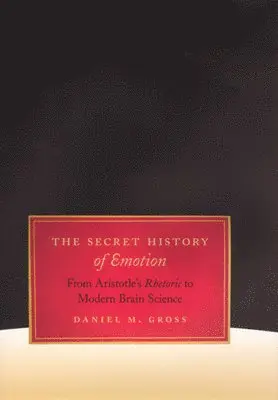
    Secret History of Emotion

    From Aristotle's Rhetoric to Modern Brain Science

    AvDaniel M. Gross

    Inbunden, Engelska, 2006

    456 kr

    Tillfälligt slut

    Fler format och utgåvor

    Häftad

    276 kr

    E-bok

    606 kr

    Beskrivning

    Princess Diana's death was a tragedy that provoked mourning across the globe; the death of a homeless person, more often than not, is met with apathy. How can we account for this uneven distribution of emotion? Can it simply be explained by the prevailing scientific understanding? Uncovering a rich tradition beginning with Aristotle, Daniel M. Gross' "The Secret History of Emotion" offers a counterpoint to the way we generally understand emotions today. Through a radical rereading of Aristotle, Seneca, Thomas Hobbes, Sarah Fielding, and Judith Butler, among others, Gross reveals a persistent intellectual current that considers emotions as psychosocial phenomena. The Roman Stoics, for instance, offer insight into the reasons political passions are distributed to some people but not to others. Contemporary theorists like Judith Butler, meanwhile, explain to us how psyches are shaped by power. To supplement his argument, Gross also provides a history and critique of the dominant modern view of emotions, expressed in Darwinism and neurobiology, in which they are considered organic, personal feelings independent of social circumstances.The result is a convincing work that rescues the study of the passions from science and returns it to the humanities and the art of rhetoric.

    Produktinformation

    • Utgivningsdatum:2006-05-15
    • Mått:15 x 23 x 2 mm
    • Vikt:369 g
    • Format:Inbunden
    • Språk:Engelska
    • Antal sidor:200
    • Förlag:The University of Chicago Press
    • ISBN:9780226309798

    Utforska kategorier

    • Socialpsykologi och gruppsykologi inom Psykologi och pedagogik
    • Psykologiska teorier och skolor inom Psykologi och pedagogik
    • Filosofi inom Filosofi och religion

    Mer om författaren

    Daniel M. Gross is assistant professor of rhetoric at the University of Iowa. He is coeditor of Heidegger and Rhetoric.

    Recensioner i media

    "With The Secret History of Emotion, Daniel Gross has achieved what I thought impossible: he compresses into these pages a compelling history of emotion from Aristotle to today. His argument that there exists a great tradition of understanding the emotions as a psychosocial phenomenon is cogent, coherent, and interesting from beginning to end. This is a remarkable book." - David Konstan, Brown University"