• Fri frakt över 249 kr
  • •
  • Snabba leveranser
  • •
  • Billiga böcker
Kundservice

Du är på sajten för privatpersoner.

Företag, bibliotek eller offentlig verksamhet?

Du handlar på classic.bokus.com, där alla dina funktioner finns intakta.
Till classic.bokus.com
Bokus logotyp. Gå till startsidan.
  • Erbjudanden
  • Nyheter
  • Student
  • Topplistor
  • Barn & ungdom
  • Bokus Play
  • E-böcker
  • Pocketböcker
  • Spel & pussel

10% rabatt på allt med kod: NYSTART10 →

Sidfot

Mina sidor

    Hjälp

    • Kundservice
    • Vanliga frågor och svar
    • Frakt och leverans
    • Retur vid ångerrätt
    • Reklamera vara
    • Betalning
    • Köpvillkor
    • Allmänna villkor
    • Information om webbplatsens tillgänglighet

    Om Bokus

    • Om oss
    • Pressrum
    • För studenter
    • För företag
    • För bibliotek och offentlig verksamhet
    • För leverantörer
    • Hållbarhet

    Populärt

    • Aktuella erbjudanden
    • Presentkort
    • Studentlitteratur
    • Nya böcker
    • Topplistor
    • Signerade böcker
    • Engelska böcker

    Inspiration

    • Boktips
    • BookTok
    • Populära bokserier
    • Barnbokskaraktärer
    • Populära författare
    Logotyp för Bokus
    Följ oss på Facebook (extern länk)Följ oss på Instagram (extern länk)Följ oss på YouTube (extern länk)Följ oss på TikTok (extern länk)
    bokus @ CookiesAnpassa cookiesIntegritetspolicyKöpvillkor
    Till Citymail hemsida (extern länk)Till Budbee hemsida (extern länk)Till Postnord hemsida (extern länk)Till Schenker hemsida (extern länk)Till Early Bird hemsida (extern länk)Till Walleys hemsida (extern länk)
    1. Samhälle och politik
    2. Sociologi och antropologi
    3. Antropologi

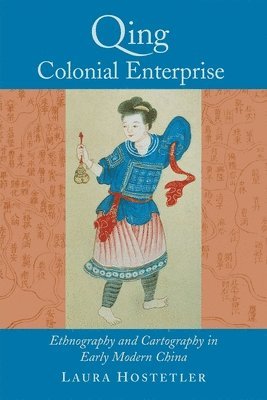
    Qing Colonial Enterprise

    Ethnography and Cartography in Early Modern China

    AvLaura Hostetler

    Häftad, Engelska, 2005

    343 kr

    Beställningsvara. Skickas inom 5-8 vardagar. Fri frakt över 249 kr.

    Beskrivning

    Laura Hostetler here shows how Qing China (1636-1911) used cartography and ethnography to pursue its imperial ambitions. She argues that far from being on the periphery of developments in the early modern period, Qing China both participated in and helped shape the new emphasis on empirical scientific knowledge that was simultaneously transforming Europe - and its colonial empires - at the time. Although mapping in China is almost as old as Chinese civilization itself, the Qing insistence on accurate scale maps of their territory was a new response to the difficulties of administering a vast and growing empire. Likewise, direct observation became increasingly important to Qing ethnographic writings, such as the illustrated manuscripts known as "Miao albums" (from which twenty color paintings are reproduced in this book). These were intended to educate Qing officials about various non-Han peoples so they could govern these groups more effectively. Hostetler's groundbreaking study provides a wealth of insights to anyone interested in the significance of cartography, the growth of empire, or this exciting period of Chinese history.

    Produktinformation

    • Utgivningsdatum:2005-12-15
    • Mått:15 x 23 x 2 mm
    • Vikt:425 g
    • Format:Häftad
    • Språk:Engelska
    • Antal sidor:288
    • Förlag:The University of Chicago Press
    • ISBN:9780226354217

    Utforska kategorier

    • Antropologi inom Samhälle och politik
    • Asiens historia inom Historia och arkeologi

    Mer om författaren

    Laura Hostetler is assistant professor in and associate chair of the Department of History at the University of Illinois at Chicago.

    Recensioner i media

    "This book makes a significant contribution to existing scholarship by drawing attention to the importance of visual representation in relation to the process of empire-building. This is a carefully researched, highly readable, and visually appealing work." - L.J. Newby, Journal of the Royal Anthropological Institute "This book's comparative approach and exciting insights should prove influential both inside and outside Qing history; serious students of cartography, ethnography, and empire cannot afford to overlook developments in Qing China or this book." - C. Pat Giersch, Journal of Asian Studies"