• Fri frakt över 249 kr
  • •
  • Snabba leveranser
  • •
  • Billiga böcker
Kundservice

Du är på sajten för privatpersoner.

Företag, bibliotek eller offentlig verksamhet?

Du handlar på classic.bokus.com, där alla dina funktioner finns intakta.
Till classic.bokus.com
Bokus logotyp. Gå till startsidan.
  • Erbjudanden
  • Nyheter
  • Student
  • Topplistor
  • Barn & ungdom
  • Bokus Play
  • E-böcker
  • Pocketböcker
  • Spel & pussel

10% rabatt på allt med kod: NYSTART10 →

Sidfot

Mina sidor

    Hjälp

    • Kundservice
    • Vanliga frågor och svar
    • Frakt och leverans
    • Retur vid ångerrätt
    • Reklamera vara
    • Betalning
    • Köpvillkor
    • Allmänna villkor
    • Information om webbplatsens tillgänglighet

    Om Bokus

    • Om oss
    • Pressrum
    • För studenter
    • För företag
    • För bibliotek och offentlig verksamhet
    • För leverantörer
    • Hållbarhet

    Populärt

    • Aktuella erbjudanden
    • Presentkort
    • Studentlitteratur
    • Nya böcker
    • Topplistor
    • Signerade böcker
    • Engelska böcker

    Inspiration

    • Boktips
    • BookTok
    • Populära bokserier
    • Barnbokskaraktärer
    • Populära författare
    Logotyp för Bokus
    Följ oss på Facebook (extern länk)Följ oss på Instagram (extern länk)Följ oss på YouTube (extern länk)Följ oss på TikTok (extern länk)
    bokus @ CookiesAnpassa cookiesIntegritetspolicyKöpvillkor
    Till Citymail hemsida (extern länk)Till Budbee hemsida (extern länk)Till Postnord hemsida (extern länk)Till Schenker hemsida (extern länk)Till Early Bird hemsida (extern länk)Till Walleys hemsida (extern länk)
    1. Historia och arkeologi
    2. Historia
    3. Amerikas historia

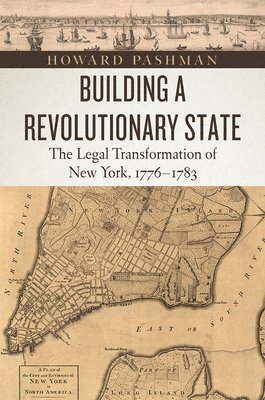
    Building a Revolutionary State

    The Legal Transformation of New York, 1776-1783

    AvHoward Pashman

    Häftad, Engelska, 2018

    Del i serien American Beginnings, 1500-1900

    276 kr

    Beställningsvara. Skickas inom 5-8 vardagar. Fri frakt över 249 kr.

    Fler format och utgåvor

    E-bok

    540 kr

    Beskrivning

    How does a popular uprising transform itself from the disorder of revolution into a legal system that carries out the daily administration required to govern? Americans faced this question during the Revolution as colonial legal structures collapsed under the period’s disorder. Yet by the end of the war, Americans managed to rebuild their courts and legislatures, imbuing such institutions with an authority that was widely respected. This remarkable transformation came about in unexpected ways. Howard Pashman here studies the surprising role played by property redistribution—seizing it from Loyalists and transferring it to supporters of independence—in the reconstruction of legal order during the Revolutionary War.Building a Revolutionary State looks closely at one state, New York, to understand the broader question of how legal structures emerged from an insurgency. By examining law as New Yorkers experienced it in daily life during the war, Pashman reconstructs a world of revolutionary law that prevailed during America’s transition to independence. In doing so, Pashman explores a central paradox of the revolutionary era: aggressive enforcement of partisan property rules actually had stabilizing effects that allowed insurgents to build legal institutions that enjoyed popular support. Tracing the transformation from revolutionary disorder to legal order, Building a New Revolutionary State gives us a radically fresh way to understand the emergence of new states.

    Produktinformation

    • Utgivningsdatum:2018-04-12
    • Mått:152 x 229 x 13 mm
    • Vikt:266 g
    • Format:Häftad
    • Språk:Engelska
    • Serie:American Beginnings, 1500-1900
    • Antal sidor:192
    • Förlag:The University of Chicago Press
    • ISBN:9780226544014

    Utforska kategorier

    • Amerikas historia inom Historia och arkeologi
    • Rättshistoria inom Juridik
    • Fastighets- och egendomsrätt inom Juridik

    Mer om författaren

    Howard Pashman is an associate attorney at Karlin Associates, LLC in Chicago. He was a research fellow at the Indiana University Center on the Global Legal Profession.