• Fri frakt över 249 kr
  • •
  • Snabba leveranser
  • •
  • Billiga böcker
Kundservice

Du är på sajten för privatpersoner.

Företag, bibliotek eller offentlig verksamhet?

Du handlar på classic.bokus.com, där alla dina funktioner finns intakta.
Till classic.bokus.com
Bokus logotyp. Gå till startsidan.
  • Erbjudanden
  • Nyheter
  • Student
  • Topplistor
  • Barn & ungdom
  • Bokus Play
  • E-böcker
  • Pocketböcker
  • Spel & pussel

10% rabatt på allt med kod NYSTART10 →

Sidfot

Mina sidor

    Hjälp

    • Kundservice
    • Vanliga frågor och svar
    • Frakt och leverans
    • Retur vid ångerrätt
    • Reklamera vara
    • Betalning
    • Köpvillkor
    • Allmänna villkor
    • Information om webbplatsens tillgänglighet

    Om Bokus

    • Om oss
    • Pressrum
    • För studenter
    • För företag
    • För bibliotek och offentlig verksamhet
    • För leverantörer
    • Hållbarhet

    Populärt

    • Aktuella erbjudanden
    • Presentkort
    • Studentlitteratur
    • Nya böcker
    • Topplistor
    • Signerade böcker
    • Engelska böcker

    Inspiration

    • Boktips
    • BookTok
    • Populära bokserier
    • Barnbokskaraktärer
    • Populära författare
    Logotyp för Bokus
    Följ oss på Facebook (extern länk)Följ oss på Instagram (extern länk)Följ oss på YouTube (extern länk)Följ oss på TikTok (extern länk)
    bokus @ CookiesAnpassa cookiesIntegritetspolicyKöpvillkor
    Till Citymail hemsida (extern länk)Till Budbee hemsida (extern länk)Till Postnord hemsida (extern länk)Till Schenker hemsida (extern länk)Till Early Bird hemsida (extern länk)Till Walleys hemsida (extern länk)
    1. Naturvetenskap och teknik
    2. Teknik och industri
    3. Transportteknik
    4. Flyg- och rymdteknik

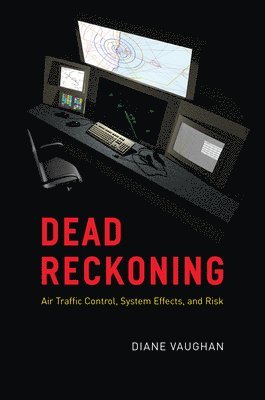
    Dead Reckoning

    Air Traffic Control, System Effects, and Risk

    AvDiane Vaughan

    Häftad, Engelska, 2023

    231 kr

    Beställningsvara. Skickas inom 5-8 vardagar. Fri frakt över 249 kr.

    Fler format och utgåvor

    E-bok

    442 kr

    Beskrivning

    Vaughan unveils the complicated and high-pressure world of air traffic controllers as they navigate technology and political and public climates, and shows how they keep the skies so safe.When two airplanes were flown into the World Trade Center towers on September 11, 2001, Americans watched in uncomprehending shock as first responders struggled to react to the situation on the ground. Congruently, another remarkable and heroic feat was taking place in the air: more than six hundred and fifty air traffic control facilities across the country coordinated their efforts to ground four thousand flights in just two hours—an achievement all the more impressive considering the unprecedented nature of the task.In Dead Reckoning, Diane Vaughan explores the complex work of air traffic controllers, work that is built upon a close relationship between human organizational systems and technology and is remarkably safe given the high level of risk. Vaughan observed the distinct skill sets of air traffic controllers and the ways their workplaces changed to adapt to technological developments and public and political pressures. She chronicles the ways these forces affected their jobs, from their relationships with one another and the layouts of their workspace to their understanding of their job and its place in society. The result is a nuanced and engaging look at an essential role that demands great coordination, collaboration, and focus—a role that technology will likely never be able to replace. Even as the book conveys warnings about complex systems and the liabilities of technological and organizational innovation, it shows the kinds of problem-solving solutions that evolved over time and the importance of people.

    Produktinformation

    • Utgivningsdatum:2023-02-13
    • Mått:152 x 229 x 38 mm
    • Vikt:934 g
    • Format:Häftad
    • Språk:Engelska
    • Antal sidor:640
    • Förlag:The University of Chicago Press
    • ISBN:9780226826578

    Utforska kategorier

    • Flyg- och rymdteknik inom Naturvetenskap och teknik

    Mer om författaren

    Diane Vaughan is professor of sociology and international and public affairs at Columbia University. She is the author of many books including The Challenger Launch Decision: Risky Technology, Culture, and Deviance at NASA, also published by the University of Chicago Press.

    Recensioner i media

    "From the dead reckoning of early navigation with its reliance on sun, stars, and wind, Vaughan develops her analysis of the present-day work of an air traffic controller, which involves an increasingly high degree of automation with consequent loss of skills and many controllers’ jobs. Drawing on interview data, Vaughan illuminates what has made air travel so safe by examining the large sociotechnical systems in which work is performed, focusing on the changing nature of organizations, technologies, and work. Recommended."

    Innehållsförteckning

    • List of Figures and TablesPart I: BeginningsChapter 1. Dead ReckoningWhy Air Traffic Control?Introduction to the System: “A Monkey Could Do This Job”System Effects on the ProjectOn Time and Discovery: Historical Ethnography and Socio-technical System HistoryThe Architecture of This BookChapter 2. History as Cause: System Emergence, System EffectsA Formation StoryPrecedent and Innovation: Boundaries and Boundary WorkThe Age of Innovators: The Diffusion of Ideas, Networks, and Infrastructure Formation, 1880–1920The Age of Organization: Controllers, Technologies, and Boundaries, Ground and Sky, 1920–1950The Jet Age: Congestion, Technological Lag, and PATCO, 1950–1980The Age of Conflict, Decline, and Repair: The Strike, NATCA, and Technological Glitches, 1980–2000Dead Reckoning at the Turn of the Century: History, Boundaries, and Turf Wars in the Sky, 2000–2001Part II: Producing ControllersChapter 3. From Skill Acquisition to ExpertiseThe Academy: The Screen, the Game, and Survival of the FittestThe Facility: The Apprentice and the TrainerThe Subtleties of the Craft: Dead ReckoningChapter 4. Embodiment: The Social Shaping of ControllersCarryover into Everyday LifeFundamental Change: Becoming a Type A PersonalityA Cultural System of Knowledge: Expertise, Embodiment, and EthnocognitionPart III: Boundary Work: Airspace, Place, and Dead ReckoningSystem Effects: Culture, Ethnocognition, and Distributed CognitionChapter 5. Boston Center and Bedford TowerBoston CenterBedford TowerChapter 6. The Terminal: Boston TRACON and Boston TowerThe TRACON: Boston Terminal Radar Approach ControlBoston TowerThe Terminal: Boston TRACON and TowerPart IV: Emotional Labor, Emotion WorkChapter 7. Mistake and Error: Emotional LaborClose CallsHaving a DealSpace, Place, and Boundaries: When Is a Deal Not a Deal?Mistake and Error as System Effects: Crossing the Boundaries of Time and Social SpaceChapter 8. Risk and Stress: Emotion WorkLosing Control: Stress-Producing ConditionsThe Social and Cultural Transformation of Risky WorkCulture, Cognition, and the Normalization of Risk and StressThe Individual, the Group, and Cultural DevicesPart V: “That Little Frisson of Terror”Chapter 9. September 11Boston CenterThe Command CenterBoston CenterThe TRACONBoston TowerBedford TowerThe Attacks: System Response and System EffectsChapter 10. The War on Terror: Policing the SkyChanging Boundaries: Restrictions, Translation, and Local CoordinationPolice Work, Emotion WorkA Fragile Stability: 2002The War on Terror: System Response and System EffectsChapter 11. Symbolic Boundaries: Distinction, Occupational Community, and Moral WorkFormal Structure and Occupational CommunityStatus and Moral WorkMaintaining Moral BoundariesPart VI: System Effects, Boundary Work, and RiskBoundary Work as Power WorkThe Intersection of Two Trajectories: Implementation, Budget Battles, Shutdowns, and FailuresThe Liabilities of Technological and Organizational InnovationChapter 12. The Age of Automation: 2002–PresentBoston Tower and Boston TRACONBoston TowerBoston TRACONChapter 13. Continuities, Change, and PersistenceSystem Effects, Resilience, and AgencyDead Reckoning: Coordinating Action and Anticipating Futures in Complex Organizational SystemsAcknowledgmentsNotesBibliographyIndex