• Fri frakt över 249 kr
  • •
  • Snabba leveranser
  • •
  • Billiga böcker
Kundservice

Du är på sajten för privatpersoner.

Företag, bibliotek eller offentlig verksamhet?

Du handlar på classic.bokus.com, där alla dina funktioner finns intakta.
Till classic.bokus.com
Bokus logotyp. Gå till startsidan.
  • Erbjudanden
  • Nyheter
  • Student
  • Topplistor
  • Barn & ungdom
  • Bokus Play
  • E-böcker
  • Pocketböcker
  • Spel & pussel

10% rabatt på allt med kod NYSTART10 →

Sidfot

Mina sidor

    Hjälp

    • Kundservice
    • Vanliga frågor och svar
    • Frakt och leverans
    • Retur vid ångerrätt
    • Reklamera vara
    • Betalning
    • Köpvillkor
    • Allmänna villkor
    • Information om webbplatsens tillgänglighet

    Om Bokus

    • Om oss
    • Pressrum
    • För studenter
    • För företag
    • För bibliotek och offentlig verksamhet
    • För leverantörer
    • Hållbarhet

    Populärt

    • Aktuella erbjudanden
    • Presentkort
    • Studentlitteratur
    • Nya böcker
    • Topplistor
    • Signerade böcker
    • Engelska böcker

    Inspiration

    • Boktips
    • BookTok
    • Populära bokserier
    • Barnbokskaraktärer
    • Populära författare
    Logotyp för Bokus
    Följ oss på Facebook (extern länk)Följ oss på Instagram (extern länk)Följ oss på YouTube (extern länk)Följ oss på TikTok (extern länk)
    bokus @ CookiesAnpassa cookiesIntegritetspolicyKöpvillkor
    Till Citymail hemsida (extern länk)Till Budbee hemsida (extern länk)Till Postnord hemsida (extern länk)Till Schenker hemsida (extern länk)Till Early Bird hemsida (extern länk)Till Walleys hemsida (extern länk)
    1. Skönlitteratur
    2. Litteraturvetenskap
    3. Litteraturvetenskap

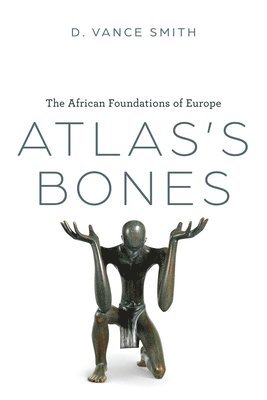
    Atlas's Bones

    The African Foundations of Europe

    AvD. Vance Smith

    Inbunden, Engelska, 2025

    359 kr

    Beställningsvara. Skickas inom 5-8 vardagar. Fri frakt över 249 kr.

    Beskrivning

    A major new look at Africa’s influence on European culture and how colonization remade Africa in the image of a medieval Europe.   Virgil. Chaucer. Petrarch. These names resonate with many as cornerstones of European culture. Yet, in Atlas’s Bones, D. Vance Smith reveals that much of what is claimed as European culture up to the Middle Ages—its great themes in literature, its sources in political thought, its religious beliefs—originated in the writings of African thinkers like Augustine, Fulgentius, and Martianus Capella, or Europeans who thought extensively about Africa. In fact, a third of Virgil’s Aeneid takes place in Africa. Francis Petrarch believed his most important achievement was his epic Africa; while Geoffrey Chaucer wrote repeatedly about the figures of Scipio Africanus, actually two different men who defeated and destroyed Carthage.  Smith tells the story of how Europe created a false “medieval” version of Africa to acquire resources and power during the era of imperialism and colonialism. The first half of the book, “Reading Africa,” traces Egypt’s, Libya’s, and Carthage’s influence on classical and medieval thinking about Africa, highlighting often ignored literary and legendary traditions, for example, that Alexander the Great named himself the son of an African god. The second part, “Writing Africa,” focuses on how the different cultures of the two great African cities—Carthage and Alexandria—shaped modern literary criticism and political theology and examines the cross-influences of modern anthropology, medieval studies, and colonial law.  Atlas’s Bones firmly re-establishes the significance of Africa in European intellectual history. It will be essential reading for anyone seeking to understand how much of Africa informs our artistic and cultural world.

    Produktinformation

    • Utgivningsdatum:2025-11-28
    • Mått:152 x 229 x 28 mm
    • Vikt:680 g
    • Format:Inbunden
    • Språk:Engelska
    • Antal sidor:432
    • Förlag:The University of Chicago Press
    • ISBN:9780226830308

    Utforska kategorier

    • Litteraturvetenskap inom Skönlitteratur
    • Etnicitet inom Samhälle och politik

    Mer om författaren

    D. Vance Smith is professor of English and former director of medieval studies at Princeton University. His many books include Arts of Dying: Literature and Finitude in Medieval England, also published by the University of Chicago Press.

    Recensioner i media

    "Encompassing Africana studies, medieval scholarship, historiography, and philosophy, this book surveys centuries of literature, history, and theology to argue for Africa’s influence on Europe’s self-conception. Hegel’s fantasy that Africa ‘is no historical place in the world’ guides Smith as he leaps from ancient civilizations, such as those of Alexandria and Carthage, to close readings of Virgil, Frantz Fanon, and Erich Auerbach. Smith’s synthesis of a wide range of sources, from antiquity to the modern era, strengthens his central claim: that “Africa was not only known to Europeans but played a profound role in how Europeans imagined both the world and themselves.”

    Innehållsförteckning

    • Preface: An Atlas for This BookIntroductionAfrican History and White Noise  1“Africa,” the Fallout of Metonymy  00All of Africa  00I. Ancient and Medieval: Reading AfricaChapter One. Egypt, the ExceptionAfrica, the Continent  00Alexander the Great African  00The Libyan God of Europe  00The Fluid Land  00Egypt in Medieval Europe  00Moses the African  00Alexander’s African Romance  00Egyptology’s History of Europe  00Egypt Theory  00Chapter Two. Africa, Fulcrum of EpicMythic Landing: The Iliad, the Argonautica, the Pharsalia, the Aeneid  00Britain’s African Foundations: Geoffrey of Monmouth  00The African Invention of England  00Chapter Three. The Specter of CarthageCarthage the Symptom: Virgil, Silius Italicus, Horace, Freud  00Carthage and African Identities: Sallust, Tertullian, Augustine  00Augustine’s Scandalous Carthaginian Theory  00The Dream of Scipio Africanus: Cicero and Macrobius  00Petrarch’s Modern Africa  00Chaucer and the African  00Chapter Four. Ghosts of Language: Punic, Lybic, African MythThe African Tumor in Language  00Martianus Capella: In the Palace of Myth  00Fulgentius: Africa’s Mythic Language  00Libyc, the Purest Language  00The Symbolic Violence of Lost Languages: Bourdieu  00Our Most Secret Writing: Assia Djebar  00II. Medieval and Modern: Writing AfricaChapter Five. Allegory of Two African CitiesAuerbach in Alexandria  00Auerbach in Carthage  00Chapter Six. The King’s African BodiesKantorowicz’s African Body  00Mystical Kings, European and African  00Anthropology’s Divine Kings and Colonial Rule: Leo Frobenius and Max Gluckman  00Chapter Seven. Kenya’s Medieval CharterThe Feudal Metaphor  00Medieval Land Law in Africa  00How Oxford Medievalists Ruled the World  00Independent Feudalism  00Kenyatta and Malinowski Imagine Land  00Ngũgĩ wa Thiong’o: Land before Time  00Chapter Eight Fanon Outside History: Manicheism, Augustine, and HegelWhich Manicheism?  00Manicheism and Dialectic  00Struggling with Augustine, Then and Now  00Chapter Nine Zimbabwe and the Fear of the MedievalThe Specter of Carthage, Again  00Picturesque Archaeology  00Barbarian Invasions: Rhodes’s Gibbon  00The Inconvenience of the Medieval  00Coda The New Divine KingsAcknowledgmentsNotesIndex