Häftad, Engelska, 2026
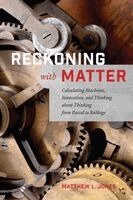
Reckoning with Matter
Calculating Machines, Innovation, and Thinking about Thinking from Pascal to Babbage
236 kr
Kommande
Fler format och utgåvor
Beskrivning
Produktinformation
- Utgivningsdatum: 2026-12-20
- Mått: 152 x 229 x 25 mm
- Vikt: 426 g
- Format: Häftad
- Språk: Engelska
- Antal sidor: 336
- Förlag: The University of Chicago Press
- ISBN: 9780226854465
Utforska kategorier
Mer om författaren
Matthew L. Jones is the Smith Family Professor of History at Princeton University and the author of The Good Life in the Scientific Revolution, also published by the University of Chicago Press, and How Data Happened: A History from the Age of Reason to the Age of Algorithms.
Recensioner i media
"Rather than being yet another history of calculating machines, this book rises much higher by its scholarly examination, explanation, and interpretation of that history from the perspectives of computational mathematics, philosophy, logic, mechanical engineering capabilities, artisan skills, intellectual property, and the creative process itself. Starting from the primary difficulty of carrying tens on a mechanical device, the author provides an invigorating journey through the inventive process of calculating machines from 1600 to 1830, while introducing readers to the creations—ideas, justification, machines, and failures—of Pascal, Morland, Leibniz, Hooke, Babbage, Clement, and Stanhope. In each case, the author carefully details why the proposed models or dreams could not be realized as physical models, especially as marketable tools. The last chapter weighs the significance of 18th-century calculating machines on mathematics, as well as the processes of thinking and creation. The excellent chapter notes, reference list, and index complement the book. In summary, this book is exceptional and succeeds at its proposed task; more so, it offers both an approach and standard that more historians of technology should emulate—critically interweaving theory, practice, and results. Essential."
Betyg & recensioner
0 recensioner
Inga recensioner tillgängliga.