• Fri frakt över 249 kr
  • •
  • Snabba leveranser
  • •
  • Billiga böcker
Kundservice

Du är på sajten för privatpersoner.

Företag, bibliotek eller offentlig verksamhet?

Du handlar på classic.bokus.com, där alla dina funktioner finns intakta.
Till classic.bokus.com
Bokus logotyp. Gå till startsidan.
  • Erbjudanden
  • Nyheter
  • Student
  • Topplistor
  • Barn & ungdom
  • Bokus Play
  • E-böcker
  • Pocketböcker
  • Spel & pussel

Må bättre, för mindre! Upp till 50% rabatt på hälsoböcker

Sidfot

Mina sidor

    Hjälp

    • Kundservice
    • Vanliga frågor och svar
    • Frakt och leverans
    • Retur vid ångerrätt
    • Reklamera vara
    • Betalning
    • Köpvillkor
    • Allmänna villkor
    • Information om webbplatsens tillgänglighet

    Om Bokus

    • Om oss
    • Pressrum
    • För studenter
    • För företag
    • För bibliotek och offentlig verksamhet
    • För leverantörer
    • Hållbarhet

    Populärt

    • Aktuella erbjudanden
    • Presentkort
    • Studentlitteratur
    • Nya böcker
    • Topplistor
    • Signerade böcker
    • Engelska böcker

    Inspiration

    • Boktips
    • BookTok
    • Populära bokserier
    • Barnbokskaraktärer
    • Populära författare
    Logotyp för Bokus
    Följ oss på Facebook (extern länk)Följ oss på Instagram (extern länk)Följ oss på YouTube (extern länk)Följ oss på TikTok (extern länk)
    bokus @ CookiesAnpassa cookiesIntegritetspolicyKöpvillkor
    Till Citymail hemsida (extern länk)Till Budbee hemsida (extern länk)Till Postnord hemsida (extern länk)Till Schenker hemsida (extern länk)Till Early Bird hemsida (extern länk)Till Walleys hemsida (extern länk)
    1. Filosofi och religion
    2. Religion och tro
    3. Religion: allmänt

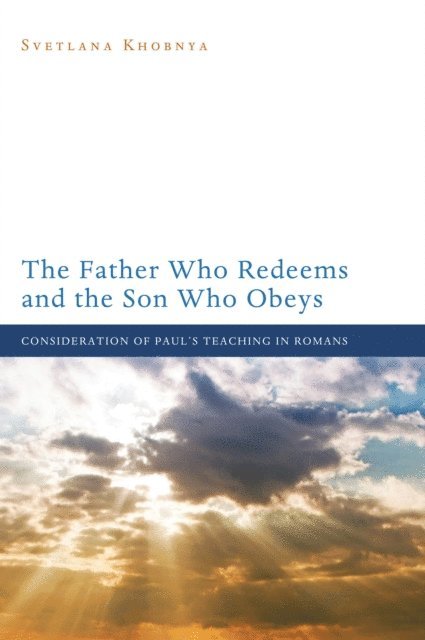
    Father Who Redeems and the Son Who Obeys

    Consideration of Paul's Teaching in Romans

    AvSvetlana Khobnya

    Häftad, Engelska, 2014

    Del i serien James Clarke

    287 kr

    Beställningsvara. Skickas inom 5-8 vardagar. Fri frakt över 249 kr.

    Fler format och utgåvor

    Inbunden

    444 kr

    Häftad

    285 kr

    E-bok

    438 kr

    Beskrivning

    An analysis of the scriptural basis of Paul's Epistle to the Romans, showing the Old Testament origins of his view of God as Father and Christ as Obedient Son.The idea of God the Father has attracted scholarly attention for centuries, especially in terms of the revelation of God's fatherhood through the Son. 'The Father Who Redeems and the Son Who Obeys' balances the Christological perspective on God's nature with the image of God the Father that has its roots in the Old Testament, and is more prominent in the Second Temple period than sometimes acknowledged. For Paul, God is the Father who redeems. The Old Testament imagery that shaped the Israelites' conception of God's interaction with them (and which was a basis for God's future restoration of the nation, despite their unfaithfulness) is central to Paul's explanation of the new salvific act of God the Father in Christ, the faithful and obedient Son.

    Produktinformation

    • Utgivningsdatum:2014-09-25
    • Mått:153 x 229 x 12 mm
    • Vikt:297 g
    • Format:Häftad
    • Språk:Engelska
    • Serie:James Clarke
    • Antal sidor:214
    • Förlag:Boydell & Brewer Ltd
    • ISBN:9780227174661

    Utforska kategorier

    • Religion: allmänt inom Filosofi och religion
    • Kristendom inom Filosofi och religion
    • Biblar inom Filosofi och religion

    Mer om författaren

    Svetlana Khobnya is Lecturer in Biblical Studies at Nazarene Theological College, Manchester (UK). She is an ordained minister in the Church of the Nazarene and a member of the Tyndale Fellowship Society, the British New Testament Society, and the Wesleyan Theological Society. This book is based on her PhD thesis submitted to the University of Manchester in 2011.

    Innehållsförteckning

    • Foreword by John Nolland Preface List of Abbreviations I Introduction II God the Father in Jewish Tradition III God the Father Revealed in Christ IV Christ's Faithfulness as Fulfillment of the Father's Faithfulness V Christ's Obedience and Abraham's Faith VI Christ's Obedience versus Adam's Disobedience (5:12-21) VII Conclusions Bibliography