• Fri frakt över 249 kr
  • •
  • Snabba leveranser
  • •
  • Billiga böcker
Kundservice

Du är på sajten för privatpersoner.

Företag, bibliotek eller offentlig verksamhet?

Du handlar på classic.bokus.com, där alla dina funktioner finns intakta.
Till classic.bokus.com
Bokus logotyp. Gå till startsidan.
  • Erbjudanden
  • Nyheter
  • Student
  • Topplistor
  • Barn & ungdom
  • Bokus Play
  • E-böcker
  • Pocketböcker
  • Spel & pussel

10% rabatt på allt med kod NYSTART10 →

Sidfot

Mina sidor

    Hjälp

    • Kundservice
    • Vanliga frågor och svar
    • Frakt och leverans
    • Retur vid ångerrätt
    • Reklamera vara
    • Betalning
    • Köpvillkor
    • Allmänna villkor
    • Information om webbplatsens tillgänglighet

    Om Bokus

    • Om oss
    • Pressrum
    • För studenter
    • För företag
    • För bibliotek och offentlig verksamhet
    • För leverantörer
    • Hållbarhet

    Populärt

    • Aktuella erbjudanden
    • Presentkort
    • Studentlitteratur
    • Nya böcker
    • Topplistor
    • Signerade böcker
    • Engelska böcker

    Inspiration

    • Boktips
    • BookTok
    • Populära bokserier
    • Barnbokskaraktärer
    • Populära författare
    Logotyp för Bokus
    Följ oss på Facebook (extern länk)Följ oss på Instagram (extern länk)Följ oss på YouTube (extern länk)Följ oss på TikTok (extern länk)
    bokus @ CookiesAnpassa cookiesIntegritetspolicyKöpvillkor
    Till Citymail hemsida (extern länk)Till Budbee hemsida (extern länk)Till Postnord hemsida (extern länk)Till Schenker hemsida (extern länk)Till Early Bird hemsida (extern länk)Till Walleys hemsida (extern länk)
    1. Medicin
    2. Medicin: allmänt
    3. Medicinhistoria

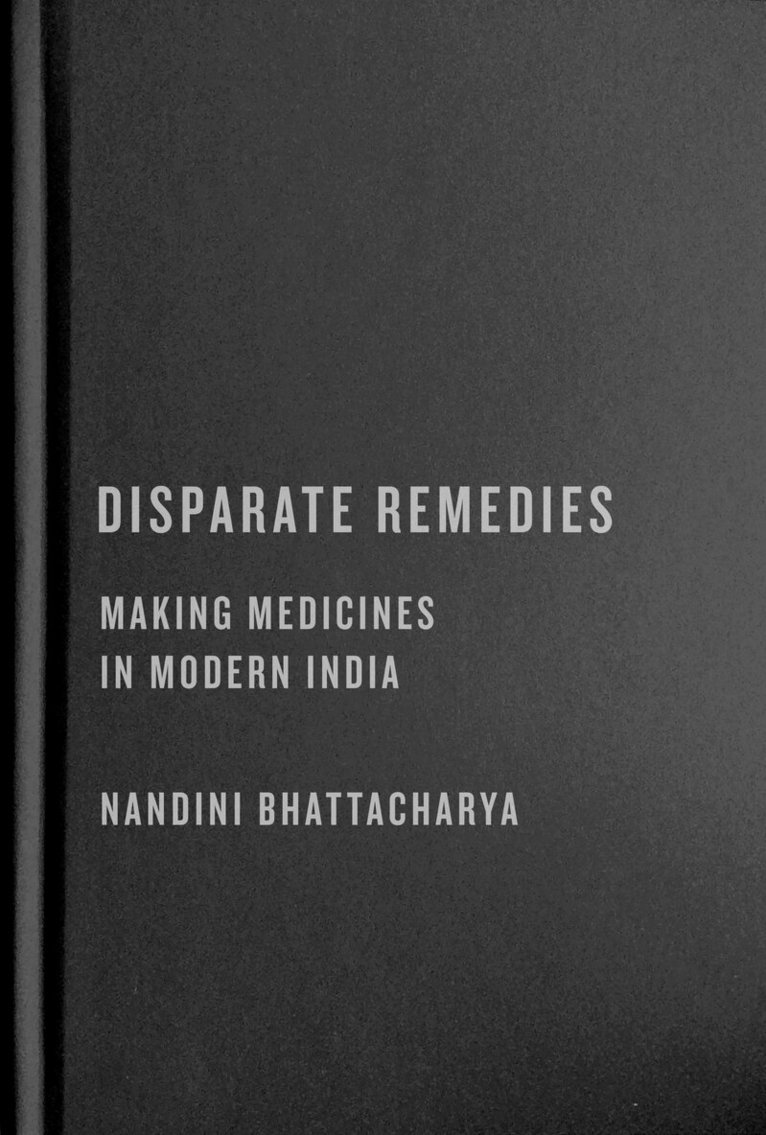
    Disparate Remedies

    Making Medicines in Modern India

    AvNandini Bhattacharya

    Inbunden, Engelska, 2023

    Del 7 i serien Intoxicating Histories

    1 474 kr

    Beställningsvara. Skickas inom 5-8 vardagar. Fri frakt över 249 kr.

    Fler format och utgåvor

    Häftad

    537 kr

    E-bok

    569 kr

    E-bok

    569 kr

    Beskrivning

    At present India is a leading producer, distributor, and consumer of generic medicines globally. Disparate Remedies traces the genealogy of this development and examines the public cultures of medicine in the country between 1870 and 1960.The book begins by discussing the expansion of medical consumerism in late nineteenth-century India when British-owned firms extended their sales into remote towns. As a result, laboratory-produced drugs competed with traditional remedies through side-by-side production of Western and Indian drugs by pharmaceutical companies. The emergent middle classes, the creation of a public sphere, and nationalist politics transformed the medical culture of modern India and generated conflict between Western and Indigenous medical systems and their practitioners. Nandini Bhattacharya demonstrates that these disparate therapies were sustained through the tropes of purity or adulteration, potency or lack of it, and epistemic heritage, even when their material configuration often differed little.Uniquely engaging with the cultures of both consumption and production in the country, Disparate Remedies follows the evolution of medicine in colonial India as it confronted Indian modernity and changing public attitudes surrounding health and drugs.

    Produktinformation

    • Utgivningsdatum:2023-07-15
    • Mått:152 x 229 x undefined mm
    • Vikt:499 g
    • Format:Inbunden
    • Språk:Engelska
    • Serie:Intoxicating Histories
    • Antal sidor:272
    • Förlag:McGill-Queen's University Press
    • ISBN:9780228017523

    Utforska kategorier

    • Medicinhistoria inom Medicin
    • Tillverkningsindustri inom Ekonomi och Ledarskap

    Mer om författaren

    Nandini Bhattacharya is associate professor at the University of Houston, Texas.

    Recensioner i media

    “Disparate Remedies demonstrates the eclecticism of every aspect of the drug trade, illustrating how a lack of legislation and regulation largely resulted in a ‘free-for-all’ in the making, supply, and sale of remedies with the consequent ubiquity of counterfeiting, adulteration, and supply of substandard medicines. The great contribution of this book is that it provides a longer historical perspective and narrative than many previous works, suggesting that the rapid rise of the pharmaceutical industry in India can only be understood by knowing its historical context.” Stuart Anderson, London School of Hygiene and Tropical Medicine