• Fri frakt över 249 kr
  • •
  • Snabba leveranser
  • •
  • Billiga böcker
Kundservice

Du är på sajten för privatpersoner.

Företag, bibliotek eller offentlig verksamhet?

Du handlar på classic.bokus.com, där alla dina funktioner finns intakta.
Till classic.bokus.com
Bokus logotyp. Gå till startsidan.
  • Erbjudanden
  • Nyheter
  • Student
  • Topplistor
  • Barn & ungdom
  • Bokus Play
  • E-böcker
  • Pocketböcker
  • Spel & pussel

10% rabatt på allt med kod: NYSTART10 →

Sidfot

Mina sidor

    Hjälp

    • Kundservice
    • Vanliga frågor och svar
    • Frakt och leverans
    • Retur vid ångerrätt
    • Reklamera vara
    • Betalning
    • Köpvillkor
    • Allmänna villkor
    • Information om webbplatsens tillgänglighet

    Om Bokus

    • Om oss
    • Pressrum
    • För studenter
    • För företag
    • För bibliotek och offentlig verksamhet
    • För leverantörer
    • Hållbarhet

    Populärt

    • Aktuella erbjudanden
    • Presentkort
    • Studentlitteratur
    • Nya böcker
    • Topplistor
    • Signerade böcker
    • Engelska böcker

    Inspiration

    • Boktips
    • BookTok
    • Populära bokserier
    • Barnbokskaraktärer
    • Populära författare
    Logotyp för Bokus
    Följ oss på Facebook (extern länk)Följ oss på Instagram (extern länk)Följ oss på YouTube (extern länk)Följ oss på TikTok (extern länk)
    bokus @ CookiesAnpassa cookiesIntegritetspolicyKöpvillkor
    Till Citymail hemsida (extern länk)Till Budbee hemsida (extern länk)Till Postnord hemsida (extern länk)Till Schenker hemsida (extern länk)Till Early Bird hemsida (extern länk)Till Walleys hemsida (extern länk)
    1. Filosofi och religion
    2. Filosofi
    3. Filosofiska discipliner

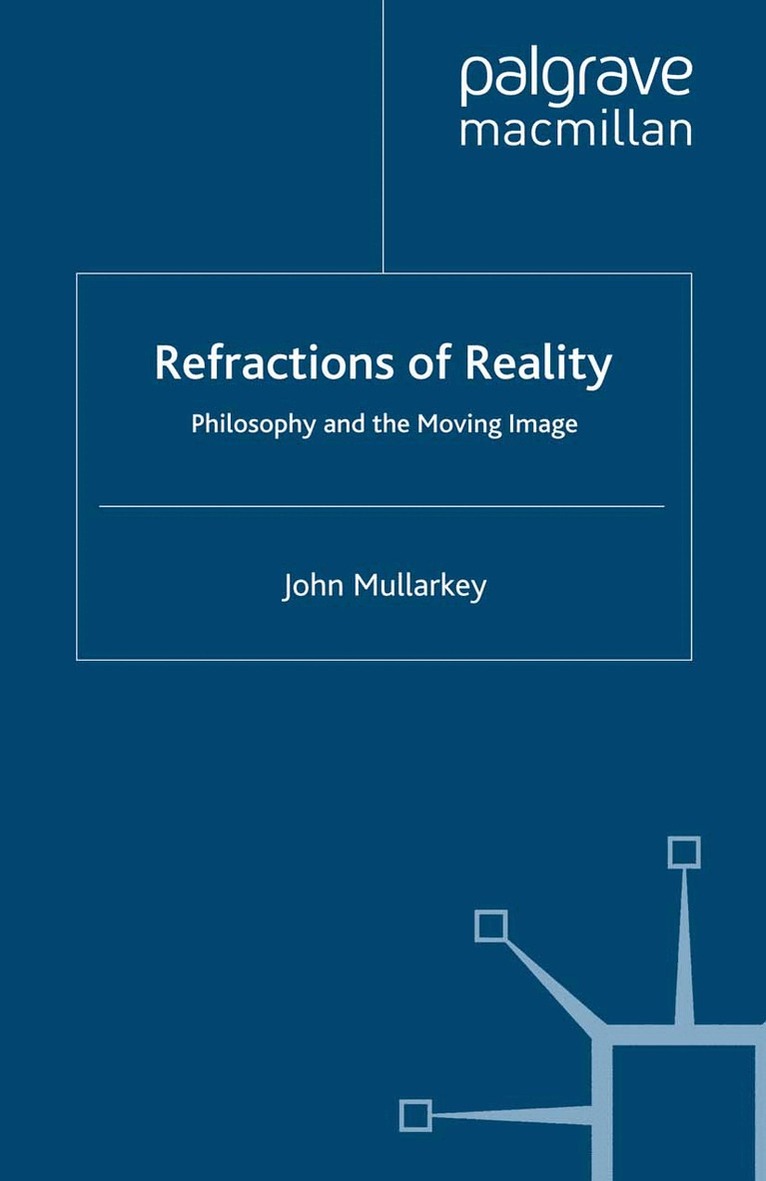
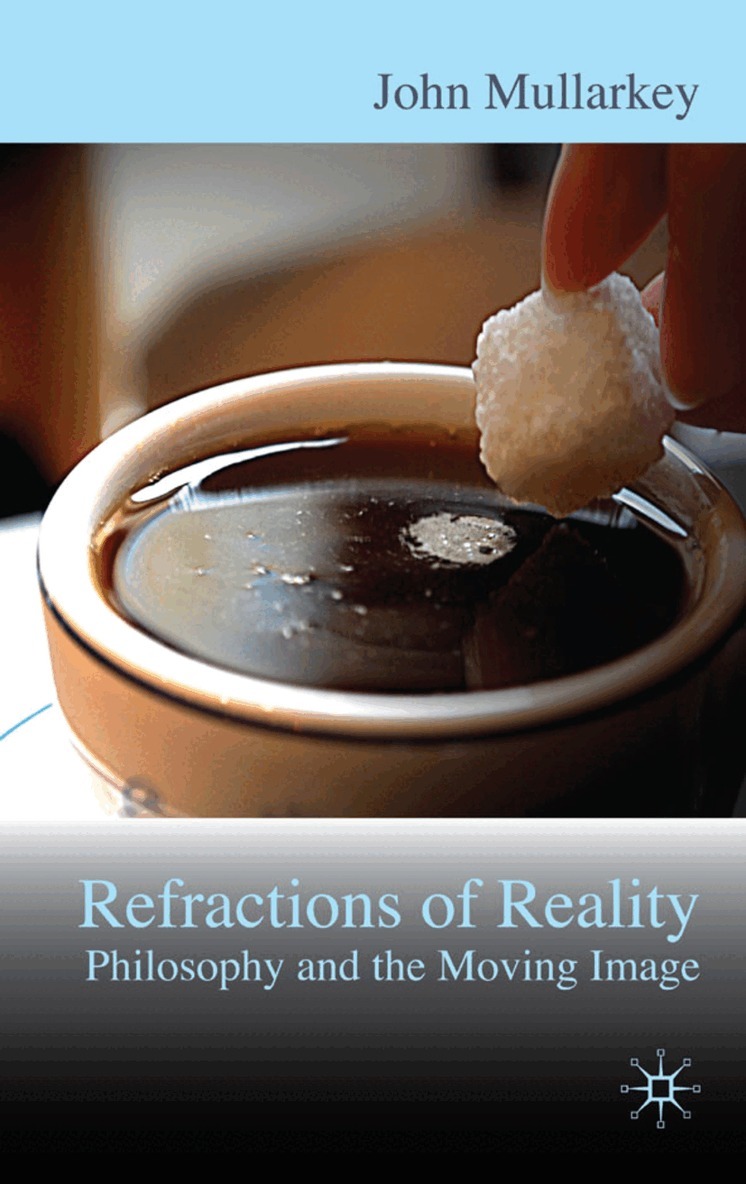
    Refractions of Reality: Philosophy and the Moving Image

    AvJohn Mullarkey

    Häftad, Engelska, 2008

    648 kr

    Beställningsvara. Skickas inom 11-20 vardagar. Fri frakt över 249 kr.

    Fler format och utgåvor

    Inbunden

    547 kr

    E-bok

    755 kr

    Häftad

    547 kr

    Beskrivning

    This is the first book to explore all central issues surrounding the relationship between the film-image and philosophy. It tackles the work of particular philosophers of film (Žižek, Deleuze and Cavell) as well as general philosophical positions (Cognitivist and Culturalist), and analyses the ability of film to teach and create philosophy.

    Produktinformation

    • Utgivningsdatum:2008-12-11
    • Mått:152 x 229 x 15 mm
    • Vikt:382 g
    • Format:Häftad
    • Språk:Engelska
    • Antal sidor:286
    • Upplaga:2009
    • Förlag:Palgrave Macmillan
    • ISBN:9780230285019

    Utforska kategorier

    • Filosofiska discipliner inom Filosofi och religion
    • Film inom Kultur

    Mer om författaren

    JOHN MULLARKEY is Professor of Film and Television, Kingston University, London, UK. His publications include Bergson and Philosophy (1999) and Post-Continental Philosophy: An Outline (2006). He is an editor of Film-Philosophy.com.

    Recensioner i media

    'In this engaging, comprehensive, incisive work, Mullarkey addresses whether film can philosophize on its own, adding something original, rather than simply illustrating concepts that philosophers extract from their own discourse An indispensible work for students/scholars in philosophy of film/art, aesthetics, and film studies.' D.W.Rothermel, CHOICE'...addresses the question of the relation between art and philosophy - the age-old problem of aesthetics - in an entirely original manner by examining how film changes the terms of this debate.''...to summarize Mullarkey's text in terms of his criticism of other film theorists does not do justice to the intricate readings and impressive scope of Mullarkey's overall approach. His engagement with figures such as Jacques Rancière, Edward Branigan, Joseph Anderson, Badiou, and Cavell (to name a few) lead him to fascinating 'partial' observations on the nature of film.''The gesture Mullarkey employs - a graceful, seamless move from critical analysis to constructive observation - suggests a pluralistic strategy based on an ethics of affirmation and acknowledgement.''...as a treatment of the question 'what does film mean for philosophy?', Mullarkey offers an intricate and considered study - with important consequences for philosophy in terms of what can be said, and what may be gestured to only by attention to what is left unsaid - that is to say, through a constellation of plural andvariably flawed refractions.' -Amanda Dennis in The International Journal for Philosophical Studies'This book, in some sense, brings to an end a certain phase of film theorizing and instead looks toward something quite new: how theories have been written and how they may be written, how they fall into types, how these types are filling out not a logical grid but a grid of the anxieties we feel, and the defenses we erect toward the everyday. A wonderful, ground-breaking book.' -Edward Branigan (University of California, Santa Barbara), author of Projecting a Camera: Language-Games in Film Theory and Narrative Comprehension and Film'Highly original both in its concern for avoiding the illustrative approach generally favoured by philosophers, and in the speculative ambition that looms behind the critical edge of its readings of contemporary film- philosophers. The very question "when does the film itself happen?" is a fundamental one, which is rarely addressed. Mullarkey is opening the door to a brand new type of philosophical engagement with films.' -Elie During (Université de Paris X-Nanterre), author of Matrix: Machine philosophique'Mullarkey brings an informed, critical view to a number of theories from both the Continental tradition (his specialization) and the Anglo-American tradition...Refractions of Reality is an original and valuable contribution to the field of film philosophy...It is perhaps most valuablein its highly successful dislocation of the rigid, myopic perspective of so many contemporary theories' -Joseph Mai, Notre Dame Philosophy Reviews

    Innehållsförteckning

    • Acknowledgements Preface: The Film-Envy of Philosophy Introduction: Nobody Knows Anything! Illustrating Manuscripts Bordwell and Other Cogitators Žižek and the Cinema of Perversion Deleuze's Kinematic Philosophy Cavell, Badiou, and Other Ontologists Expanded Cognitions and the Speeds of Cinema Fabulation, Process and Event Refractions of Reality Or, What is Thinking Anyway? Conclusion: Code Unknown - A Bastard Theory for a Bastard Art Notes Bibliography Index