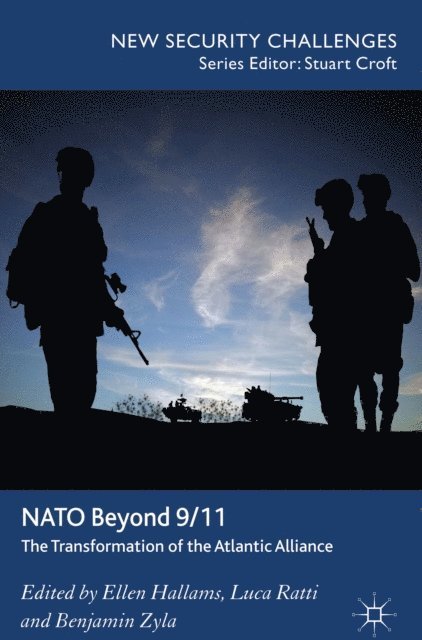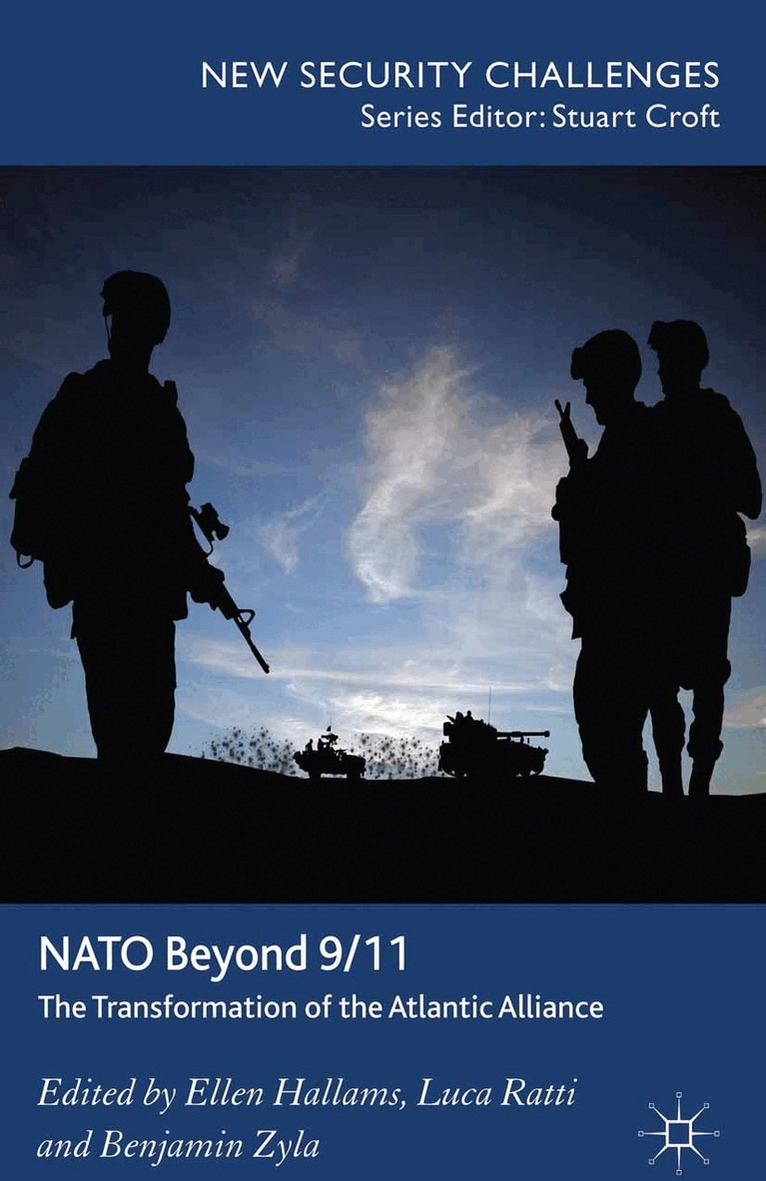
NATO Beyond 9/11
The Transformation of the Atlantic Alliance
556 kr
Beställningsvara. Skickas inom 10-15 vardagar. Fri frakt över 249 kr.
Du är på sajten för privatpersoner.
556 kr
Beställningsvara. Skickas inom 10-15 vardagar. Fri frakt över 249 kr.
Mark Webber, University of Birmingham, UKMichael Rühle, NATO's Emerging Security Challenges DivisionCarl Cavanagh Hodge, University of British Columbia-Okanagan, CanadaTerry Terriff, University of Calgary, CanadaTim Bird, King's College London, UKJeffrey H. Michaels, King's College London, UKMagnus Petersson, Norwegian Institute for Defence Studies, NorwaySteve Marsh, Cardiff University, UKAlan Dobson, University of Dundee, UKMagnus Christiansson, Swedish National Defence College, SwedenSven Biscop, Egmont Royal Institute for International Relations in Brussels, BelgiumTrine Flockhart, Danish Institute for International StudiesBastian Giegerich, Bundeswehr Centre for Military History and Social Sciences
'For much of its existence, NATO had a very clear deterrence mission which did not oblige it to move around very much. However, in more recent times, the Alliance has taken on a broad range of missions and in many different parts of the world. Arguably, these missions, extending from ground operations in Afghanistan to maritime operations in the Mediterranean and Gulf, and involving cooperation with a large number of partner countries from across the globe, have made NATO an even more visible and important organization than it was during the Cold War. Yet as NATO's mission in Afghanistan winds down, and as the European Allies confront major defence cuts and a shift of attention by the US to the Asia Pacific, can NATO remain a global actor? Do the enduring strengths of the Alliance continue to outweigh the many challenges it faces in adapting to the new spectrum of 21st century security threats, such as cyber attacks, terrorism, or the proliferation of weapons of mass destruction? Do the Allies have the political will and capabilities to address these issues together? As the debate on NATO's future gets under way, this book is the essential guide for anyone - whether policy maker, practitioner or student - who wants to understand where the Alliance is today and where it will be in the future.' - Jamie Shea, NATO Deputy Assistant Secretary General for Emerging Security Challenges "NATO's capacity for change is once again on the agenda now that its engulfing and prolonged combat mission in Afghanistan is about to end. This timely and important book traces the wider effects of the September 2001 terrorist attacks on the Alliance and how its future remains intimately tied to its past. It masterfully combines reflections on 'big change' with insights into NATO policy issues and is certain to provoke new thinking on the Alliance." - Sten Rynning, University of Southern Denmark
Peter Englund
Inbunden, 2026
199 kr239 kr
Håkan Nesser
Inbunden, 2026
259 kr
Du är på sajten för privatpersoner.
556 kr
Beställningsvara. Skickas inom 10-15 vardagar. Fri frakt över 249 kr.
Mark Webber, University of Birmingham, UKMichael Rühle, NATO's Emerging Security Challenges DivisionCarl Cavanagh Hodge, University of British Columbia-Okanagan, CanadaTerry Terriff, University of Calgary, CanadaTim Bird, King's College London, UKJeffrey H. Michaels, King's College London, UKMagnus Petersson, Norwegian Institute for Defence Studies, NorwaySteve Marsh, Cardiff University, UKAlan Dobson, University of Dundee, UKMagnus Christiansson, Swedish National Defence College, SwedenSven Biscop, Egmont Royal Institute for International Relations in Brussels, BelgiumTrine Flockhart, Danish Institute for International StudiesBastian Giegerich, Bundeswehr Centre for Military History and Social Sciences
'For much of its existence, NATO had a very clear deterrence mission which did not oblige it to move around very much. However, in more recent times, the Alliance has taken on a broad range of missions and in many different parts of the world. Arguably, these missions, extending from ground operations in Afghanistan to maritime operations in the Mediterranean and Gulf, and involving cooperation with a large number of partner countries from across the globe, have made NATO an even more visible and important organization than it was during the Cold War. Yet as NATO's mission in Afghanistan winds down, and as the European Allies confront major defence cuts and a shift of attention by the US to the Asia Pacific, can NATO remain a global actor? Do the enduring strengths of the Alliance continue to outweigh the many challenges it faces in adapting to the new spectrum of 21st century security threats, such as cyber attacks, terrorism, or the proliferation of weapons of mass destruction? Do the Allies have the political will and capabilities to address these issues together? As the debate on NATO's future gets under way, this book is the essential guide for anyone - whether policy maker, practitioner or student - who wants to understand where the Alliance is today and where it will be in the future.' - Jamie Shea, NATO Deputy Assistant Secretary General for Emerging Security Challenges "NATO's capacity for change is once again on the agenda now that its engulfing and prolonged combat mission in Afghanistan is about to end. This timely and important book traces the wider effects of the September 2001 terrorist attacks on the Alliance and how its future remains intimately tied to its past. It masterfully combines reflections on 'big change' with insights into NATO policy issues and is certain to provoke new thinking on the Alliance." - Sten Rynning, University of Southern Denmark
Peter Englund
Inbunden, 2026
199 kr239 kr
Håkan Nesser
Inbunden, 2026
259 kr