• Fri frakt över 249 kr
  • •
  • Snabba leveranser
  • •
  • Billiga böcker
Kundservice

Du är på sajten för privatpersoner.

Företag, bibliotek eller offentlig verksamhet?

Du handlar på classic.bokus.com, där alla dina funktioner finns intakta.
Till classic.bokus.com
Bokus logotyp. Gå till startsidan.
  • Erbjudanden
  • Nyheter
  • Student
  • Topplistor
  • Barn & ungdom
  • Bokus Play
  • E-böcker
  • Pocketböcker
  • Spel & pussel

10% rabatt på allt med kod: NYSTART10 →

Sidfot

Mina sidor

    Hjälp

    • Kundservice
    • Vanliga frågor och svar
    • Frakt och leverans
    • Retur vid ångerrätt
    • Reklamera vara
    • Betalning
    • Köpvillkor
    • Allmänna villkor
    • Information om webbplatsens tillgänglighet

    Om Bokus

    • Om oss
    • Pressrum
    • För studenter
    • För företag
    • För bibliotek och offentlig verksamhet
    • För leverantörer
    • Hållbarhet

    Populärt

    • Aktuella erbjudanden
    • Presentkort
    • Studentlitteratur
    • Nya böcker
    • Topplistor
    • Signerade böcker
    • Engelska böcker

    Inspiration

    • Boktips
    • BookTok
    • Populära bokserier
    • Barnbokskaraktärer
    • Populära författare
    Logotyp för Bokus
    Följ oss på Facebook (extern länk)Följ oss på Instagram (extern länk)Följ oss på YouTube (extern länk)Följ oss på TikTok (extern länk)
    bokus @ CookiesAnpassa cookiesIntegritetspolicyKöpvillkor
    Till Citymail hemsida (extern länk)Till Budbee hemsida (extern länk)Till Postnord hemsida (extern länk)Till Schenker hemsida (extern länk)Till Early Bird hemsida (extern länk)Till Walleys hemsida (extern länk)
    1. Filosofi och religion
    2. Religion och tro
    3. Religion: allmänt

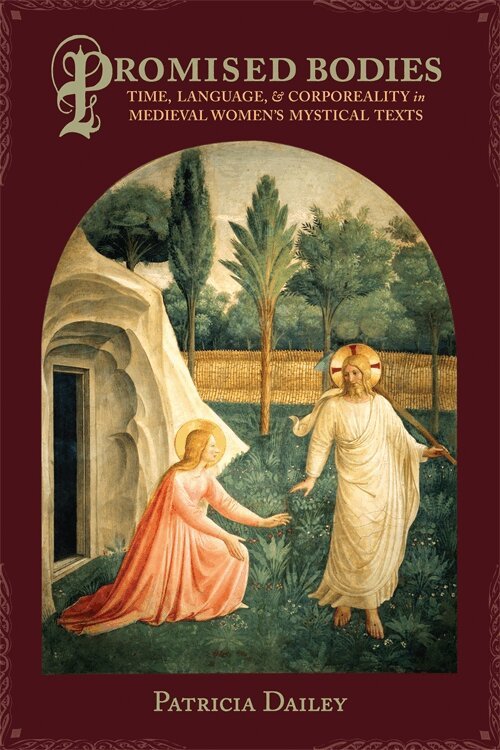
    Promised Bodies

    Time, Language, and Corporeality in Medieval Women's Mystical Texts

    AvPatricia Dailey

    Inbunden, Engelska, 2013

    Del i serien Gender, Theory, and Religion

    1 256 kr

    Beställningsvara. Skickas inom 3-6 vardagar. Fri frakt över 249 kr.

    Beskrivning

    In the Christian tradition, especially in the works of Paul, Augustine, and the exegetes of the Middle Ages, the body is a twofold entity consisting of inner and outer persons that promises to find its true materiality in a time to come. A potentially transformative vehicle, it is a dynamic mirror that can reflect the work of the divine within and substantially alter its own materiality if receptive to divine grace. The writings of Hadewijch of Brabant, a thirteenth-century beguine, engage with this tradition in sophisticated ways both singular to her mysticism and indicative of the theological milieu of the twelfth and thirteenth centuries. Crossing linguistic and historical boundaries, Patricia Dailey connects the embodied poetics of Hadewijch's visions, writings, and letters to the work of Julian of Norwich, Hildegard of Bingen, Marguerite of Oingt, and other mystics and visionaries.She establishes new criteria to more consistently understand and assess the singularity of women's mystical texts and, by underscoring the similarities between men's and women's writings of the time, collapses traditional conceptions of gender as they relate to differences in style, language, interpretative practices, forms of literacy, and uses of textuality.

    Produktinformation

    • Utgivningsdatum:2013-08-27
    • Mått:152 x 229 x 22 mm
    • Vikt:574 g
    • Format:Inbunden
    • Språk:Engelska
    • Serie:Gender, Theory, and Religion
    • Antal sidor:272
    • Förlag:Columbia University Press
    • ISBN:9780231161206

    Utforska kategorier

    • Religion: allmänt inom Filosofi och religion
    • Kristendom inom Filosofi och religion

    Mer om författaren

    Patricia Dailey is an associate professor of English and comparative literature at Columbia University.

    Recensioner i media

    Promised Bodies is a contribution at once to the study of medieval Christian mystical theology and to that of medieval women's religious writing. These two fields are adjacent and have been in dialogue for more than a century, yet they have never engaged with the intellectual energy that Patricia Dailey brings to bear on them here. -- Nicholas Watson, Harvard University Both learned and delightful, both sweeping and precise, Promised Bodies sets a new standard for the study of the mystical tradition in the Western Middle Ages. Reading across linguistic, temporal, and institutional boundaries, Patricia Dailey provides a compelling new perspective on the eternally perplexing nature of embodiment and its formal incarnation in writing. -- Bruce Holsinger, University of Virginia Patricia Dailey's Promised Bodies is a truly remarkable study that will transform the way we read and teach medieval mystical texts. Analyzing the thirteenth-century Middle Dutch writings of the gifted mystic Hadewijch and placing her writings in the context of Pauline and Augustinian conceptions of the body as a "twofold entity" of considerable complexity and their medieval reception, it works out the problem of the body in mystical writing that has plagued literary scholars since they first took on such texts as objects of study in the mid-twentieth century. Integrating her deep knowledge of medieval theology and philosophy, Dailey not only explains why the use of bodily metaphors in the description of mystical experience can be so perplexing, she also makes sense of them. In so doing, she offers us a new means of reading women's mysticism that allows us to appreciate the sophistication of these texts without compartmentalizing them as "merely" somatic and irrational and therefore feminine and incidental. -- Sara Poor, Princeton University Excellent and very full of notes. Choice This work of historical theology will be essential for libraries, graduate students, and scholars of medieval theology in general and of women's mysticism in particular, along with all those interested in the question of embodiment and the relationship between theology and poetics. Horizons An insightful and profound reading of medieval women mystics... Dailey's work is highly recommended for graduate students and scholars of medieval theology and mysticism, as well as scholars of religious literature. Religious Studies Review Represents an important and fresh addition to the debate surrounding gender and the religious literature written by women. Ons Geestelijk Erf Dailey presents a bold new approach to the study of medieval women's mystical literature. -- Jessica A. Boon Modern Philology Dailey's work will now be indispensable for anyone who wants to understand this most elusive of mystics, or to think in a more sophisticated way about mystical bodies. Church History

    Innehållsförteckning

    • Acknowledgments Abbreviations Introduction 1. Children of Promise, Children of the Flesh: Augustine's Two Bodies 2. The Mystic's Two Bodies: The Temporal and Material Poetics of Visionary Texts 3. Werke and the Postscriptum of the Soul 4. Living Song: Dwelling in Hadewijch's Liederen Conclusion Notes Bibliography Index