• Fri frakt över 249 kr
  • •
  • Snabba leveranser
  • •
  • Billiga böcker
Kundservice

Du är på sajten för privatpersoner.

Företag, bibliotek eller offentlig verksamhet?

Du handlar på classic.bokus.com, där alla dina funktioner finns intakta.
Till classic.bokus.com
Bokus logotyp. Gå till startsidan.
  • Erbjudanden
  • Nyheter
  • Student
  • Topplistor
  • Barn & ungdom
  • Bokus Play
  • E-böcker
  • Pocketböcker
  • Spel & pussel

10% rabatt på allt med kod: NYSTART10 →

Sidfot

Mina sidor

    Hjälp

    • Kundservice
    • Vanliga frågor och svar
    • Frakt och leverans
    • Retur vid ångerrätt
    • Reklamera vara
    • Betalning
    • Köpvillkor
    • Allmänna villkor
    • Information om webbplatsens tillgänglighet

    Om Bokus

    • Om oss
    • Pressrum
    • För studenter
    • För företag
    • För bibliotek och offentlig verksamhet
    • För leverantörer
    • Hållbarhet

    Populärt

    • Aktuella erbjudanden
    • Presentkort
    • Studentlitteratur
    • Nya böcker
    • Topplistor
    • Signerade böcker
    • Engelska böcker

    Inspiration

    • Boktips
    • BookTok
    • Populära bokserier
    • Barnbokskaraktärer
    • Populära författare
    Logotyp för Bokus
    Följ oss på Facebook (extern länk)Följ oss på Instagram (extern länk)Följ oss på YouTube (extern länk)Följ oss på TikTok (extern länk)
    bokus @ CookiesAnpassa cookiesIntegritetspolicyKöpvillkor
    Till Citymail hemsida (extern länk)Till Budbee hemsida (extern länk)Till Postnord hemsida (extern länk)Till Schenker hemsida (extern länk)Till Early Bird hemsida (extern länk)Till Walleys hemsida (extern länk)
    1. Filosofi och religion
    2. Religion och tro
    3. Alternativa trosföreställningar
    4. Magi och ockulta studier

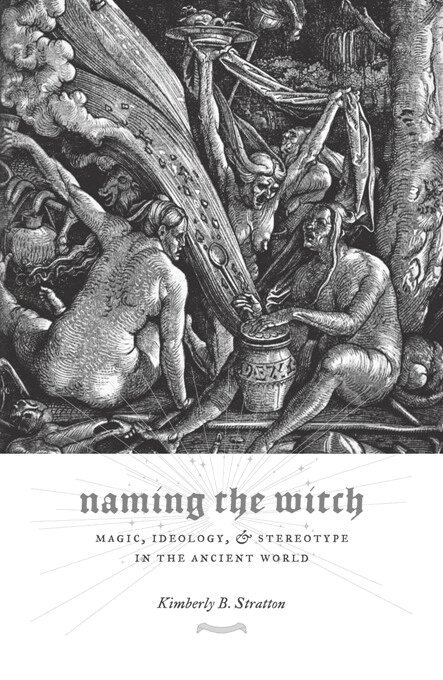
    Naming the Witch

    Magic, Ideology, and Stereotype in the Ancient World

    AvKimberly B. Stratton

    Inbunden, Engelska, 2007

    Del i serien Gender, Theory, and Religion

    2 138 kr

    Beställningsvara. Skickas inom 3-6 vardagar. Fri frakt över 249 kr.

    Fler format och utgåvor

    Häftad

    293 kr

    Beskrivning

    Kimberly B. Stratton investigates the cultural and ideological motivations behind early imaginings of the magician, the sorceress, and the witch in the ancient world. Accusations of magic could carry the death penalty or, at the very least, marginalize the person or group they targeted. But Stratton moves beyond the popular view of these accusations as mere slander. In her view, representations and accusations of sorcery mirror the complex struggle of ancient societies to define authority, legitimacy, and Otherness. Stratton argues that the concept "magic" first emerged as a discourse in ancient Athens where it operated part and parcel of the struggle to define Greek identity in opposition to the uncivilized "barbarian" following the Persian Wars. The idea of magic then spread throughout the Hellenized world and Rome, reflecting and adapting to political forces, values, and social concerns in each society. Stratton considers the portrayal of witches and magicians in the literature of four related periods and cultures: classical Athens, early imperial Rome, pre-Constantine Christianity, and rabbinic Judaism.She compares patterns in their representations of magic and analyzes the relationship between these stereotypes and the social factors that shaped them. Stratton's comparative approach illuminates the degree to which magic was (and still is) a cultural construct that depended upon and reflected particular social contexts. Unlike most previous studies of magic, which treated the classical world separately from antique Judaism, Naming the Witch highlights the degree to which these ancient cultures shared ideas about power and legitimate authority, even while constructing and deploying those ideas in different ways. The book also interrogates the common association of women with magic, denaturalizing the gendered stereotype in the process. Drawing on Michel Foucault's notion of discourse as well as the work of other contemporary theorists, such as Homi K. Bhabha and Bruce Lincoln, Stratton's bewitching study presents a more nuanced, ideologically sensitive approach to understanding the witch in Western history.

    Produktinformation

    • Utgivningsdatum:2007-11-09
    • Mått:160 x 235 x 30 mm
    • Vikt:540 g
    • Format:Inbunden
    • Språk:Engelska
    • Serie:Gender, Theory, and Religion
    • Antal sidor:312
    • Förlag:Columbia University Press
    • ISBN:9780231138369
    • Utmärkelser:Winner of Best First Book in the History of Religions, American Academy of Religion 2008

    Utforska kategorier

    • Magi och ockulta studier inom Filosofi och religion

    Mer om författaren

    Kimberly B. Stratton is an associate professor in the College of Humanities at Carleton University. She grew up in Seattle, holds a B.A. in English and religion from Barnard College, an M.T.S. from Harvard University, and a Ph.D. in the history of religions in late antiquity from Columbia University. She has also studied at the Hebrew University of Jerusalem. Her research covers the fields of early Christianity, rabbinic Judaism, and Greco-Roman culture and religion.

    Recensioner i media

    Naming the Witch is a well argued, well constructed book that can be highly recommended. -- Patrick Maille Bryn Mawr Classical Review A scrupulous and highly innovative study of the phenomenon of "magic" in the ancient world... A significant contribution to the discussion... Recommendable to all readers. -- Thomas J. Kraus Review of Biblical Literature This is one of the most stimulating and intelligent of many studies of ancient magic in recent scholarship... -- Ian H. Henderson Toronto Journal of Theology

    Innehållsförteckning

    • Preface Acknowledgments Abbreviations 1. Magic, Discourse, and Ideology 2. Barbarians, Magic, and Construction of the Other in Athens 3. Mascula Libido: Women, Sex, and Magic in Roman Rhetoric and Ideology 4. My Miracle, Your Magic: Heresy, Authority, and Early Christianities 5. Caution in the Kosher Kitchen: Magic, Identity, and Authority in Rabbinic Literature Epilogue Works Cited Index