• Fri frakt över 249 kr
  • •
  • Snabba leveranser
  • •
  • Billiga böcker
Kundservice

Du är på sajten för privatpersoner.

Företag, bibliotek eller offentlig verksamhet?

Du handlar på classic.bokus.com, där alla dina funktioner finns intakta.
Till classic.bokus.com
Bokus logotyp. Gå till startsidan.
  • Erbjudanden
  • Nyheter
  • Student
  • Topplistor
  • Barn & ungdom
  • Bokus Play
  • E-böcker
  • Pocketböcker
  • Spel & pussel

10% studentrabatt med kod TERM26

Sidfot

Mina sidor

    Hjälp

    • Kundservice
    • Vanliga frågor och svar
    • Frakt och leverans
    • Retur vid ångerrätt
    • Reklamera vara
    • Betalning
    • Köpvillkor
    • Allmänna villkor
    • Information om webbplatsens tillgänglighet

    Om Bokus

    • Om oss
    • Pressrum
    • För studenter
    • För företag
    • För bibliotek och offentlig verksamhet
    • För leverantörer
    • Hållbarhet

    Populärt

    • Aktuella erbjudanden
    • Presentkort
    • Studentlitteratur
    • Nya böcker
    • Topplistor
    • Signerade böcker
    • Engelska böcker

    Inspiration

    • Boktips
    • BookTok
    • Populära bokserier
    • Barnbokskaraktärer
    • Populära författare
    Logotyp för Bokus
    Följ oss på Facebook (extern länk)Följ oss på Instagram (extern länk)Följ oss på YouTube (extern länk)Följ oss på TikTok (extern länk)
    bokus @ CookiesAnpassa cookiesIntegritetspolicyKöpvillkor
    Till Citymail hemsida (extern länk)Till Budbee hemsida (extern länk)Till Postnord hemsida (extern länk)Till Schenker hemsida (extern länk)Till Early Bird hemsida (extern länk)Till Walleys hemsida (extern länk)
    1. Historia och arkeologi
    2. Historia
    3. Asiens historia

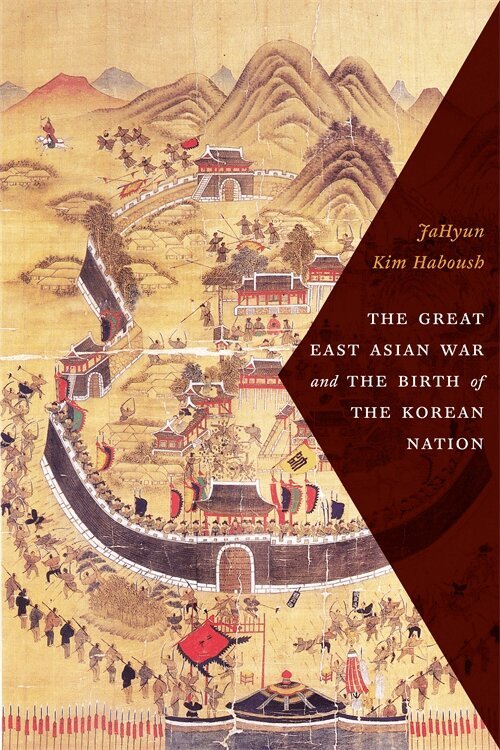
    Great East Asian War and the Birth of the Korean Nation

    AvJaHyun Kim Haboush,William Haboush

    Inbunden, Engelska, 2016

    1 101 kr

    Beställningsvara. Skickas inom 5-8 vardagar. Fri frakt över 249 kr.

    Fler format och utgåvor

    Häftad

    276 kr

    Beskrivning

    The Imjin War (1592-1598) was a grueling conflict that wreaked havoc on the towns and villages of the Korean Peninsula. The involvement of Chinese, Japanese, and Korean forces, not to mention the regional scope of the war, was the largest the world had seen, and the memory dominated East Asian memory until World War II. Despite massive regional realignments, Korea's Choson Dynasty endured, but within its polity a new, national discourse began to emerge. Meant to inspire civilians to rise up against the Japanese army, this potent rhetoric conjured a unified Korea and intensified after the Manchu invasions of 1627 and 1636. By documenting this phenomenon, JaHyun Kim Haboush offers a compelling counternarrative to Western historiography, which ties Korea's idea of nation to the imported ideologies of modern colonialism. She instead elevates the formative role of the conflicts that defined the second half of the Choson Dynasty, which had transfigured the geopolitics of East Asia and introduced a national narrative key to Korea's survival.Re-creating the cultural and political passions that bound Choson society together during this period, Haboush reclaims the root story of solidarity that helped Korea thrive well into the modern era.

    Produktinformation

    • Utgivningsdatum:2016-03-08
    • Mått:152 x 229 x undefined mm
    • Format:Inbunden
    • Språk:Engelska
    • Antal sidor:240
    • Förlag:Columbia University Press
    • ISBN:9780231172288

    Utforska kategorier

    • Asiens historia inom Historia och arkeologi
    • Militärhistoria inom Historia och arkeologi

    Mer om författaren

    JaHyun Kim Haboush (1940-2011) was the King Sejong Professor of Korean Studies at Columbia University. Her Columbia University Press publications include A Korean War Captive in Japan, 1597-1600: The Writings of Kang Hang (2013); Epistolary Korea: Letters in the Communicative Space of the Choson, 1392-1910 (2009); The Confucian Kingship in Korea: Yongjo and the Politics of Sagacity (2001); and A Heritage of Kings: One Man's Monarchy in the Confucian World (1988). William J. Haboush is professor of mathematics at the University of Illinois at Urbana-Champaign. Jisoo M. Kim is the Korea Foundation Assistant Professor of History, International Affairs, and East Asian Languages and Literatures at the Elliott School of International Affairs, George Washington University.

    Recensioner i media

    As the first work to thoroughly examine the formation of the Korean nation before the modern era, The Great East Asian War and the Birth of the Korean Nation is an enormous contribution to scholarship on Korean and East Asian history and to the study of nations and nationalism throughout the world. It is certain to cement JaHyun Kim Haboush's legacy as one of the most brilliant scholars of her era. -- Jungwon Kim, Columbia University, co-translator of Wrongful Death: Selected Inquest Records from Nineteenth Century Korea This singular book can be savored on many levels. The lover of fiction will find high dramas of alien invasions and sacked homes, replete with blood and valor worthy of Hollywood. The scholar-of East Asia or elsewhere-will be challenged to rethink the relationship between the nation, language, and modernity. It saddens me that there will be no more books by the incomparable JaHyun Kim Haboush after this one. -- Dorothy Ko, Barnard College, coeditor of The Birth of Chinese Feminism: Essential Texts in Transnational Theory A welcome addition to recent scholarship... Haboush's manuscript leaves readers with much to ponder about the Imjin War, literature, and nationhood in the premodern world... Highly recommended. Choice Required reading for anyone interested in the discourse of a nation more generally and in this particular war. The Sixteenth Century Journal A welcome contribution to the study of Choson Korea. -- Nam-Lin Hur Journal of Asian Studies

    Innehållsförteckning

    • Foreword, by William J. Haboush Introduction 1. The Volunteer Army and the Discourse of Nation 2. The Volunteer Army and the Emergence of Imagined Community 3. War of Words: The Changing Nature of Literary Chinese in the Japanese Occupation 4. Language Strategy: The Emergence of a Vernacular National Space 5. The Aftermath: Dream Journeys and the Culture of Commemoration Publications by JaHyun Kim Haboush Notes Bibliography Index