• Fri frakt över 249 kr
  • •
  • Snabba leveranser
  • •
  • Billiga böcker
Kundservice

Du är på sajten för privatpersoner.

Företag, bibliotek eller offentlig verksamhet?

Du handlar på classic.bokus.com, där alla dina funktioner finns intakta.
Till classic.bokus.com
Bokus logotyp. Gå till startsidan.
  • Erbjudanden
  • Nyheter
  • Student
  • Topplistor
  • Barn & ungdom
  • Bokus Play
  • E-böcker
  • Pocketböcker
  • Spel & pussel

10% rabatt på allt med kod: NYSTART10 →

Sidfot

Mina sidor

    Hjälp

    • Kundservice
    • Vanliga frågor och svar
    • Frakt och leverans
    • Retur vid ångerrätt
    • Reklamera vara
    • Betalning
    • Köpvillkor
    • Allmänna villkor
    • Information om webbplatsens tillgänglighet

    Om Bokus

    • Om oss
    • Pressrum
    • För studenter
    • För företag
    • För bibliotek och offentlig verksamhet
    • För leverantörer
    • Hållbarhet

    Populärt

    • Aktuella erbjudanden
    • Presentkort
    • Studentlitteratur
    • Nya böcker
    • Topplistor
    • Signerade böcker
    • Engelska böcker

    Inspiration

    • Boktips
    • BookTok
    • Populära bokserier
    • Barnbokskaraktärer
    • Populära författare
    Logotyp för Bokus
    Följ oss på Facebook (extern länk)Följ oss på Instagram (extern länk)Följ oss på YouTube (extern länk)Följ oss på TikTok (extern länk)
    bokus @ CookiesAnpassa cookiesIntegritetspolicyKöpvillkor
    Till Citymail hemsida (extern länk)Till Budbee hemsida (extern länk)Till Postnord hemsida (extern länk)Till Schenker hemsida (extern länk)Till Early Bird hemsida (extern länk)Till Walleys hemsida (extern länk)
    1. Historia och arkeologi
    2. Historia
    3. Historia: särskilda händelser och ämnen
    4. Socialhistoria och kulturhistoria

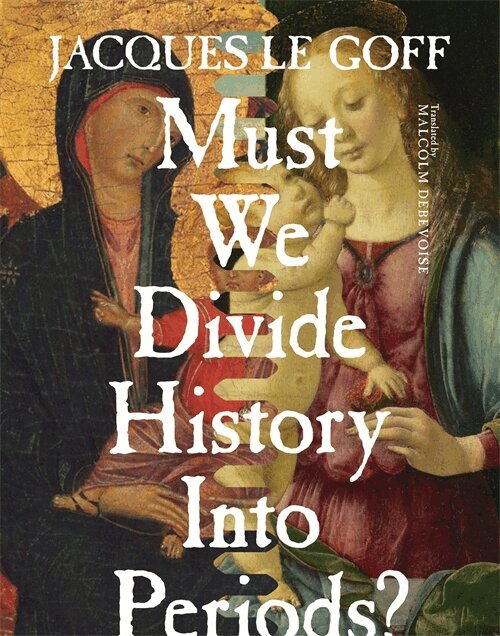
    Must We Divide History Into Periods?

    AvJacques Le Goff

    Inbunden, Engelska, 2015

    Del i serien European Perspectives: A Series in Social Thought and Cultural Criticism

    764 kr

    Beställningsvara. Skickas inom 5-8 vardagar. Fri frakt över 249 kr.

    Fler format och utgåvor

    Häftad

    201 kr

    Beskrivning

    We have long thought of the Renaissance as a luminous era that marked a decisive break with the past, but the idea of the Renaissance as a distinct period arose only during the nineteenth century. Though the view of the Middle Ages as a dark age of unreason has softened somewhat, we still locate the advent of modern rationality in the Italian thought and culture of the fifteenth and sixteenth centuries. Jacques Le Goff pleads for a strikingly different view. In this, his last book, he argues persuasively that many of the innovations we associate with the Renaissance have medieval roots, and that many of the most deplorable aspects of medieval society continued to flourish during the Renaissance. We should instead view Western civilization as undergoing several "renaissances" following the fall of Rome, over the course of a long Middle Ages that lasted until the mid-eighteenth century. While it is indeed necessary to divide history into periods, Le Goff maintains, the meaningful continuities of human development only become clear when historians adopt a long perspective.Genuine revolutions-the shifts that signal the end of one period and the beginning of the next-are much rarer than we think.

    Produktinformation

    • Utgivningsdatum:2015-09-08
    • Mått:140 x 178 x undefined mm
    • Format:Inbunden
    • Språk:Engelska
    • Serie:European Perspectives: A Series in Social Thought and Cultural Criticism
    • Antal sidor:184
    • Förlag:Columbia University Press
    • ISBN:9780231173001
    • Översättare:Malcolm DeBevoise, Malcolm Debevoise

    Utforska kategorier

    • Socialhistoria och kulturhistoria inom Historia och arkeologi
    • Medeltiden inom Historia och arkeologi

    Mer om författaren

    Jacques Le Goff (1924-2014), for many years director of studies at the Ecole des Hautes Etudes en Sciences Sociales in Paris, was a highly influential member of the Annales School. Among his other works are Time, Work, and Culture in the Middle Ages and Constructing the Past: Essays in Historical Methodology. M. B. DeBevoise translates from the French and Italian in every branch of scholarship.

    Recensioner i media

    The value of this work lies in its consideration of Western early modern history and its reflection on how we perceive and try to control time. It is a memoir of intellectual landscape by a man who lived with his subject for half a century. Le Goff evokes how the naming of a new period entails the rejection of what precedes; when we decide 'this was the Renaissance,' we cast off a thing called the Middle Ages. Le Goff encourages us to avoid such partitions and appreciate time's continuum -- Andrea Tarnowski, Dartmouth College Time occupied Le Goff throughout his long and immensely fruitful career. The qualities of time-liturgical time, market time, peasant time-intrigued him, as did the ways it has been divided, measured, and represented. In Must We Divide History Into Periods?, Le Goff delights his readers with the suggestion that the Renaissance was but one of a series of creative episodes within Europe's long 'Middle Ages,' an epoch whose end is best found in the eighteenth century. -- Miri Rubin, Queen Mary University of London Le Goff was one of the truly great historians of our time, and his final reflections on the nature and responsibilities of our craft are lucid, profound, and humane. -- R. I. Moore, Newcastle University Acknowledging both the arbitrary nature of historical periodization and its necessity, Jacques Le Goff argued until his death for an appreciation of the fundamental unity of what is normally divided into the Middle Ages and the Renaissance. This final formulation of his arguments will be useful to generations of those who seek to understand the paradox of continuity and change in European history -- Patrick J. Geary, Institute for Advanced Study A good book that leaves the reader with interesting questions. -- Scott McLemee Inside Higher Ed Richly informative and thought-provoking. -- Walter Kaiser New York Review of Books [A] thought-provoking and eminently readable book. -- Helen Fulton Times Higher Education

    Innehållsförteckning

    • A Note on the Translation Preface Acknowledgments Prelude: Periodization and the Past 1. Early Periodizations 2. The Late Appearance of the Middle Ages 3. History, Education, Periodization 4. Birth of the Renaissance 5. The Renaissance Today 6. The Middle Ages Become the Dark Ages 7. A Long Middle Ages Conclusion: Periodization and Globalization Notes Bibliography Index