• Fri frakt över 249 kr
  • •
  • Snabba leveranser
  • •
  • Billiga böcker
Kundservice

Du är på sajten för privatpersoner.

Företag, bibliotek eller offentlig verksamhet?

Du handlar på classic.bokus.com, där alla dina funktioner finns intakta.
Till classic.bokus.com
Bokus logotyp. Gå till startsidan.
  • Erbjudanden
  • Nyheter
  • Student
  • Topplistor
  • Barn & ungdom
  • Bokus Play
  • E-böcker
  • Pocketböcker
  • Spel & pussel

10% rabatt på allt med kod: NYSTART10 →

Sidfot

Mina sidor

    Hjälp

    • Kundservice
    • Vanliga frågor och svar
    • Frakt och leverans
    • Retur vid ångerrätt
    • Reklamera vara
    • Betalning
    • Köpvillkor
    • Allmänna villkor
    • Information om webbplatsens tillgänglighet

    Om Bokus

    • Om oss
    • Pressrum
    • För studenter
    • För företag
    • För bibliotek och offentlig verksamhet
    • För leverantörer
    • Hållbarhet

    Populärt

    • Aktuella erbjudanden
    • Presentkort
    • Studentlitteratur
    • Nya böcker
    • Topplistor
    • Signerade böcker
    • Engelska böcker

    Inspiration

    • Boktips
    • BookTok
    • Populära bokserier
    • Barnbokskaraktärer
    • Populära författare
    Logotyp för Bokus
    Följ oss på Facebook (extern länk)Följ oss på Instagram (extern länk)Följ oss på YouTube (extern länk)Följ oss på TikTok (extern länk)
    bokus @ CookiesAnpassa cookiesIntegritetspolicyKöpvillkor
    Till Citymail hemsida (extern länk)Till Budbee hemsida (extern länk)Till Postnord hemsida (extern länk)Till Schenker hemsida (extern länk)Till Early Bird hemsida (extern länk)Till Walleys hemsida (extern länk)
    1. Samhälle och politik
    2. Krig och försvar
    3. Vapen och utrustning

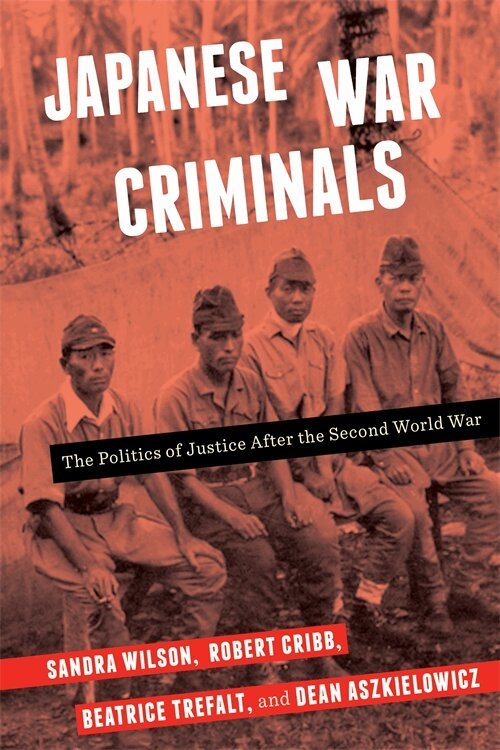
    Japanese War Criminals

    The Politics of Justice After the Second World War

    AvSandra Wilson,Robert Cribb

    Inbunden, Engelska, 2017

    680 kr

    Beställningsvara. Skickas inom 5-8 vardagar. Fri frakt över 249 kr.

    Beskrivning

    Beginning in late 1945, the United States, Britain, China, Australia, France, the Netherlands, and later the Philippines, the Soviet Union, and the People's Republic of China convened national courts to prosecute Japanese military personnel for war crimes. The defendants included ethnic Koreans and Taiwanese who had served with the armed forces as Japanese subjects. In Tokyo, the International Military Tribunal for the Far East tried Japanese leaders. While the fairness of these trials has been a focus for decades, Japanese War Criminals instead argues that the most important issues arose outside the courtroom. What was the legal basis for identifying and detaining subjects, determining who should be prosecuted, collecting evidence, and granting clemency after conviction? The answers to these questions helped set the norms for transitional justice in the postwar era and today contribute to strategies for addressing problematic areas of international law.Examining the complex moral, ethical, legal, and political issues surrounding the Allied prosecution project, from the first investigations during the war to the final release of prisoners in 1958, Japanese War Criminals shows how a simple effort to punish the guilty evolved into a multidimensional struggle that muddied the assignment of criminal responsibility for war crimes. Over time, indignation in Japan over Allied military actions, particularly the deployment of the atomic bombs, eclipsed anger over Japanese atrocities, and, among the Western powers, new Cold War imperatives took hold. This book makes a unique contribution to our understanding of the construction of the postwar international order in Asia and to our comprehension of the difficulties of implementing transitional justice.

    Produktinformation

    • Utgivningsdatum:2017-02-14
    • Mått:152 x 229 x 33 mm
    • Vikt:784 g
    • Format:Inbunden
    • Språk:Engelska
    • Antal sidor:440
    • Förlag:Columbia University Press
    • ISBN:9780231179225
    • Utmärkelser:Winner of New South Wales Premier's History Award, General History Category 2017

    Utforska kategorier

    • Vapen och utrustning inom Samhälle och politik
    • Asiens historia inom Historia och arkeologi
    • Folkrätt inom Juridik

    Mer om författaren

    Sandra Wilson is professor of history in the School of Arts and a fellow of the Asia Research Centre at Murdoch University. She is the author of The Manchurian Crisis and Japanese Society, 1931-33 (2002). Robert Cribb is professor of Asian history at the Australian National University. He is author (with Li Narangoa) of the Historical Atlas of Northeast Asia: Korea, Manchuria, Mongolia, Eastern Siberia (Columbia, 2014). Beatrice Trefalt is senior lecturer in Japanese studies at Monash University. She is the author of Japanese Army Stragglers and Memories of the War in Japan, 1950-1975 (2003), and coeditor, with Chris Dixon and Sean Brawley, of Competing Voices from the Pacific War (2009). Dean Aszkielowicz teaches at Murdoch University and is the author of The Australian Pursuit of Japanese War Criminals, 1943-1958: From Foe to Friend (forthcoming).

    Recensioner i media

    This exemplary work of collaborative scholarship represents a genuine breakthrough in our understanding of the processes behind, and consequences of, Allied efforts to prosecute Japanese war crimes in the aftermath of the Second World War. Drawing on archival sources gathered from all corners of the globe, it not only provides an impressive overview of the thousands of individual trials conducted by the Allies across the Asia-Pacific region, but also details the complex tangle of considerations that resulted in the release of all remaining prisoners by the end of 1958. Rejecting the simple opposition between politics and justice that has so often been used to frame discussions of the trials, it instead offers a deeply compelling account of the moral, legal and practical dilemmas that haunt every episode in this profoundly important history. -- Daniel Botsman, Yale University I cannot think of a similar work with such a broad scope...This book is a product of an enormous, novel, research effort and it shows. The authors illustrate the development of an Inter-Allied system of legal assistance for purposes ranging from the transfer of evidence to suspects and prisoners developed from 1946 and which worked until 1959. It makes for a fascinating account of international cooperation. -- Neil Boister, University of Waikato The Allied authorities meted out retributive justice to thousands of Japanese war criminals in the immediate aftermath of World War II. However, "the sentences were only the start of a new phase in applying justice to war criminals," so this book warns us, and compels us to consider the implications of the complex interplay of domestic politics and diplomacy that led to the eventual release of all convicted war criminals -- Yuma Totani, University of Hawaii

    Innehållsförteckning

    • Acknowledgments Note on Names, Spelling, and Terminology List of Abbreviations Introduction 1. Defining War Crimes and Creating Courts 2. Investigation and Arrest 3. In Court: Indictment, Trial, and Sentencing 4. Dilemmas of Detention and the First Misgivings 5. Shifting Mood, Shifting Location 6. Peace and Article 11 7. Japanese Pressure Mounts 8. Finding a Formula for Release 9. The Race to Clear Sugamo Conclusion Notes Bibliography Index