• Fri frakt över 249 kr
  • •
  • Snabba leveranser
  • •
  • Billiga böcker
Kundservice

Du är på sajten för privatpersoner.

Företag, bibliotek eller offentlig verksamhet?

Du handlar på classic.bokus.com, där alla dina funktioner finns intakta.
Till classic.bokus.com
Bokus logotyp. Gå till startsidan.
  • Erbjudanden
  • Nyheter
  • Student
  • Topplistor
  • Barn & ungdom
  • Bokus Play
  • E-böcker
  • Pocketböcker
  • Spel & pussel

10% rabatt på allt med kod: NYSTART10 →

Sidfot

Mina sidor

    Hjälp

    • Kundservice
    • Vanliga frågor och svar
    • Frakt och leverans
    • Retur vid ångerrätt
    • Reklamera vara
    • Betalning
    • Köpvillkor
    • Allmänna villkor
    • Information om webbplatsens tillgänglighet

    Om Bokus

    • Om oss
    • Pressrum
    • För studenter
    • För företag
    • För bibliotek och offentlig verksamhet
    • För leverantörer
    • Hållbarhet

    Populärt

    • Aktuella erbjudanden
    • Presentkort
    • Studentlitteratur
    • Nya böcker
    • Topplistor
    • Signerade böcker
    • Engelska böcker

    Inspiration

    • Boktips
    • BookTok
    • Populära bokserier
    • Barnbokskaraktärer
    • Populära författare
    Logotyp för Bokus
    Följ oss på Facebook (extern länk)Följ oss på Instagram (extern länk)Följ oss på YouTube (extern länk)Följ oss på TikTok (extern länk)
    bokus @ CookiesAnpassa cookiesIntegritetspolicyKöpvillkor
    Till Citymail hemsida (extern länk)Till Budbee hemsida (extern länk)Till Postnord hemsida (extern länk)Till Schenker hemsida (extern länk)Till Early Bird hemsida (extern länk)Till Walleys hemsida (extern länk)
    1. Samhälle och politik
    2. Politik och statsskick
    3. Centralt styre och förvaltning

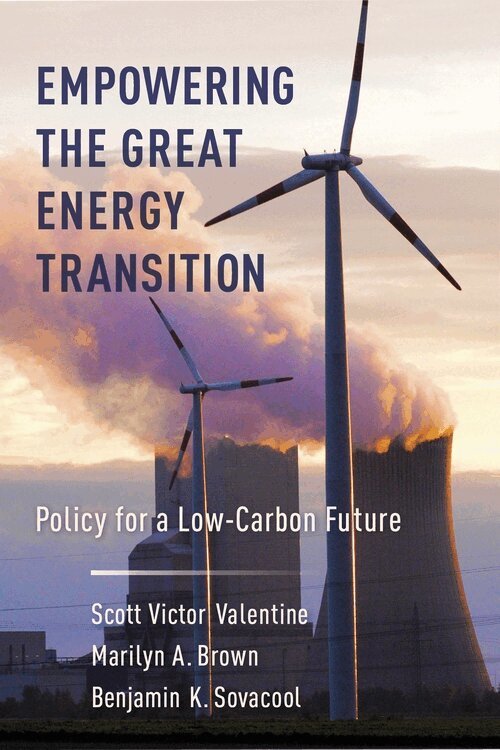
    Empowering the Great Energy Transition

    Policy for a Low-Carbon Future

    AvScott Valentine,Benjamin Sovacool

    Inbunden, Engelska, 2019

    293 kr

    Beställningsvara. Skickas inom 5-8 vardagar. Fri frakt över 249 kr.

    Beskrivning

    At a time when climate-change deniers hold the reins of power in the United States and international greenhouse gas negotiations continue at a slow crawl, what options are available to cities, companies, and consumers around the world who seek a cleaner future? Scott Victor Valentine, Marilyn A. Brown, and Benjamin K. Sovacool explore developments and strategies that will help fast-track the transition to renewable energy. They provide an expert analysis of the achievable steps that citizens, organizational leaders, and policy makers can take to put their commitments to sustainability into practice.Empowering the Great Energy Transition examines trends that suggest a transition away from carbon-intensive energy sources is inevitable—there are too many forces for change at work to stop a shift to clean energy. Yet under the status quo, change will be too slow to avert the worst consequences of climate change. Humanity is on a path to incur avoidable social, environmental, and economic costs. Valentine, Brown, and Sovacool argue that new policies and business models are needed to surmount the hurdles separating the current consumption model from a sustainable energy future. Empowering the Great Energy Transition shows that with well-placed efforts, we can set humanity on a course that supports entrepreneurs and communities in mitigating the environmental harm caused by technologies whose time has come and gone.

    Produktinformation

    • Utgivningsdatum:2019-12-17
    • Mått:152 x 229 x 29 mm
    • Vikt:584 g
    • Format:Inbunden
    • Språk:Engelska
    • Antal sidor:336
    • Förlag:Columbia University Press
    • ISBN:9780231185967

    Utforska kategorier

    • Centralt styre och förvaltning inom Samhälle och politik
    • Miljövetenskap och miljöpolitik inom Naturvetenskap och teknik
    • Naturvetenskap:allmänt inom Naturvetenskap och teknik

    Mer om författaren

    Scott Victor Valentine is professor and associate dean of sustainability and urban planning at RMIT University. His books include Wind Power Politics and Policies (2014) and, also with Brown and Sovacool, Fact and Fiction in Global Energy Policy: Fifteen Contentious Questions (2016).Marilyn A. Brown is a Regents’ and Brook Byers Professor in the School of Public Policy at the Georgia Institute of Technology, where she directs the Climate and Energy Policy Lab. A former utility regulator, she is a corecipient of the 2007 Nobel Peace Prize for the IPCC Report on Mitigation of Climate Change.Benjamin K. Sovacool is professor of energy policy at the Science Policy Research Unit at the University of Sussex, where he serves as director of the Sussex Energy Group and of the Center on Innovation and Energy Demand. His publications include Global Energy Justice: Problems, Principles, and Practices (2014).

    Recensioner i media

    Anyone offering or believing that bumper sticker solutions exist for reconciling global energy and environmental concerns in the twenty-first century should be humbled after reading this book. Valentine, Brown, and Sovacool offer an erudite, sobering, and compelling analysis of the complicated challenges, tradeoffs, and opportunities involved in transitioning globally to a renewable energy future. Writing in prose accessible to experts and laypersons alike, the authors adroitly integrate a multidisciplinary body of research (pro and con) to make a full-throated case for shifting to a renewable energy future. Readers may or may not agree with their arguments for an energy reset, but they cannot ignore the data, realpolitik, and strategic analysis the authors provide to explain and address the often halting and mostly patchworked progress made so far.

    Innehållsförteckning

    • PrefaceAcknowledgments1. The Great Energy Transition2. Sneak Preview of the Challenges to the Energy Transition3. The Uncertainties of Climate Change4. Managing Uncertainties While Promoting Technological Evolution5. Fostering and Financing the Energy Infrastructure Transition6. Policies for Driving Innovation and Expediting the Transition7. Consumers as Agents of Change8. Minimizing Governance Barriers and Creating Polycentric Networks9. Faster, Further, Farther: Empowering the Great Energy TransitionNotesIndex