• Fri frakt över 249 kr
  • •
  • Snabba leveranser
  • •
  • Billiga böcker
Kundservice

Du är på sajten för privatpersoner.

Företag, bibliotek eller offentlig verksamhet?

Du handlar på classic.bokus.com, där alla dina funktioner finns intakta.
Till classic.bokus.com
Bokus logotyp. Gå till startsidan.
  • Erbjudanden
  • Nyheter
  • Student
  • Topplistor
  • Barn & ungdom
  • Bokus Play
  • E-böcker
  • Pocketböcker
  • Spel & pussel

10% rabatt på allt med kod NYSTART10 →

Sidfot

Mina sidor

    Hjälp

    • Kundservice
    • Vanliga frågor och svar
    • Frakt och leverans
    • Retur vid ångerrätt
    • Reklamera vara
    • Betalning
    • Köpvillkor
    • Allmänna villkor
    • Information om webbplatsens tillgänglighet

    Om Bokus

    • Om oss
    • Pressrum
    • För studenter
    • För företag
    • För bibliotek och offentlig verksamhet
    • För leverantörer
    • Hållbarhet

    Populärt

    • Aktuella erbjudanden
    • Presentkort
    • Studentlitteratur
    • Nya böcker
    • Topplistor
    • Signerade böcker
    • Engelska böcker

    Inspiration

    • Boktips
    • BookTok
    • Populära bokserier
    • Barnbokskaraktärer
    • Populära författare
    Logotyp för Bokus
    Följ oss på Facebook (extern länk)Följ oss på Instagram (extern länk)Följ oss på YouTube (extern länk)Följ oss på TikTok (extern länk)
    bokus @ CookiesAnpassa cookiesIntegritetspolicyKöpvillkor
    Till Citymail hemsida (extern länk)Till Budbee hemsida (extern länk)Till Postnord hemsida (extern länk)Till Schenker hemsida (extern länk)Till Early Bird hemsida (extern länk)Till Walleys hemsida (extern länk)
    1. Samhälle och politik
    2. Samhälle och kultur
    3. Kultur och medier
    4. Referensverk och tvärvetenskap

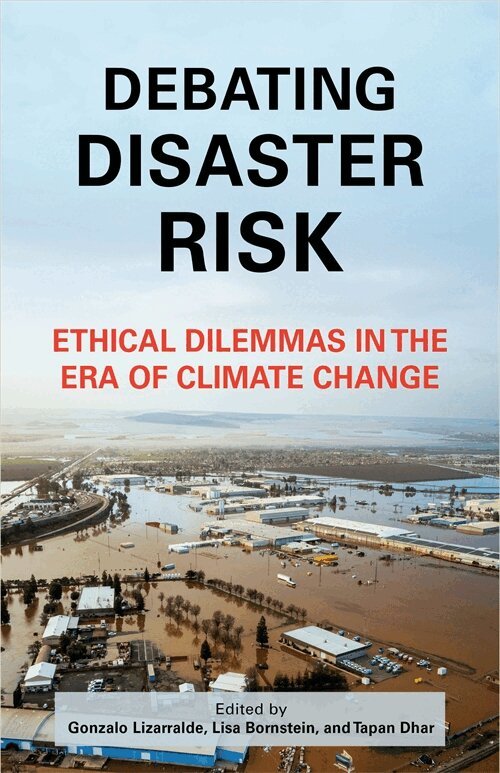
    Debating Disaster Risk

    Ethical Dilemmas in the Era of Climate Change

    AvGonzalo Lizarralde,Lisa M. Bornstein

    Inbunden, Engelska, 2025

    1 148 kr

    Beställningsvara. Skickas inom 5-8 vardagar. Fri frakt över 249 kr.

    Beskrivning

    Dealing with the risks of climate change and disaster is a political process. It produces winners and losers, mobility and permanence, radical change and continuity, relief and suffering. For some, it ultimately leads to life or death. Yet consultants, academics, humanitarian agents, and politicians often simply propose well-intentioned ideas—resilience, sustainability, community participation, emergency shelter, green development—while failing to perceive the blind spots and unintended consequences of such approaches.Debating Disaster Risk brings together leading global experts to explore the controversies that emerge—and the tough decisions that must be made—when cities, people, and the environment are at risk. Scholars and practitioners discuss the challenges of reducing vulnerability and rebuilding after destruction in an accessible and lively debate format, with commentary by researchers, students, and development workers from across the world. They emphasize the ethical consequences of decisions about how cities and communities should prepare for and react to disasters, considering issues such as housing, environmental protection, urban development, and infrastructure recovery.A valuable resource for scholars, students, and practitioners in a variety of fields, this book provides an in-depth analysis of the difficult choices we face in dealing with disasters. As climate change accelerates, Debating Disaster Risk invites readers to grapple with the most pressing controversies.

    Produktinformation

    • Utgivningsdatum:2025-08-19
    • Mått:140 x 216 x undefined mm
    • Format:Inbunden
    • Språk:Engelska
    • Antal sidor:376
    • Förlag:Columbia University Press
    • ISBN:9780231209663

    Utforska kategorier

    • Referensverk och tvärvetenskap inom Samhälle och politik
    • Miljövetenskap och miljöpolitik inom Naturvetenskap och teknik
    • Sociala och etiska frågor inom Samhälle och politik

    Mer om författaren

    Gonzalo Lizarralde is a professor in the School of Architecture at Université de Montréal, where he holds the Fayolle-Magil Construction Chair in Architecture, Built Environment, and Sustainability.Lisa Bornstein is an associate professor and the director of the School of Urban Planning at McGill University.Tapan Dhar is an assistant professor in the School of the Environment at Trent University.

    Recensioner i media

    The authors of Debating Disaster Risk bring their expertise in a multitude of fields to examine the often unintended consequences and aftereffects of decisions made in grappling with climate change, disasters, and risk more broadly. Debating Disaster Risk delves beyond success or failure and into the fraught conflict of it all, a critical space to maintain in such discussions, but one all too often set aside for comfort.

    Innehållsförteckning

    • PrefaceAcknowledgmentsIntroduction: The Problem of Explaining Problems, by Tapan Dhar, Lisa Bornstein, and Gonzalo LizarraldePart I. Language and Meanings: Language and Meanings of Risk, Adaptation, and Resilience in Negril, Jamaica, by Tapan Dhar, Gonzalo Lizarralde, and Lisa Bornstein1. On Fragility: Are Cities and Human Systems Increasingly Fragile in the Face of Disasters?, by Thomas Fisher and Michael Mehaffy2. On Power Imbalances: Is Disaster-Related Research and Practice in the Global South Unfavorably Guided by Northern Ideas?, by J. C. Gaillard and Carmen Mendoza-Arroyo3. On Resilience: Is the Concept of Resilience Useful in the Fields of Disaster Risk Reduction and the Built Environment, or Is It Just Another Abused and Malleable Buzzword?, by Daniel Aldrich and Jonathan JosephPart II. Tough Choices: Tough Choices in Responding to Disasters: Flooding in Mozambique and California, by Lisa Bornstein, Tapan Dhar, and Gonzalo Lizarralde4. On Emergency Response: Does Temporary Housing Hinder the Recovery Process?, by Ilan Kelman and Graham Saunders5. On Shelter: Should Refugees Be Sheltered in Contained, Organized Camps or Be Allowed to Disperse Throughout Urban and Rural Areas?, by Kamel Abboud and Jeff Crisp6. On Participation: Is Public Participation the Key to Success for Urban Projects and Initiatives Aimed at Disaster Risk Reduction?, by Christopher Bryant and Camillo Boano7. On Aid: Does Aid Actually Aid in Avoiding Disasters and Rebuilding After Disasters?, by Anna Konotchick and Jason von MedingPart III. What Ought to Be: Living with Risk or Relocating in Isabela de Sagua, Cuba, by Gonzalo Lizarralde, Tapan Dhar, and Lisa Bornstein8. On External Agents and Consultants: Do International Agencies, Consultants, and Other “Orchestrators” Truly Help Cities Reduce Climate-Related Risks?, by Lorenzo Chelleri and Craig Johnson9. On Regulations: Should Governments Devise and Enforce Standards for Low-Cost Housing in Developing Countries?, by Edmundo Werna and Brian Aldrich 10. On Environmental Performance Indicators: Should Construction and Urban Projects in Developing Countries Adopt Green Building Certifications Created in Developed and Industrialized Nations?, by Jared O. Blum and David Wachsmuth 11. On Adaptation: Is Adapting to Climate Change Our Best Choice?, by Deborah Harford and Silja KleppConclusions: Ethics in Decisions on Tough Problems, by Gonzalo Lizarralde, Lisa Bornstein, and Tapan Dhar List of ContributorsIndex