• Fri frakt över 249 kr
  • •
  • Snabba leveranser
  • •
  • Billiga böcker
Kundservice

Du är på sajten för privatpersoner.

Företag, bibliotek eller offentlig verksamhet?

Du handlar på classic.bokus.com, där alla dina funktioner finns intakta.
Till classic.bokus.com
Bokus logotyp. Gå till startsidan.
  • Erbjudanden
  • Nyheter
  • Student
  • Topplistor
  • Barn & ungdom
  • Bokus Play
  • E-böcker
  • Pocketböcker
  • Spel & pussel

10% rabatt på allt med kod NYSTART10 →

Sidfot

Mina sidor

    Hjälp

    • Kundservice
    • Vanliga frågor och svar
    • Frakt och leverans
    • Retur vid ångerrätt
    • Reklamera vara
    • Betalning
    • Köpvillkor
    • Allmänna villkor
    • Information om webbplatsens tillgänglighet

    Om Bokus

    • Om oss
    • Pressrum
    • För studenter
    • För företag
    • För bibliotek och offentlig verksamhet
    • För leverantörer
    • Hållbarhet

    Populärt

    • Aktuella erbjudanden
    • Presentkort
    • Studentlitteratur
    • Nya böcker
    • Topplistor
    • Signerade böcker
    • Engelska böcker

    Inspiration

    • Boktips
    • BookTok
    • Populära bokserier
    • Barnbokskaraktärer
    • Populära författare
    Logotyp för Bokus
    Följ oss på Facebook (extern länk)Följ oss på Instagram (extern länk)Följ oss på YouTube (extern länk)Följ oss på TikTok (extern länk)
    bokus @ CookiesAnpassa cookiesIntegritetspolicyKöpvillkor
    Till Citymail hemsida (extern länk)Till Budbee hemsida (extern länk)Till Postnord hemsida (extern länk)Till Schenker hemsida (extern länk)Till Early Bird hemsida (extern länk)Till Walleys hemsida (extern länk)
    1. Naturvetenskap och teknik
    2. Matematik och naturvetenskap
    3. Naturvetenskap:allmänt
    4. Populärvetenskap

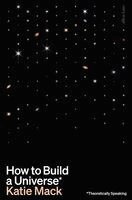
    How to Build a Universe

    (Theoretically Speaking)

    AvKatie Mack

    Inbunden, Engelska, 2027

    263 kr

    Kommande

    Beskrivning

    'In this brilliant book, Mack makes learning feel thrilling, and along the way helps us to understand what science actually does' John Green From one of the most exciting voices in science, a fascinating behind-the-scenes tour of modern physicsWhat is the universe made of, and how do we know? For decades, physicists have studied this question, circling the most fundamental yet enigmatic building blocks of our world, descending to a level below atoms into the mysterious particles and fields that make up the quantum realm. This astonishing world is the key to understanding the workings of the universe, but it has held its secrets close.In How to Build a Universe, celebrated astrophysicist Katie Mack pulls back the curtain on these mysteries, presenting the most cutting-edge picture of what we know so far. And she shows we may be on the precipice of a monumental breakthrough, one that could shatter everything we thought we knew about the universe and the nature of reality.Thrilling and witty, How to Build a Universe is a ringside seat to some of the most mind-bending and exciting developments in physics and cosmology as they undergo a revolution, informed by the smallest and most alluring particles.

    Produktinformation

    • Utgivningsdatum:2027-03-09
    • Mått:156 x 240 x 26 mm
    • Vikt:484 g
    • Format:Inbunden
    • Språk:Engelska
    • Antal sidor:256
    • Förlag:Penguin Books Ltd
    • ISBN:9780241662083

    Utforska kategorier

    • Populärvetenskap inom Naturvetenskap och teknik
    • Astronomi inom Naturvetenskap och teknik
    • Kvantfysik inom Naturvetenskap och teknik

    Mer om författaren

    Katie Mack is a theoretical astrophysicist and the author of The End of Everything. She currently holds the position of Hawking Chair in Cosmology and Science Communication at the Perimeter Institute for Theoretical Physics, where she carries out research on dark matter and the early universe and works to make physics more accessible to the general public.

    Recensioner i media

    Katie Mack's writing on physics is always a joy: not just because of the wit, and the charming lightness, but especially because she describes science as it really is, not the sanitized version which is often presented. If you want to know how a scientist thinks about reality today, read this