• Fri frakt över 249 kr
  • •
  • Snabba leveranser
  • •
  • Billiga böcker
Kundservice

Du är på sajten för privatpersoner.

Företag, bibliotek eller offentlig verksamhet?

Du handlar på classic.bokus.com, där alla dina funktioner finns intakta.
Till classic.bokus.com
Bokus logotyp. Gå till startsidan.
  • Erbjudanden
  • Nyheter
  • Student
  • Topplistor
  • Barn & ungdom
  • Bokus Play
  • E-böcker
  • Pocketböcker
  • Spel & pussel

10% rabatt på allt med kod: NYSTART10 →

Sidfot

Mina sidor

    Hjälp

    • Kundservice
    • Vanliga frågor och svar
    • Frakt och leverans
    • Retur vid ångerrätt
    • Reklamera vara
    • Betalning
    • Köpvillkor
    • Allmänna villkor
    • Information om webbplatsens tillgänglighet

    Om Bokus

    • Om oss
    • Pressrum
    • För studenter
    • För företag
    • För bibliotek och offentlig verksamhet
    • För leverantörer
    • Hållbarhet

    Populärt

    • Aktuella erbjudanden
    • Presentkort
    • Studentlitteratur
    • Nya böcker
    • Topplistor
    • Signerade böcker
    • Engelska böcker

    Inspiration

    • Boktips
    • BookTok
    • Populära bokserier
    • Barnbokskaraktärer
    • Populära författare
    Logotyp för Bokus
    Följ oss på Facebook (extern länk)Följ oss på Instagram (extern länk)Följ oss på YouTube (extern länk)Följ oss på TikTok (extern länk)
    bokus @ CookiesAnpassa cookiesIntegritetspolicyKöpvillkor
    Till Citymail hemsida (extern länk)Till Budbee hemsida (extern länk)Till Postnord hemsida (extern länk)Till Schenker hemsida (extern länk)Till Early Bird hemsida (extern länk)Till Walleys hemsida (extern länk)
    1. Samhälle och politik
    2. Samhälle och kultur
    3. Kultur och medier
    4. Referensverk och tvärvetenskap

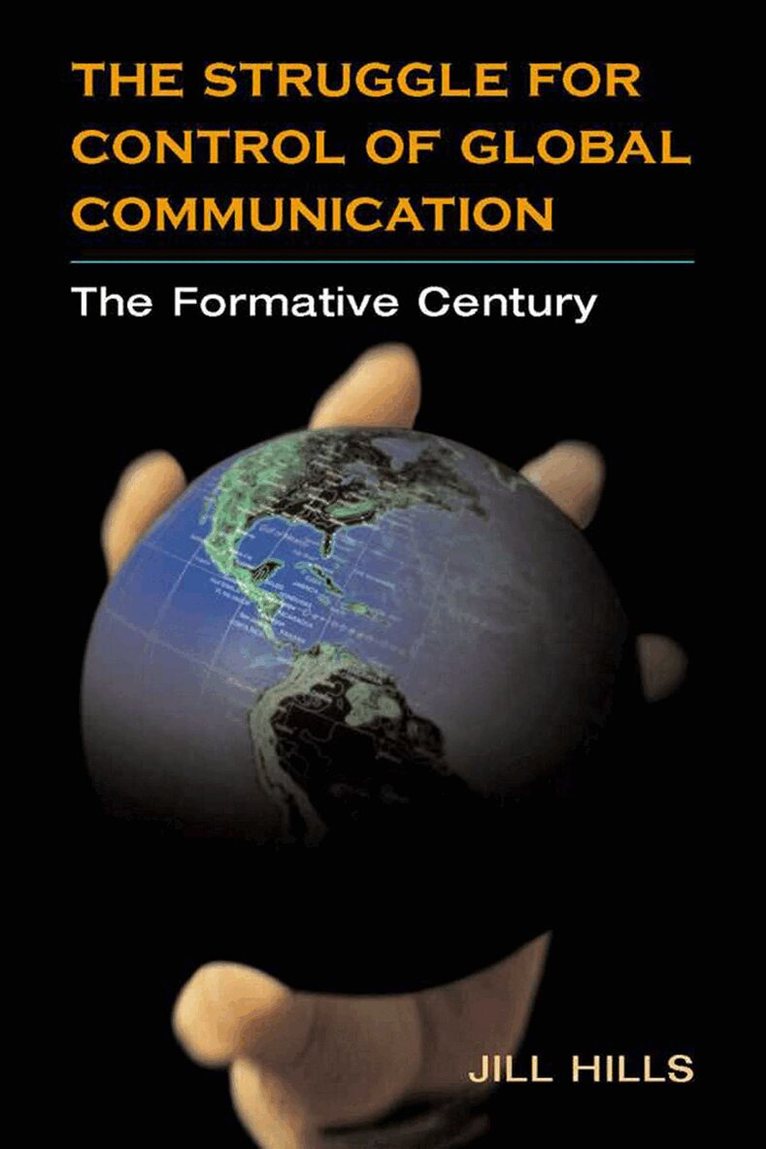
    Struggle for Control of Global Communication

    The Formative Century

    AvJill Hills

    Inbunden, Engelska, 2002

    497 kr

    Beställningsvara. Skickas inom 11-20 vardagar. Fri frakt över 249 kr.

    Fler format och utgåvor

    E-bok

    542 kr

    Beskrivning

    Tracing the development of communication markets and the regulation of international communications from the 1840s through World War I, Jill Hills examines the political, technological, and economic forces at work during the formative century of global communication. Hills analyzes power relations within the arena of global communications from the inception of the telegraph through the successive technologies of submarine telegraph cables, ship-to-shore wireless, broadcast radio, shortwave wireless, the telephone, and movies with sound. As she shows, global communication began to overtake transportation as an economic, political, and social force after the inception of the telegraph, which shifted communications from national to international. From that point on, information was a commodity and ownership of the communications infrastructure became valuable as the means of distributing information. The struggle for control of that infrastructure occurred in part because British control of communications hindered the growing economic power of the United States. Hills outlines the technological advancements and regulations that allowed the United States to challenge British hegemony and enter the global communications market. She demonstrates that control of global communication was part of a complex web of relations between and within the government and corporations of Britain and the United States. Detailing the interplay between American federal regulation and economic power, Hills shows how these forces shaped communications technologies and illuminates the contemporary systems of power in global communications.

    Produktinformation

    • Utgivningsdatum:2002-10-22
    • Mått:152 x 229 x 23 mm
    • Vikt:513 g
    • Format:Inbunden
    • Språk:Engelska
    • Antal sidor:344
    • Förlag:University of Illinois Press
    • ISBN:9780252027574

    Utforska kategorier

    • Referensverk och tvärvetenskap inom Samhälle och politik

    Mer om författaren

    Jill Hills, a professor in the School of Communication and Creative Industries at the University of Westminster, is the author of Deregulating Telecoms, Information Technology and Industrial Policy, and Telecommunications and Empire.

    Recensioner i media

    "A stimulating, learned, careful text. . . . For the first time, the jockeying for position between British and U.S. authorities is brought forward as the organizing principle in international telecommunications system development during the first century of transnational network building. The treatment is nuanced, as Hills does not impute any single overriding interest or logic to either state actor. Rather, she integrates the often discordant needs and demands of private corporations into her sweeping analysis."--Dan Schiller, author of Digital Capitalism: Networking the Global Market System"This work is especially valuable because it remedies the tendency in general historical scholarship to make communication a rather peripheral force in social life. Moreover, Hills's book does an excellent job of assessing the complex and mutually constitutive relationships among political, economic, and technological forces."--Vincent Mosco, author of The Political Economy of Communication: Rethinking and Renewal

    Innehållsförteckning

    • ContentsAcknowledgmentsIntroduction1. Infrastructure and Information in the United States and Britain, 1840s–18902. Following the Flag: Cable and the British Government3. Wireless and the State4. The United States, Trade, and Communications, 1890s–19175. South America: Prewar Competitionin Infrastructure and Information6. The United States: Competition for Infrastructure in the Interwar Years7. British Communications, 1919–408. Cultural Production and International RelationsConclusionNotesReferencesIndex