• Fri frakt över 249 kr
  • •
  • Snabba leveranser
  • •
  • Billiga böcker
Kundservice

Du är på sajten för privatpersoner.

Företag, bibliotek eller offentlig verksamhet?

Du handlar på classic.bokus.com, där alla dina funktioner finns intakta.
Till classic.bokus.com
Bokus logotyp. Gå till startsidan.
  • Erbjudanden
  • Nyheter
  • Student
  • Topplistor
  • Barn & ungdom
  • Bokus Play
  • E-böcker
  • Pocketböcker
  • Spel & pussel

10% rabatt på allt med kod: NYSTART10 →

Sidfot

Mina sidor

    Hjälp

    • Kundservice
    • Vanliga frågor och svar
    • Frakt och leverans
    • Retur vid ångerrätt
    • Reklamera vara
    • Betalning
    • Köpvillkor
    • Allmänna villkor
    • Information om webbplatsens tillgänglighet

    Om Bokus

    • Om oss
    • Pressrum
    • För studenter
    • För företag
    • För bibliotek och offentlig verksamhet
    • För leverantörer
    • Hållbarhet

    Populärt

    • Aktuella erbjudanden
    • Presentkort
    • Studentlitteratur
    • Nya böcker
    • Topplistor
    • Signerade böcker
    • Engelska böcker

    Inspiration

    • Boktips
    • BookTok
    • Populära bokserier
    • Barnbokskaraktärer
    • Populära författare
    Logotyp för Bokus
    Följ oss på Facebook (extern länk)Följ oss på Instagram (extern länk)Följ oss på YouTube (extern länk)Följ oss på TikTok (extern länk)
    bokus @ CookiesAnpassa cookiesIntegritetspolicyKöpvillkor
    Till Citymail hemsida (extern länk)Till Budbee hemsida (extern länk)Till Postnord hemsida (extern länk)Till Schenker hemsida (extern länk)Till Early Bird hemsida (extern länk)Till Walleys hemsida (extern länk)
    1. Historia och arkeologi
    2. Historia
    3. Europas historia

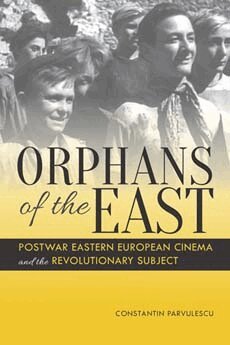
    Orphans of the East

    Postwar Eastern European Cinema and the Revolutionary Subject

    AvConstantin Parvulescu

    Inbunden, Engelska, 2015

    Del i serien Indiana University Press (IPS)

    854 kr

    Beställningsvara. Skickas inom 5-8 vardagar. Fri frakt över 249 kr.

    Fler format och utgåvor

    Häftad

    304 kr

    Beskrivning

    Unlike the benevolent orphan found in Charlie Chaplin's The Kid or the sentimentalized figure of Little Orphan Annie, the orphan in postwar Eastern European cinema takes on a more politically fraught role, embodying the tensions of individuals struggling to recover from war and grappling with an unknown future under Soviet rule. By exploring films produced in postwar Hungary, the German Democratic Republic, Czechoslovakia, Romania, and Poland, Parvulescu traces the way in which cinema envisioned and debated the condition of the post-World War II subject and the "new man" of Soviet-style communism. In these films, the orphan becomes a cinematic trope that interrogates socialist visions of ideological institutionalization and re-education and stands as a silent critic of the system's shortcomings or as a resilient spirit who has resisted capture by the political apparatus of the new state.

    Produktinformation

    • Utgivningsdatum:2015-06-08
    • Mått:152 x 229 x 13 mm
    • Vikt:454 g
    • Format:Inbunden
    • Språk:Engelska
    • Serie:Indiana University Press (IPS)
    • Antal sidor:200
    • Förlag:Indiana University Press
    • ISBN:9780253016737

    Utforska kategorier

    • Europas historia inom Historia och arkeologi
    • Film inom Kultur
    • Övriga länders och regioners historia inom Historia och arkeologi

    Mer om författaren

    Constantin Parvulescu is Research Fellow at the Institute for Culture and Society at University of Navarra, Spain. He is editor (with Robert A. Rosenstone) of A Companion to the Historical Film.

    Recensioner i media

    " Orphans of the East delves into the multifaceted meanderings around postwar vagrancy in a genre of film rarely brought together in one coherent volume."—Slavic and East European Journal"Parvulescu has taken a highly innovative approach to socialist and post-socialist cinema in the region, and one that is vividly illustrated by a superb selection of films."—Studies in European Cinema"[This book] is a complex, competent, and engagingly written interdisciplinary book bringing together history, cultural and political theory, and film analysis. It should be of considerable interest to a wide range of scholars and students of Europena cinema, history, and cultural studies."—Slavic Review"Parvulescu skillfully uses his examples to explore how ideologies of socialist identity strategies changed over time. Although largely unconcerned with the audio-visual dimensions of the films, the author provides bracing discussions, offering significant insights into the characters and plots as well as the political circumstances to which the narratives responded. . . . Highly recommended."—Choice"Parvulescu's broad synoptic reading of films from different Eastern European countries, referring to films that are often hard to see in the West, has the great merit of addressing larger sociological questions about film under socialism that can get lost in more narrowly focused approaches concentrating only on filmic poetics or on the history of everyday life."—Studies in Eastern European Cinema"A stunning, brilliant, and very rich book!"—Robert A. Rosenstone, author of History of Film/Film on History"By using the trope of an orphan Constantin Parvulescu demonstrates how films made in countries such as Hungary, East Germany, Poland, Czechoslovakia and Romania reflected on the specific problems affecting Eastern Europe after 1945, such as the loss of population, economic backwardness, the legacy of the Holocaust, while engaging in wider debates, especially the superiority of socialism over capitalism. Economically and elegantly written, it demonstrates that cinema produced in the periphery can be central to our understanding of films as ideological tools. This is one of the best books on Eastern European cinema ever written."—Ewa Mazierska, University of Central Lancashire"This groundbreaking study figures the orphan as a key cinematic trope for interrogating socialist representations in feature films produced in postwar Hungary, the German Democratic Republic, Czechoslovakia, Romania, and Poland.  The author's comparative, transnational perspective in chapters devoted to close textual analyses of each narrative demonstrates the value of reading film as a primary source for understanding the relationships among state power, intergenerational trauma, and revolutionary subjectivity.  Parvulescu's highly original portrayal of a landscape of parentless children evokes the trauma of war and the specificity of the socialist experiment in the former Eastern Bloc."—Catherine Portuges, University of Massachusetts-Amherst

    Innehållsförteckning

    • Introduction: The Socialist Experience and Beyond1. Creatures of the Event: Subject Production in the Reconstruction Era2. Producing Revolutionary Consciousness in the Times of Radical Socialism3. The Testifying Orphan: Rethinking Modernity's Optimism4. Children of the Revolution: The Rebirth of the Subject in Revisionist Discourse5. The Family of Victims: Stalinism Revisited in the 1980sEpilogue: The Abandoned Offspring of Late SocialismNotesWorks CitedIndex