• Fri frakt över 249 kr
  • •
  • Snabba leveranser
  • •
  • Billiga böcker
Kundservice

Du är på sajten för privatpersoner.

Företag, bibliotek eller offentlig verksamhet?

Du handlar på classic.bokus.com, där alla dina funktioner finns intakta.
Till classic.bokus.com
Bokus logotyp. Gå till startsidan.
  • Erbjudanden
  • Nyheter
  • Student
  • Topplistor
  • Barn & ungdom
  • Bokus Play
  • E-böcker
  • Pocketböcker
  • Spel & pussel

10% rabatt på allt med kod: NYSTART10 →

Sidfot

Mina sidor

    Hjälp

    • Kundservice
    • Vanliga frågor och svar
    • Frakt och leverans
    • Retur vid ångerrätt
    • Reklamera vara
    • Betalning
    • Köpvillkor
    • Allmänna villkor
    • Information om webbplatsens tillgänglighet

    Om Bokus

    • Om oss
    • Pressrum
    • För studenter
    • För företag
    • För bibliotek och offentlig verksamhet
    • För leverantörer
    • Hållbarhet

    Populärt

    • Aktuella erbjudanden
    • Presentkort
    • Studentlitteratur
    • Nya böcker
    • Topplistor
    • Signerade böcker
    • Engelska böcker

    Inspiration

    • Boktips
    • BookTok
    • Populära bokserier
    • Barnbokskaraktärer
    • Populära författare
    Logotyp för Bokus
    Följ oss på Facebook (extern länk)Följ oss på Instagram (extern länk)Följ oss på YouTube (extern länk)Följ oss på TikTok (extern länk)
    bokus @ CookiesAnpassa cookiesIntegritetspolicyKöpvillkor
    Till Citymail hemsida (extern länk)Till Budbee hemsida (extern länk)Till Postnord hemsida (extern länk)Till Schenker hemsida (extern länk)Till Early Bird hemsida (extern länk)Till Walleys hemsida (extern länk)
    1. Kultur
    2. Konstböcker
    3. Konsthistoria

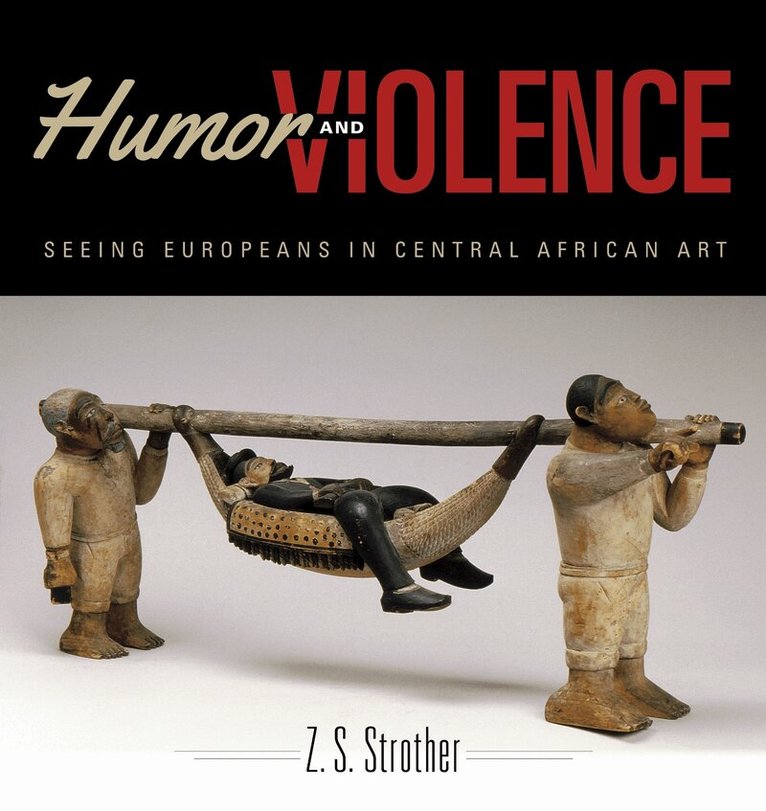
    Humor and Violence

    Seeing Europeans in Central African Art

    AvZ. S. Strother

    Häftad, Engelska, 2016

    Del i serien African Expressive Cultures

    285 kr

    Beställningsvara. Skickas inom 11-20 vardagar. Fri frakt över 249 kr.

    Beskrivning

    Humor and Violence examines the rich history of portraying Europeans in Central African art in images ranging from heart-wrenching scenes of human trafficking to playful parodies of colonialists. Z. S. Strother contends that the dialectic of humor and violence reveals deep insights into the psychology of power and resistance that continues to operate in the region today. Her argument is built on a set of works of art and demonstrates the important role that patronage and political and social history played in their creation. Strother conveys Central African ideas about how the therapeutic power of humor can initiate social change and upset power relations between oppressors and oppressed. This analysis plunges seemingly benign figures into a maelstrom of violence and crime–rape, murder, torture, and forced labor on a massive scale. By restoring the dialectic of humor, it reveals the complicated psychological codependency of Africans and Europeans over a long period of history and maintains that art plays a mediating function in the mechanics and ethics of power.

    Produktinformation

    • Utgivningsdatum:2016-12-26
    • Mått:216 x 229 x 24 mm
    • Vikt:1 202 g
    • Format:Häftad
    • Språk:Engelska
    • Serie:African Expressive Cultures
    • Antal sidor:364
    • Förlag:Indiana University Press
    • ISBN:9780253022677

    Utforska kategorier

    • Konsthistoria inom Kultur

    Mer om författaren

    Z. S. Strother is Riggio Professor of African Art at Columbia University. She is author of Inventing Masks: Agency and History in the Art of the Central Pende, winner of the Arnold Rubin Outstanding Publication Award. http://www.columbia.edu/cu/arthistory/faculty/Strother.html

    Recensioner i media

    "This work should be of great interest to students, scholars, and a general audience interested in African visual culture."—African Arts"Z. S. Strother does not shy away from difficult and controversial topics, whether European or Congolese. In the complicated story that covers issues of colonialism, greed, multiple cultures, and over 100 years of history, she produces a remarkably readable and accessible volume."—Elisabeth Cameron, editor of Portraiture and Photography in Africa"Original and provocative, it offers a revealing and compelling analysis and interpretation of representations of humor and violence—two cultural forms of expression that are almost impossible to put into words. A rich and rewarding work that will sustain thoughtful reflection."—Henry John Drewal, editor of Sacred Waters"Perceptive, nuanced, and sensitive to change over time and place, Zoe Strother's Humor and Violence is laugh-out-loud funny. In this dazzling array of art, Europeans constitute a cultural category—people who perform an identity of yappy little dogs and drunkenness—but, most fundamentally, of violence. Here are rape, murder, torture, and forced labor; here is the humor of tragic parody, defiance, and healing. Strother's superb close reading of the art together with her careful dating for historical context and unblinking truth-telling make this an extraordinarily valuable work, an essential contribution to cultural history as well as art history."—Nell Irvin Painter, author of The History of White People"This well-written, meticulously researched study will be valuable to all who are interested in African arts."—Choice"Humor and Violence is an excellent book of art historical scholarship and a pleasure to read."—African Studies Review"Strother's expertise, notably, the "reading" of objects as texts is both highly compelling and thought-provoking, and ultimately, herein lies the book's strength. It is well written in accessible narrative style lavishly accompanied by color and black-and-white photographs, together with hand-drawn sketches. This book will no doubt find itself on the bookshelves of those interested in African art."—African Studies Quarterly" Humor and Violence's depth of research and radical interdisciplinarity is breathtaking."—The Art Bulletin

    Innehållsförteckning

    • AcknowledgmentsPreface1. Introduction2. Warning! What do you see? A white man? Or an over-dressed one?3. New Commodities on the Loango Coast (1840-1880)4. Depictions of Human Trafficking on Loango Ivories in the 1880s5. Humor in the Hygiene of Power (ca. 1885-1915)6. By Congolese, for Congolese (1910s-40s) 7. The African Victim in the Congolese Imaginary (1950s-1997)Coda: Congolese Perspectives on Humor and RedemptionNotes BibliographyIndex