• Fri frakt över 249 kr
  • •
  • Snabba leveranser
  • •
  • Billiga böcker
Kundservice

Du är på sajten för privatpersoner.

Företag, bibliotek eller offentlig verksamhet?

Du handlar på classic.bokus.com, där alla dina funktioner finns intakta.
Till classic.bokus.com
Bokus logotyp. Gå till startsidan.
  • Erbjudanden
  • Student
  • Topplistor
  • Barn & ungdom
  • Bokus Play
  • E-böcker
  • Ljudböcker
  • Pocketböcker
  • Spel och pussel

Pocketfynda! Hundratals böcker för 49 kr/st →

Sidfot

Mina sidor

    Hjälp

    • Kundservice
    • Vanliga frågor och svar
    • Frakt och leverans
    • Retur vid ångerrätt
    • Reklamera vara
    • Betalning
    • Köpvillkor
    • Allmänna villkor
    • Information om webbplatsens tillgänglighet

    Om Bokus

    • Om oss
    • Pressrum
    • För studenter
    • För företag
    • För bibliotek och offentlig verksamhet
    • För leverantörer
    • Hållbarhet

    Populärt

    • Aktuella erbjudanden
    • Presentkort
    • Studentlitteratur
    • Nya böcker
    • Topplistor
    • Signerade böcker
    • Engelska böcker

    Inspiration

    • Boktips
    • BookTok
    • Barnbokskaraktärer
    • Populära författare
    Logotyp för Bokus
    Följ oss på Facebook (extern länk)Följ oss på Instagram (extern länk)Följ oss på YouTube (extern länk)Följ oss på TikTok (extern länk)
    bokus @ CookiesAnpassa cookiesIntegritetspolicyKöpvillkor
    Till Citymail hemsida (extern länk)Till Budbee hemsida (extern länk)Till Postnord hemsida (extern länk)Till Schenker hemsida (extern länk)Till Early Bird hemsida (extern länk)Till Walleys hemsida (extern länk)
    1. Historia och arkeologi
    2. Historia
    3. Historia: särskilda händelser och ämnen
    4. Socialhistoria och kulturhistoria

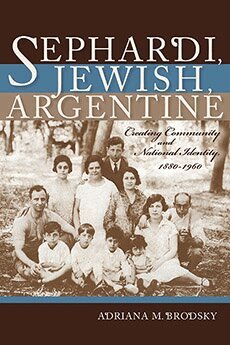
    Sephardi, Jewish, Argentine

    Community and National Identity, 1880-1960

    AvAdriana M. Brodsky

    Häftad, Engelska, 2016

    Del i serien Sephardi and Mizrahi Studies

    330 kr

    Beställningsvara. Skickas inom 5-8 vardagar. Fri frakt över 249 kr.

    Fler format och utgåvor

    Inbunden

    961 kr

    Beskrivning

    At the turn of the 20th century, Jews from North Africa and the Middle East were called Turcos ("Turks"), and they were seen as distinct from Ashkenazim, not even identified as Jews. Adriana M. Brodsky follows the history of Sephardim as they arrived in Argentina, created immigrant organizations, founded synagogues and cemeteries, and built strong ties with coreligionists around the country. She theorizes that fragmentation based on areas of origin gave way to the gradual construction of a single Sephardi identity, predicated both on Zionist identification (with the State of Israel) and "national" feelings (for Argentina), and that Sephardi Jews assumed leadership roles in national Jewish organizations once they integrated into the much larger Askenazi community. Rather than assume that Sephardi identity was fixed and unchanging, Brodsky highlights the strategic nature of this identity, constructed both from within the various Sephardi groups and from the outside, and reveals that Jewish identity must be understood as part of the process of becoming Argentine.

    Produktinformation

    • Utgivningsdatum:2016-10-31
    • Mått:152 x 229 x 16 mm
    • Vikt:431 g
    • Format:Häftad
    • Språk:Engelska
    • Serie:Sephardi and Mizrahi Studies
    • Antal sidor:286
    • Förlag:Indiana University Press
    • ISBN:9780253023032

    Utforska kategorier

    • Socialhistoria och kulturhistoria inom Historia och arkeologi
    • Amerikas historia inom Historia och arkeologi
    • Sociala grupper och identitet inom Samhälle och politik

    Mer om författaren

    Adriana M. Brodsky is Associate Professor of History at St. Mary's College of Maryland. She is editor (with Raanan Rein) of The New Jewish Argentina: Facets of Jewish Experiences in the Southern Cone, winner of the Latin American Jewish Studies Association Best Book Award in 2013.

    Recensioner i media

    "Historian Brodskyhas written a much-needed monograph on the role of Sephardic Jews in Argentina, and her work is an important contribution to the study of Jews in Latin America overall. "—Choice"Overall, Brodsky's analysis of the tensions between assimilation and the maintenance of Jewish identity among the Sephardim in Argentina is a significant contribution to the study of identity. It will be a valuable contribution to all Jewish studies collections."—Association of Jewish Libraries Reviews"Adriana M. Brodsky's work is a much-needed addition to the growing field of Latin American Jewish studies. "—The Americas"Brodsky has introduced a critical contribution to the study of Jewish Latin America, that highlights Sephardi history and that will continue to be valuable to the sub-discipline and to all scholars attempting to understand the complexity of competing migrant identities."—Bulletin of Spanish Studies"Brodsky's book is as rich in its sources as it is illuminating in its narrative. It is an excellent contribution to the field of Latin American Jewish studies but is also a necessary read for anyone engaged in diasporic, national, and ethnic studies. Brodsky's narrative is accessible, textured, and vivid, a work of solid scholarship vehemently rooted in both Argentine and Sephardi cultures."—Hispanic American Historical Review"Bodsky's fascinating study . . . focus[es] on how the Sephardic Jews in Argentina became Argentines, but also, perhaps more significantly, how they 'became Jewish' and came to play their own influential role in the history of Argentine Jewry."—Bulletin of Latin American Research"By focusing on the lives of Sephardic Jews, male and female alike, both in Buenos Aires and the interior provinces, Adriana M. Brodsky is able to challenge many commonly held assumptions about Jewish lives in Argentina, home to the biggest Jewish community in Latin America."—Raanan Rein, Tel Aviv University"In short, the author has made a significant contribution not only to the study of the Sephardim and Jews in Argentina, but also to the study of the minority migrations in the country as a whole and the ethnic histories of the inland provinces of Argentina. This is an important work that hopefully will be the catalyst for further lines of research on the Sephardim, which, as Brodsky says, are no longer invisible in Argentina."—AJS Review

    Innehållsförteckning

    • Note about Translation and TransliterationAcknowledgementsIntroduction 1. Burying the Dead: Cemeteries, Walls and Jewish Identity in Early-Twentieth-Century Argentina2. Helping the Living: Philanthropy and the Boundaries of Sephardi Communities in Argentina3. The Limits of Community: Unsuccessful Attempts at Creating Single Sephardi Organizations4. Working for the Homeland: Zionism and the Creation of an "Argentine" Sephardi Community after 19205. Becoming Argentine, Becoming Jewish, Becoming and Remaining Sephardi: Jewish Women and Identity in Twentieth-Century Argentina6. Marriages and Schools: Living within Multiple BordersPostscriptNotesBibliographyIndex