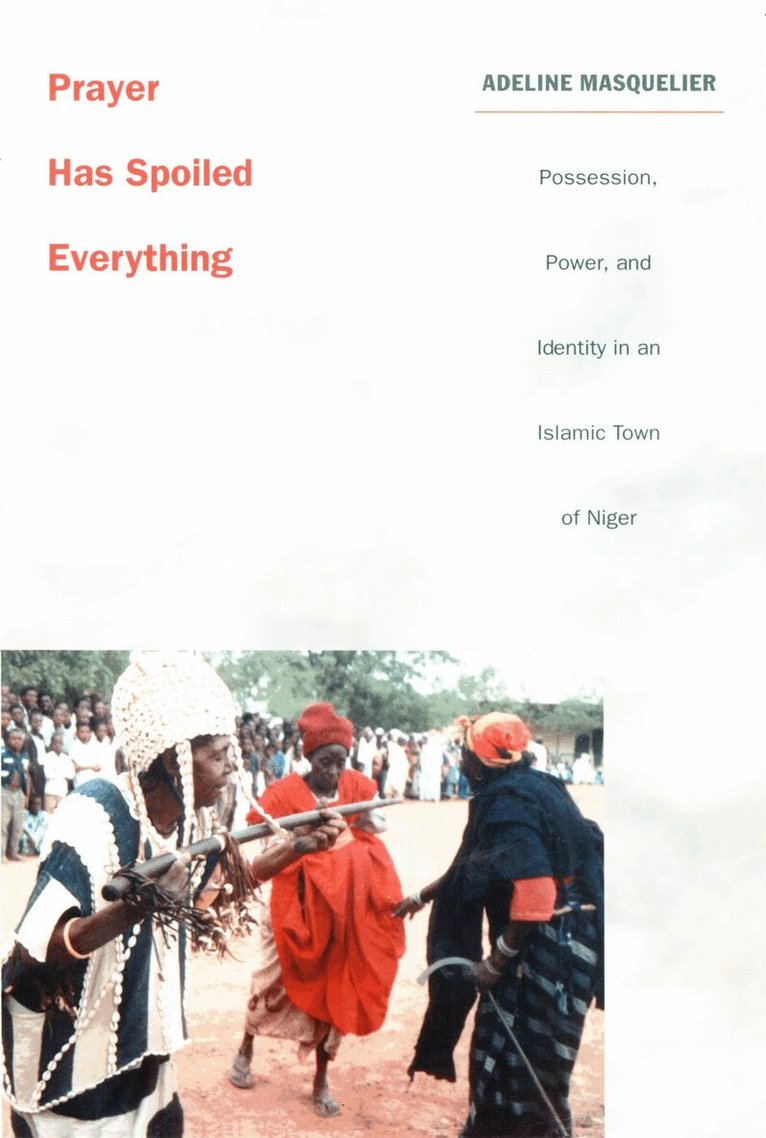
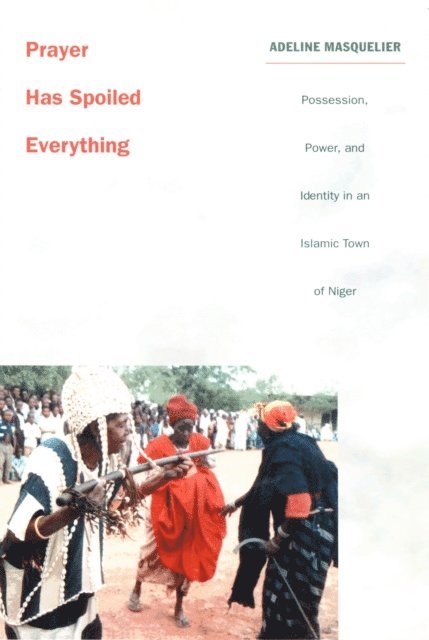
"Dogondoutchi is a small, provincial town in Niger, a West African country that is among the poorest in the world. It is also the site of Masquelier's anthropological research since the mid-1980s. In this book, Masquelier (Tulane) explores the timely and difficult topic of the impact of modern forms of Islamic revivalist movements on the Hausa-speaking population of this West African community. Central to the author's analysis is a powerful, charismatic Muslim preacher whose mission and methods illustrate the transformative influence of reformist Islam in Africa and its impact on women in particular. How do women experience this influence, and what does it mean to the daily conduct of their lives? Much of the public debate about issues of Islamic morality, propriety, and piety tend to translate into women's deportment, dress, and seclusion or 'moral domesticity,' which, for the Hausa women, includes modesty, obedience, thrift, veiling, and seclusion. An examination of the complex politics of the hijab, bride wealth, and mosque attendance, among other issues, reveals the different strategies that women employ to safeguard their autonomy and defend their interests in the face of their rapidly changing world. Summing Up: Recommended. Upper-division undergraduates and above. —Choice"—A. Rassam, emerita, CUNY Queens College, July 2010"In the small town of Dogondoutchi, Niger, Malam Awal, a charismatic Sufi preacher, was recruited by local Muslim leaders to denounce the practices of reformist Muslims. Malam Awal's message has been viewed as a mixed blessing by Muslim women who have seen new definitions of Islam and Muslim practice impact their place and role in society. This study follows the career of Malam Awal and documents the engagement of women in the religious debates that are refashioning their everyday lives. Adeline Masquelier reveals how these women have had to define Islam on their own terms, especially as a practice that governs education, participation in prayer, domestic activities, wedding customs, and who wears the veil and how. Masquelier's richly detailed narrative presents new understandings of what it means to be a Muslim woman in Africa today.July 2010"—Frauensolidaritaet Informationsarbeit zu Frauen in Afrika, Asien und Lateinamerika". . . explores the timely and difficult topic of the impact of modern forms of Islamic revivalist movements on the Hausa-speaking population of this West African community. . . . Recommended.July 2010"—Choice"[A] magnificent study of the region and the people that will stand as definitive in our time."—African Studies Review"Masquelier skillfully combines theory and ethnography in a well-written and captivating account of an understudied region in West Africa. . . . [T]his book is an important contribution to the growing literature on Islam in Africa, new religious leaders, globalization and the agency of Muslim women.Vol. 40, 2010"—Journal of Religion in Africa"Masquelier's book offers not just a very fine (and historically grounded) ethnograhy of this remote corner of the Muslim world, but one which merits the attention of all anthropologists of Islam. 2011"—Journal of the Royal Anthropological Institute"Adeline Masquelier has written a fresh and engaging ethnography of West African women. Vol. 81.3, 2011"—Africa"Masquelier's rich contextualization of the interplay among religious movements, as well as her explanations for their appeal to believers in different social, political, and economic circumstances, make this an indispensable book for scholars of contemporary West Africa."—American Ethnologist"Masquelier's richly detailed narrative presents new understandings of what it means to be a Muslim woman in Africa today."—Allegra"[T]his book should inspire scholars in the field of religious, gender, and African studies. It contributes to the study of contemporary Niger, a country on which very little has been written."—Islamic Africa"Based on theoretically informed and empirically grounded research, Women and Islamic Revival in a West African Town sketches with great historical depth a vivid account of the ethnographic present in Dogondoutchi, a provincial town in southwestern Niger inhabited by the Mawri people. Although focused on a small Sahelian town, it has much wider applications, offering a window onto the impact of reformist Islam and global processes of social transformation on local traditions and touching on questions about how Muslim identities are (re)negotiated in daily life . . . .11/29/10"—American Anthropologist"Brings vividly to life the contested landscape of religion and gender in Dogondoutchi."—Barbara Cooper, Rutgers University"A substantial contribution to the small but rapidly growing anthropological literature on Islam in Africa."—Robert Launay, Northwestern University