• Fri frakt över 249 kr
  • •
  • Snabba leveranser
  • •
  • Billiga böcker
Kundservice

Du är på sajten för privatpersoner.

Företag, bibliotek eller offentlig verksamhet?

Du handlar på classic.bokus.com, där alla dina funktioner finns intakta.
Till classic.bokus.com
Bokus logotyp. Gå till startsidan.
  • Erbjudanden
  • Student
  • Topplistor
  • Barn & ungdom
  • Bokus Play
  • E-böcker
  • Ljudböcker
  • Pocketböcker
  • Spel och pussel

Pocketfynda! Hundratals böcker för 49 kr/st →

Sidfot

Mina sidor

    Hjälp

    • Kundservice
    • Vanliga frågor och svar
    • Frakt och leverans
    • Retur vid ångerrätt
    • Reklamera vara
    • Betalning
    • Köpvillkor
    • Allmänna villkor
    • Information om webbplatsens tillgänglighet

    Om Bokus

    • Om oss
    • Pressrum
    • För studenter
    • För företag
    • För bibliotek och offentlig verksamhet
    • För leverantörer
    • Hållbarhet

    Populärt

    • Aktuella erbjudanden
    • Presentkort
    • Studentlitteratur
    • Nya böcker
    • Topplistor
    • Signerade böcker
    • Engelska böcker

    Inspiration

    • Boktips
    • BookTok
    • Barnbokskaraktärer
    • Populära författare
    Logotyp för Bokus
    Följ oss på Facebook (extern länk)Följ oss på Instagram (extern länk)Följ oss på YouTube (extern länk)Följ oss på TikTok (extern länk)
    bokus @ CookiesAnpassa cookiesIntegritetspolicyKöpvillkor
    Till Citymail hemsida (extern länk)Till Budbee hemsida (extern länk)Till Postnord hemsida (extern länk)Till Schenker hemsida (extern länk)Till Early Bird hemsida (extern länk)Till Walleys hemsida (extern länk)
    1. Samhälle och politik
    2. Samhälle och kultur
    3. Kultur och medier
    4. Medievetenskap

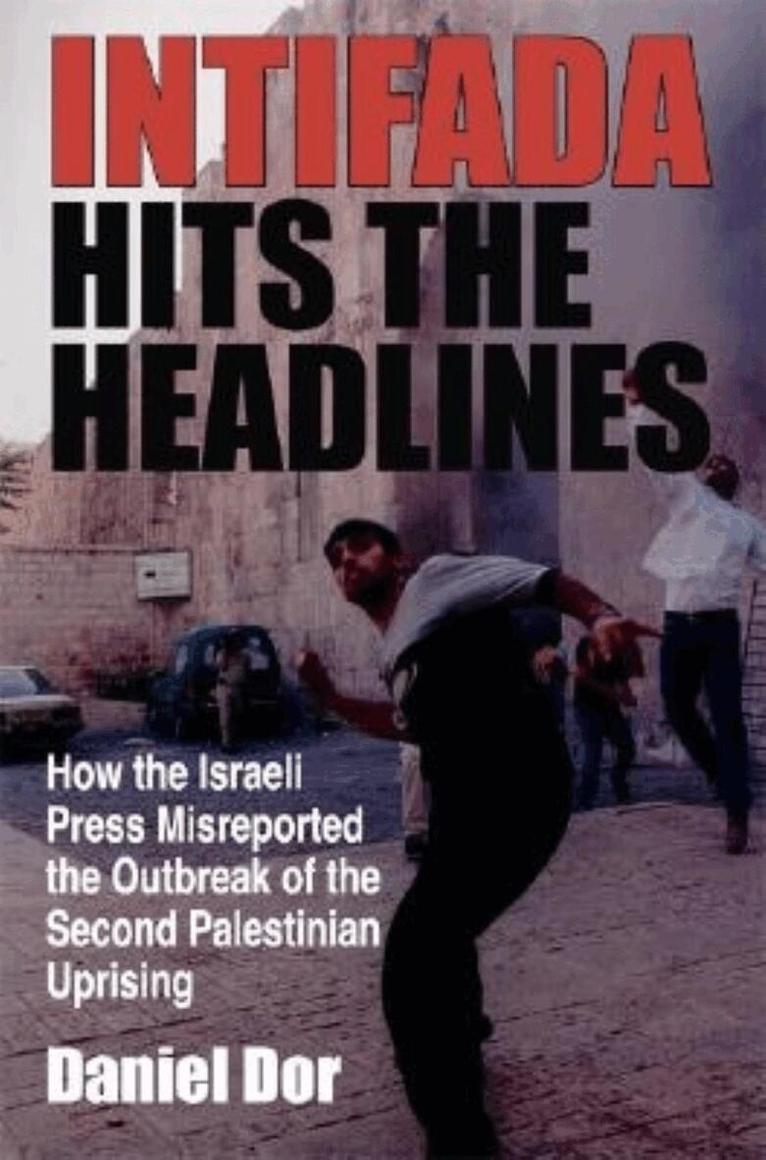
    Intifada Hits the Headlines

    How the Israeli Press Misreported the Outbreak of the Second Palestinian Uprising

    AvDaniel Dor

    Häftad, Engelska, 2004

    Del i serien Middle East Studies

    214 kr

    Beställningsvara. Skickas inom 10-15 vardagar. Fri frakt över 249 kr.

    Beskrivning

    In this nuanced and detailed study of newspaper reporting during the escalation of the second Intifada in the fall of 2000, Daniel Dor shows how real events are subject to distortion and manipulation by the media. In an analysis of the heart of Israel's media establishment—the newspapers Yediot Ahronot, Ma'ariv, and Ha'aretz—he finds a wide gap between the reality reported by field reporters and the eventual newspaper accounts framed by editors. Led by beliefs, opinions, and emotional responses rather than the facts provided by their reporters, these editors created a platform on which a new and fearful narrative for Israeli–Palestinian relations was built. Yet while Dor demonstrates that the media construct the news rather than simply report it, his sophisticated analysis also shows that no one entity or person is responsible. Rather than a supreme authority, Dor argues, it is the influence of fear, anger, ignorance, and a desire to please and sell newspapers that threatens the freedom of the press in a liberal democracy.

    Produktinformation

    • Utgivningsdatum:2004-02-18
    • Mått:156 x 235 x 10 mm
    • Vikt:318 g
    • Format:Häftad
    • Språk:Engelska
    • Serie:Middle East Studies
    • Antal sidor:200
    • Förlag:Indiana University Press
    • ISBN:9780253216373

    Utforska kategorier

    • Medievetenskap inom Samhälle och politik
    • Referensverk och tvärvetenskap inom Samhälle och politik
    • Media och underhållning inom Ekonomi och Ledarskap

    Mer om författaren

    Daniel Dor teaches in the Department of Communication, Tel Aviv University. A graduate of Stanford University, he has worked as a senior news editor at two of Israel's leading newspapers. He lives in Tel Aviv.

    Recensioner i media

    "If more studies like Dor's were published, audiences worldwide might recognize how poorly news is reported and written and take measures to resist. Dor (communication, Tel Aviv Univ.) scrutinized the news coverage of the first month (October 2000) of the Intifada in Israel's three largest dailies, Yediot Ahrenot, Ma'ariv, and Ha'aretz. Using ten parameters (positioning, graphic saliency, headline wording, etc.), he analyzed all material; he then interviewed 18 senior editors, reporters, and senior commentators to discover their rationale for what he called a one-sided, partial, censored, and biased picture of reality. His conclusions are shocking yet not surprising, in the context of subsequent coverage of terrorism and the Iraq War. The contrast between what reporters sent in and what was printed was stark. The editors had their own agendas (obtained from television reports), and though they knew far less about the intricacies of the general picture than senior reporters, they adopted the political and military establishment's judgments to prevent friction with the powers-that-be. The result was public-be-damned journalism that presented the conflict in administratively engineered language, loaded-with-blame (placed on Arafat) commentaries, under apocalyptic and hysterical headlines. Similar studies of television news coverage would likely reveal a situation many times worse. Summing Up: Essential. Upper-division undergraduates through faculty and professionals; general readers.October 2004"—J. A. Lent, Temple University

    Innehållsförteckning

    • Table of Contents: PrefaceAcknowledgments1. Introduction2. "Under Arafat's Baton"3. "Make No Mistake, Yasser"4. "The Limits of Restraint"5. "A Fifth Column"6. In All Their Murderous Ugliness"7. "We Have Turned Every Stone"8. ConclusionNotesBibliographyIndex