• Fri frakt över 249 kr
  • •
  • Snabba leveranser
  • •
  • Billiga böcker
Kundservice

Du är på sajten för privatpersoner.

Företag, bibliotek eller offentlig verksamhet?

Du handlar på classic.bokus.com, där alla dina funktioner finns intakta.
Till classic.bokus.com
Bokus logotyp. Gå till startsidan.
  • Erbjudanden
  • Nyheter
  • Student
  • Topplistor
  • Barn & ungdom
  • Bokus Play
  • E-böcker
  • Pocketböcker
  • Spel & pussel

10% rabatt på allt med kod: NYSTART10 →

Sidfot

Mina sidor

    Hjälp

    • Kundservice
    • Vanliga frågor och svar
    • Frakt och leverans
    • Retur vid ångerrätt
    • Reklamera vara
    • Betalning
    • Köpvillkor
    • Allmänna villkor
    • Information om webbplatsens tillgänglighet

    Om Bokus

    • Om oss
    • Pressrum
    • För studenter
    • För företag
    • För bibliotek och offentlig verksamhet
    • För leverantörer
    • Hållbarhet

    Populärt

    • Aktuella erbjudanden
    • Presentkort
    • Studentlitteratur
    • Nya böcker
    • Topplistor
    • Signerade böcker
    • Engelska böcker

    Inspiration

    • Boktips
    • BookTok
    • Populära bokserier
    • Barnbokskaraktärer
    • Populära författare
    Logotyp för Bokus
    Följ oss på Facebook (extern länk)Följ oss på Instagram (extern länk)Följ oss på YouTube (extern länk)Följ oss på TikTok (extern länk)
    bokus @ CookiesAnpassa cookiesIntegritetspolicyKöpvillkor
    Till Citymail hemsida (extern länk)Till Budbee hemsida (extern länk)Till Postnord hemsida (extern länk)Till Schenker hemsida (extern länk)Till Early Bird hemsida (extern länk)Till Walleys hemsida (extern länk)
    1. Samhälle och politik
    2. Samhälle och kultur
    3. Kultur och medier
    4. Referensverk och tvärvetenskap

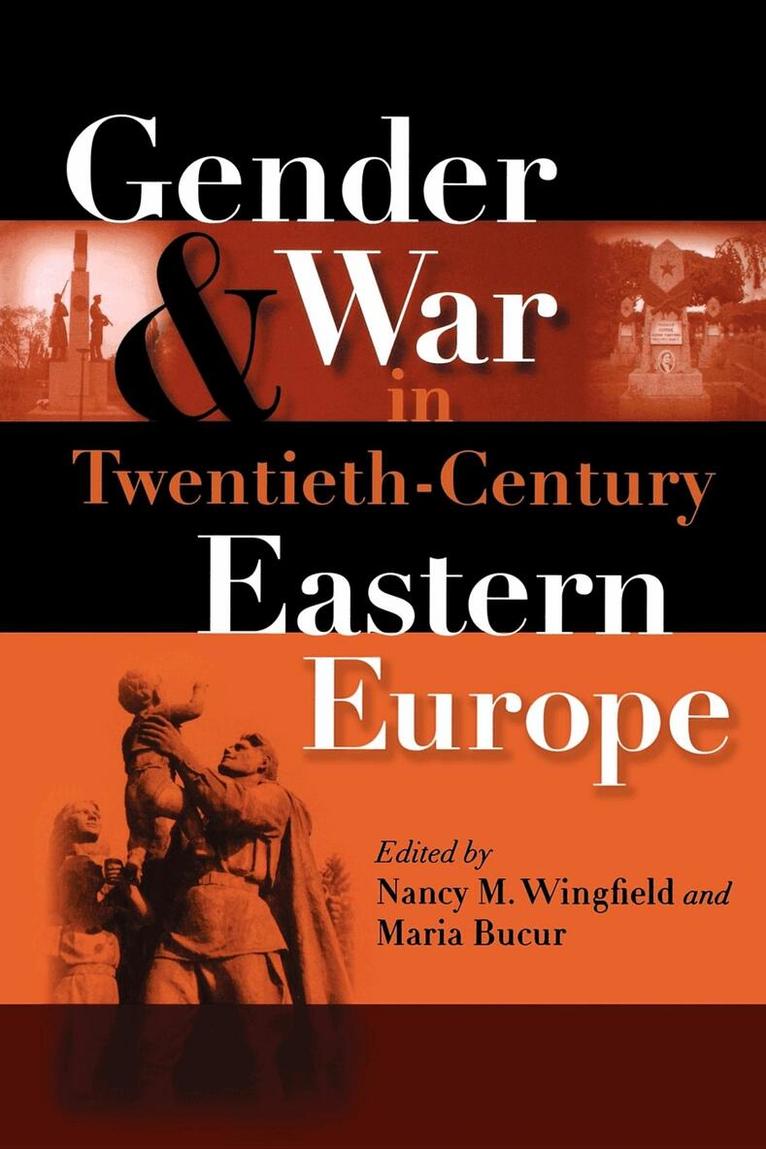
    Gender and War in Twentieth-Century Eastern Europe

    AvNancy M. Wingfield,Maria Bucur-Deckard

    Häftad, Engelska, 2006

    Del i serien Indiana-Michigan Series in Russian and East European Studies

    307 kr

    Beställningsvara. Skickas inom 10-15 vardagar. Fri frakt över 249 kr.

    Beskrivning

    This volume explores the role of gender on both the home and fighting fronts in eastern Europe during World Wars I and II. By using gender as a category of analysis, the authors seek to arrive at a more nuanced understanding of the subjective nature of wartime experience and its representations. While historians have long equated the fighting front with the masculine and the home front with the feminine, the contributors challenge these dichotomies, demonstrating that they are based on culturally embedded assumptionsabout heroism and sacrifice. Major themes include the ways in which wartime experiences challenge traditional gender roles; postwar restoration of gender order; collaboration and resistance; the body; and memory and commemoration.

    Produktinformation

    • Utgivningsdatum:2006-05-09
    • Mått:156 x 235 x 14 mm
    • Vikt:386 g
    • Format:Häftad
    • Språk:Engelska
    • Serie:Indiana-Michigan Series in Russian and East European Studies
    • Antal sidor:264
    • Förlag:Indiana University Press
    • ISBN:9780253218445

    Utforska kategorier

    • Referensverk och tvärvetenskap inom Samhälle och politik
    • Europas historia inom Historia och arkeologi

    Mer om författaren

    Nancy M. Wingfield is Associate Professor of History at Northern Illinois University. She is co-author of Return to Diversity: A Political History of East Central Europe since World War II and co-editor (with Maria Bucur) of Staging the Past: The Politics of Commemoration in Habsburg Central Europe, 1848 to the Present.Maria Bucur is John W. Hill Associate Professor of History at Indiana University and author of Eugenics and Modernization in Interwar Romania.

    Recensioner i media

    "This collection of high-quality essays is designed to explore little-known aspects of the two world wars in Eastern Europe. The contributions have been grouped thematically in three sections devoted to gender roles, gender and occupation, and the gendered commemoration of war. The result is a coherent volume that will be of particular interest to social and cultural historians of modern Europe."—The Journal of Military History 71.4, 2007"[This book] is a . . . welcome addition to the literature on gender in Europe during a particularly violent century. Oct. 2008"—Slavonic & East European Review". . . an exceptionally rich collection of diverse texts. . . . [A] significant contribution in the interdisciplinary field of gender studies. . ."—Signs"This volume is an impressive collection of articles that will appeal to those interested in the history of eastern Europe, war and the war experience, both world wars, and gender and women's studies."—Laurie Stoff, russian-front.com". . . thoughtful, fascinating . . . . this fine volume is notable for its unified presentation of complex and engaging issues. It provides an introduction to the most significant recent historiography in gender studies and military history, as well as an overview of some of the most stimulating new research being done in an important field. March 2009"—Andrea Orzoff, H-Ideas, H-Net". . . this fine volume is notable for its unified presentation of complex and engaging issues. It provides an introduction to the most significant recent historiography in gender studies and military history, as well as an overview of some of the most stimulating new research being done in an important field. . . . Rarely are compilations like this one so consistently well written and intriguing.March, 2009"—Andrea Orzoff, H-Ideas, H-Net"This excellent collection of 11 articles advances the thriving English-language historiography on gender, wars and the military into the too often neglected territories of twentieth-century Eastern Europe.Vol. 39.4 2009"—Anders Ahlback, European History Quarterly"The anthology is an exceptionally rich collection of diverse texts since it brings together the knowledge of different cultural contexts, from the Austro-Hungarian Empire to the remnants of the Ottoman Empire; specific historical frameworks; sometimes opposing ideological backgrounds; and many local resources using different languages spoken in the countries whose painful experiences of the two world wars the book explores."—"Although in disciplinary terms it is represented as a history project the collection also enters into sociology, anthropology, and literature, and is a significant contribution in the interdisciplinary field of gender studies. . ."—". . . an engaging read and a remarkable scholarly accomplishment. . . . The authors do a marvelous job of situating their findings within broader historical contexts and current historiographical debates. . . . [T]his is a pioneering study that should open a broader discussion of gender and war on the eastern front. . . . This book is essential reading for anyone interested in how war affects society. It is an excellent text for undergraduate and especially graduate classes. By reading this collection, scholars and students can discover multifaceted methodologies and diverse sources useful for approaching issues of gender and war in any historical context."—HABSBURG

    Innehållsförteckning

    • Acknowledgments1. Introduction: Gender and War in Twentieth-Century Eastern EuropeNancy M. Wingfield and Maria BucurPart I. Challenging Gender Roles/Restoring Order2. "Female Generals" and "Siberian Angels": Aristocratic Nurses and the Austro-Hungarian POW ReliefAlon Rachamimov3. Civilizing the Soldier in Postwar AustriaMaureen Healy4. Between Red Army and White Guard: Women in Budapest, 1919Eliza AblovatskiPart II. Gendered Collaborating and Resisting5. Dumplings and Domesticity: Women, Collaboration, and Resistance in the Protectorate of Bohemia and MoraviaMelissa Feinberg6. Denouncers and Fraternizers: Gender, Collaboration, and Retribution in Bohemia and Moravia during World War II and AfterBenjamin Frommer7. Family, Gender, and Ideology in World War II LatviaMara LazdaPart III. Remembering War: Gendered Bodies, Gendered Stories8. Kosovo Maiden(s): Serbian Women Commemorate the Wars of National Liberation, 1912–1918Melissa Bokovoy9. Women's Stories as Sites of Memory: Gender and Remembering Romania's World WarsMaria Bucur10. The Nation's Pain and Women's Shame: Polish Women and Wartime ViolenceKatherine R. Jolluck11. "The Alienated Body": Gender Identity and the Memory of the Siege of LeningradLisa A. KirschenbaumSelect BibliographyContributorsIndex