• Fri frakt över 249 kr
  • •
  • Snabba leveranser
  • •
  • Billiga böcker
Kundservice

Du är på sajten för privatpersoner.

Företag, bibliotek eller offentlig verksamhet?

Du handlar på classic.bokus.com, där alla dina funktioner finns intakta.
Till classic.bokus.com
Bokus logotyp. Gå till startsidan.
  • Erbjudanden
  • Student
  • Topplistor
  • Barn & ungdom
  • Bokus Play
  • E-böcker
  • Ljudböcker
  • Pocketböcker
  • Spel och pussel

Pocketfynda! Hundratals böcker för 49 kr/st →

Sidfot

Mina sidor

    Hjälp

    • Kundservice
    • Vanliga frågor och svar
    • Frakt och leverans
    • Retur vid ångerrätt
    • Reklamera vara
    • Betalning
    • Köpvillkor
    • Allmänna villkor
    • Information om webbplatsens tillgänglighet

    Om Bokus

    • Om oss
    • Pressrum
    • För studenter
    • För företag
    • För bibliotek och offentlig verksamhet
    • För leverantörer
    • Hållbarhet

    Populärt

    • Aktuella erbjudanden
    • Presentkort
    • Studentlitteratur
    • Nya böcker
    • Topplistor
    • Signerade böcker
    • Engelska böcker

    Inspiration

    • Boktips
    • BookTok
    • Barnbokskaraktärer
    • Populära författare
    Logotyp för Bokus
    Följ oss på Facebook (extern länk)Följ oss på Instagram (extern länk)Följ oss på YouTube (extern länk)Följ oss på TikTok (extern länk)
    bokus @ CookiesAnpassa cookiesIntegritetspolicyKöpvillkor
    Till Citymail hemsida (extern länk)Till Budbee hemsida (extern länk)Till Postnord hemsida (extern länk)Till Schenker hemsida (extern länk)Till Early Bird hemsida (extern länk)Till Walleys hemsida (extern länk)
    1. Kultur
    2. Musikböcker

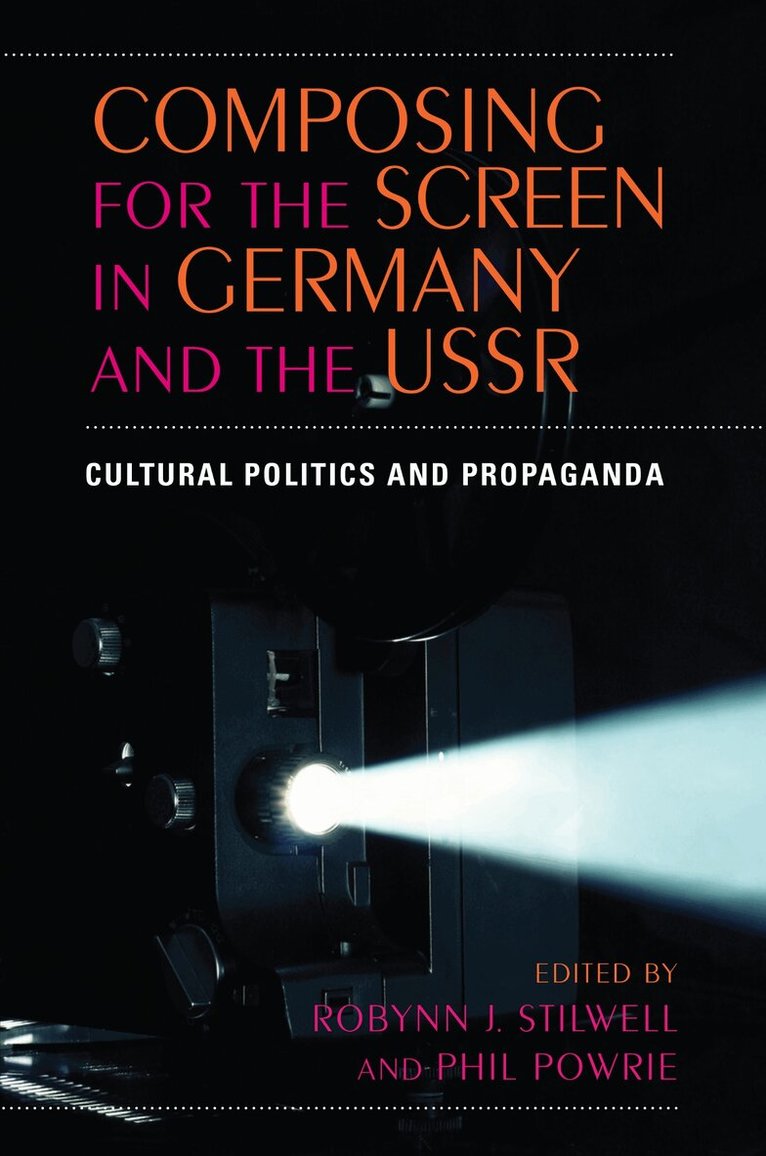
    Composing for the Screen in Germany and the USSR

    Cultural Politics and Propaganda

    AvPhil Powrie,Robynn J. Stilwell

    Häftad, Engelska, 2007

    Del i serien Indiana University Press

    249 kr

    Beställningsvara. Skickas inom 10-15 vardagar. Fri frakt över 249 kr.

    Beskrivning

    Despite the long history of music in film, its serious academic study is still a relatively recent development and therefore comprises a limited body of work. The contributors to this book, drawn from both film studies and musicology, attempt to rectify this oversight by investigating film music from the vibrant, productive, politically charged period before World War II. They apply a variety of methodologies—including archival work, close readings, political histories, and style comparison—to this under explored field.

    Produktinformation

    • Utgivningsdatum:2007-12-26
    • Mått:156 x 235 x 15 mm
    • Vikt:340 g
    • Format:Häftad
    • Språk:Engelska
    • Serie:Indiana University Press
    • Antal sidor:200
    • Förlag:Indiana University Press
    • ISBN:9780253219541

    Utforska kategorier

    • Musikböcker inom Kultur
    • Filmmusik, musikaler och teatermusik inom Kultur
    • Film inom Kultur

    Mer om författaren

    Phil Powrie is Professor of French Cultural Studies at the University of Newcastle upon Tyne. Most recently, he is co-author (with Bruce Babington, Ann Davies, and Chris Perriam) of Carmen on Film: A Cultural History (IUP, 2007).Robynn Stilwell is Assistant Professor of Music in the Department of Art, Music and Theatre at Georgetown University. She is co-editor (with Phil Powrie) of Changing Tunes: The Use of Pre-existing Music in Film.

    Recensioner i media

    ". . . [an] interesting collection of essays . . . ."—Anselm C. Heinrich, Department of Theatre, Film and Television Studies, University of Glasgow, H-German, July 2009"Composing for the Screen in Germany and the USSR offer[s] the first scholarly discussion of German and Soviet film music under a single cover, foregrounding numerous social and aesthetic parallels between these two countries at a time when movies were beginning to talk. Vol. 4, No. 3"—Studies in Russian and Soviet Cinema". . . a valuable contribution to the growing body of film-music scholarship.Vol 32.2 May 2009"—Stephen Meyer, Syracuse University"Sampling a wide range of cinematic time and space, Composing for the Screen in Germany and the USSR leave no doubt that we have yet much to discover about the complex relationship between film music and 'cultural politics' and that the expertise and point of view which musicologists and, particularly, film music scholars bring to the discourse is invaluable. 54.3 Fall 2010"—Slavic and East European Journal"Music became a key ingredient in the propaganda machines developed by the National Socialists and Stalin, an art both to regulate and exploit. Indeed, it is impossible to speak of film music in these countries during the early sound era without considering the political implications of compositional choice and the relationship between music and image."—from the introduction

    Innehållsförteckning

    • ContentsIntroductionPart 1. Germany1. Film Music in the Third ReichRobert E. Peck2. Herbert Windt's Film Music to Triumph of the Will: Ersatz-Wagner or Incidental Music to the Ultimate Nazi-Gesamtkunstwerk?Reimar Volker3. Alban Berg, Lulu, and the Silent FilmMarc Weiner4. From Revolution to Mystic Mountains: Edmund Meisel and the Politics of ModernismChristopher Morris5. New Technologies and Old Rites: Dissonance between Picture and Music in Readings of Joris Ivens's RainEd Hughes6. "Composition with Film": Mauricio Kagel as FilmmakerBjörn HeilePart 2. The USSR7. Eisenstein's Theory of Film Music Revisited: Silent and Early Sound AntecedentsJulie Hubbert8. Aleksandr Nevskiy: Prokofiev's Successful Compromise with Socialist RealismRebecca Schwartz-Bishir9. In Marginal Fashion: Sex, Drugs, Russian Modernism, and New Wave Music in Liquid SkyMitchell MorrisList of ContributorsIndex