• Fri frakt över 249 kr
  • •
  • Snabba leveranser
  • •
  • Billiga böcker
Kundservice

Du är på sajten för privatpersoner.

Företag, bibliotek eller offentlig verksamhet?

Du handlar på classic.bokus.com, där alla dina funktioner finns intakta.
Till classic.bokus.com
Bokus logotyp. Gå till startsidan.
  • Erbjudanden
  • Nyheter
  • Student
  • Topplistor
  • Barn & ungdom
  • Bokus Play
  • E-böcker
  • Pocketböcker
  • Spel & pussel

Må bättre, för mindre! Upp till 50% rabatt på hälsoböcker

Sidfot

Mina sidor

    Hjälp

    • Kundservice
    • Vanliga frågor och svar
    • Frakt och leverans
    • Retur vid ångerrätt
    • Reklamera vara
    • Betalning
    • Köpvillkor
    • Allmänna villkor
    • Information om webbplatsens tillgänglighet

    Om Bokus

    • Om oss
    • Pressrum
    • För studenter
    • För företag
    • För bibliotek och offentlig verksamhet
    • För leverantörer
    • Hållbarhet

    Populärt

    • Aktuella erbjudanden
    • Presentkort
    • Studentlitteratur
    • Nya böcker
    • Topplistor
    • Signerade böcker
    • Engelska böcker

    Inspiration

    • Boktips
    • BookTok
    • Populära bokserier
    • Barnbokskaraktärer
    • Populära författare
    Logotyp för Bokus
    Följ oss på Facebook (extern länk)Följ oss på Instagram (extern länk)Följ oss på YouTube (extern länk)Följ oss på TikTok (extern länk)
    bokus @ CookiesAnpassa cookiesIntegritetspolicyKöpvillkor
    Till Citymail hemsida (extern länk)Till Budbee hemsida (extern länk)Till Postnord hemsida (extern länk)Till Schenker hemsida (extern länk)Till Early Bird hemsida (extern länk)Till Walleys hemsida (extern länk)
    1. Samhälle och politik
    2. Samhälle och kultur
    3. Sociala grupper och identitet
    4. Genusvetenskap

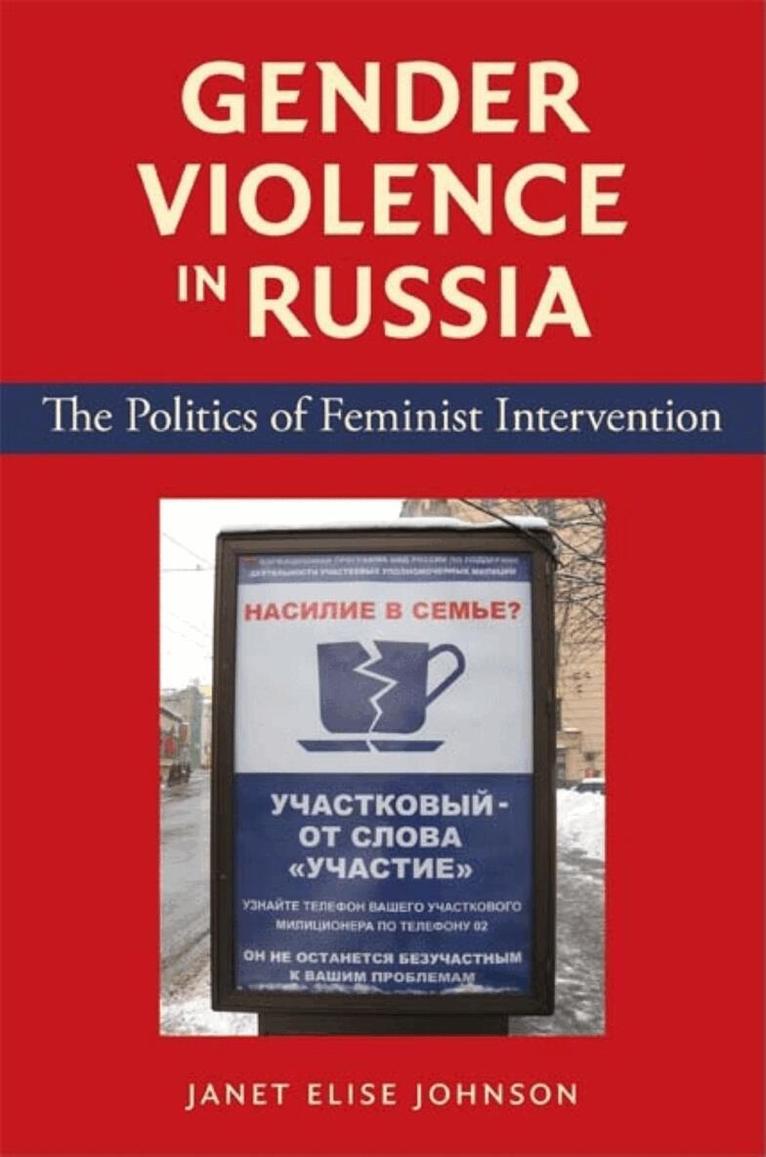
    Gender Violence in Russia

    The Politics of Feminist Intervention

    AvJanet Elise Johnson

    Häftad, Engelska, 2009

    Del i serien Indiana University Press (IPS)

    267 kr

    Beställningsvara. Skickas inom 5-8 vardagar. Fri frakt över 249 kr.

    Beskrivning

    Just a few years ago, most Russian citizens did not recognize the notion of domestic violence or acknowledge that such a problem existed. Today, after years of local and international pressure to combat violence against women, things have changed dramatically. Gender Violence in Russia examines why and how this shift occurred—and why there has been no similar reform on other gender violence issues such as rape, sexual assault, or human trafficking. Drawing on more than a decade of research, Janet Elise Johnson analyzes media coverage and survey data to explain why some interventions succeed while others fail. She describes the local-global dynamics between a range of international actors, from feminist activists to national governments, and an equally diverse set of Russian organizations and institutions.

    Produktinformation

    • Utgivningsdatum:2009-02-18
    • Mått:156 x 235 x 15 mm
    • Vikt:399 g
    • Format:Häftad
    • Språk:Engelska
    • Serie:Indiana University Press (IPS)
    • Antal sidor:256
    • Förlag:Indiana University Press
    • ISBN:9780253220745

    Utforska kategorier

    • Genusvetenskap inom Samhälle och politik
    • Våld och övergrepp inom Samhälle och politik

    Mer om författaren

    Janet Elise Johnson is Associate Professor of Political Science and Women's Studies at Brooklyn College, CUNY, and editor, with Jean C. Robinson, of Living Gender after Communism (IUP, 2007).

    Recensioner i media

    "The title of this book is misleading: it is not about gender violence in Russia, and it is not entirely about 'the politics of feminist intervention,' as the subtitle asserts. Rather, it is a social policy study that examines the impact of various initiatives aimed at raising Russian awareness of the issues involved in violence against women and at combating it. Strongly feminist in her point of view, Johnson (political science and women's studies, Brooklyn College, CUNY) evaluates approaches and methods of external involvement by 'transnational' feminist organizations, by donor organizations, and by pressure or encouragement from foreign governments not only for their effectiveness in the short term, but also for their more profound impact on undermining the established, male-dominated gender hierarchy. Apparently designed for ongoing analysis within the world of feminist policy studies, the book makes few concessions to the outside reader. It is overloaded with citations and lacks any involvement with human actors (or even victims). The book is populated instead by NGOs, alphabetical abbreviations, and bureaucracies. Stolid prose and clumsy syntax only add to the difficulties. It is hard to see an audience for this work, apart from colleagues in the author's field. Summing Up: Optional. Specialists only. — Choice"— J. Zimmerman, emerita, University of Pittsburgh, March 2010"Overall, this is an interesting account of a period of US-led development intervention in Russia and how it was, to a greater or lesser extent, shaped by the actions and goals of feminist activists. As such, it will be relevant to anyone concerned with the way that feminist concerns and development intervention interact, and with the recent development of feminism and civil society in Russia.March 2010"—Gender & Development"...well done and well structured. ...[P]rovides a well elaborated explanatory model of the effects of foreign intervention on the articulation of gender violence and the struggle against gender violence, and the limitations of this struggle, in Russia.Vol. 69. 2 Summer 2010"—Anna Temkina, European Univ at St. Petersburg, Russia"[T]his is a very interesting, complex and well informed study, highly recommendable not only for scholars within the field of Russian studies, but for all who are interested in global feminism, development aid, and international relations.69.3, July 2010"—The Russian Review"Gender Violence in Russia provides an excellent account of the trials and tribulations of global feminism in Russia during this last, difficult decade. Vol. 6, No. 4, 2010"—Politics and Gender"In periods of rapid social change, the poets of one ideological system or another rush to find the cogent metaphor or, more recently, the winning soundbite, that will interpret the change to suit their own ends, to control meaning. To find and sell the right descriptive phrase is to raise the flag of possession over a historical event. For example, the collapse of the Soviet Union—or, even more stridently, the U.S. victory in the Cold War—spins the end of the 1980s, the end of history, as some proclaimed it, as a triumph of righteousness, rendered even more morally spectacular by the supposed 'coldness' of the conflict, and the ushering in of a new world order. That's why a book like Janet Johnson's 'Gender Violence in Russia' is so badly needed. The conclusion Johnson's study reaches is . . . that what really works, in terms of feminist intervention, are 'alliances between global feminists and large donors.' Money talks, apparently; or rather its use in creating organizations for women's advocacy is the best agent for social change. What Johnson calls 'flexible and responsive funding' is the key, targeting funds where they are most needed and can do the most good to protect women and to begin to change cultures of violence which have proven fearfully resistant to change.July 2, 2009"—Rick Taylor, Feminist Review"All in all, this book provides us with a primary argument about the success and failure of international intervention for women's rights, but it can be read in many different ways: as a story about women's movements, as multiple stories about developing policy agendas on different forms of gender violence, as a story about weak state capacity in post-Soviet transition states, or as a story of transnational feminist networking. The wealth of data presented allows all of these readings. I highly recommend this book."—Perspectives on Politics"Engagingly written and superbly researched, Gender Violence in Russia makes a theoretical contribution to postcommunist studies and, more importantly, advances the scholarly conversation about how global human rights norms can more effectively be transmitted to the local level in order to create social change."—Valerie Sperling, Clark University

    Innehållsförteckning

    • Preface: Can Intervention Help Women?AcknowledgmentsList of Abbreviations1. Introduction: Foreign Intervention and Gender Violence2. The Global Feminist Challenge, Communism, and Postcommunism3. The Women's Crisis Center Movement: Funding and De-funding Feminism4. Sexual Assault: The Limits of Blame and Shame5. Domestic Violence: The Benefits of Assistance6. Trafficking in Women: The Costs of State Pressure7. Conclusion: Recommendations for Future InterventionsAppendix 1. Women's Human Rights and Gender ViolenceAppendix 2. Notes on Measurement and MethodNotesWorks CitedIndex