• Fri frakt över 249 kr
  • •
  • Snabba leveranser
  • •
  • Billiga böcker
Kundservice

Du är på sajten för privatpersoner.

Företag, bibliotek eller offentlig verksamhet?

Du handlar på classic.bokus.com, där alla dina funktioner finns intakta.
Till classic.bokus.com
Bokus logotyp. Gå till startsidan.
  • Erbjudanden
  • Nyheter
  • Student
  • Topplistor
  • Barn & ungdom
  • Bokus Play
  • E-böcker
  • Pocketböcker
  • Spel & pussel

10% rabatt på allt med kod: NYSTART10 →

Sidfot

Mina sidor

    Hjälp

    • Kundservice
    • Vanliga frågor och svar
    • Frakt och leverans
    • Retur vid ångerrätt
    • Reklamera vara
    • Betalning
    • Köpvillkor
    • Allmänna villkor
    • Information om webbplatsens tillgänglighet

    Om Bokus

    • Om oss
    • Pressrum
    • För studenter
    • För företag
    • För bibliotek och offentlig verksamhet
    • För leverantörer
    • Hållbarhet

    Populärt

    • Aktuella erbjudanden
    • Presentkort
    • Studentlitteratur
    • Nya böcker
    • Topplistor
    • Signerade böcker
    • Engelska böcker

    Inspiration

    • Boktips
    • BookTok
    • Populära bokserier
    • Barnbokskaraktärer
    • Populära författare
    Logotyp för Bokus
    Följ oss på Facebook (extern länk)Följ oss på Instagram (extern länk)Följ oss på YouTube (extern länk)Följ oss på TikTok (extern länk)
    bokus @ CookiesAnpassa cookiesIntegritetspolicyKöpvillkor
    Till Citymail hemsida (extern länk)Till Budbee hemsida (extern länk)Till Postnord hemsida (extern länk)Till Schenker hemsida (extern länk)Till Early Bird hemsida (extern länk)Till Walleys hemsida (extern länk)
    1. Historia och arkeologi
    2. Historia
    3. Historia: särskilda händelser och ämnen
    4. Socialhistoria och kulturhistoria

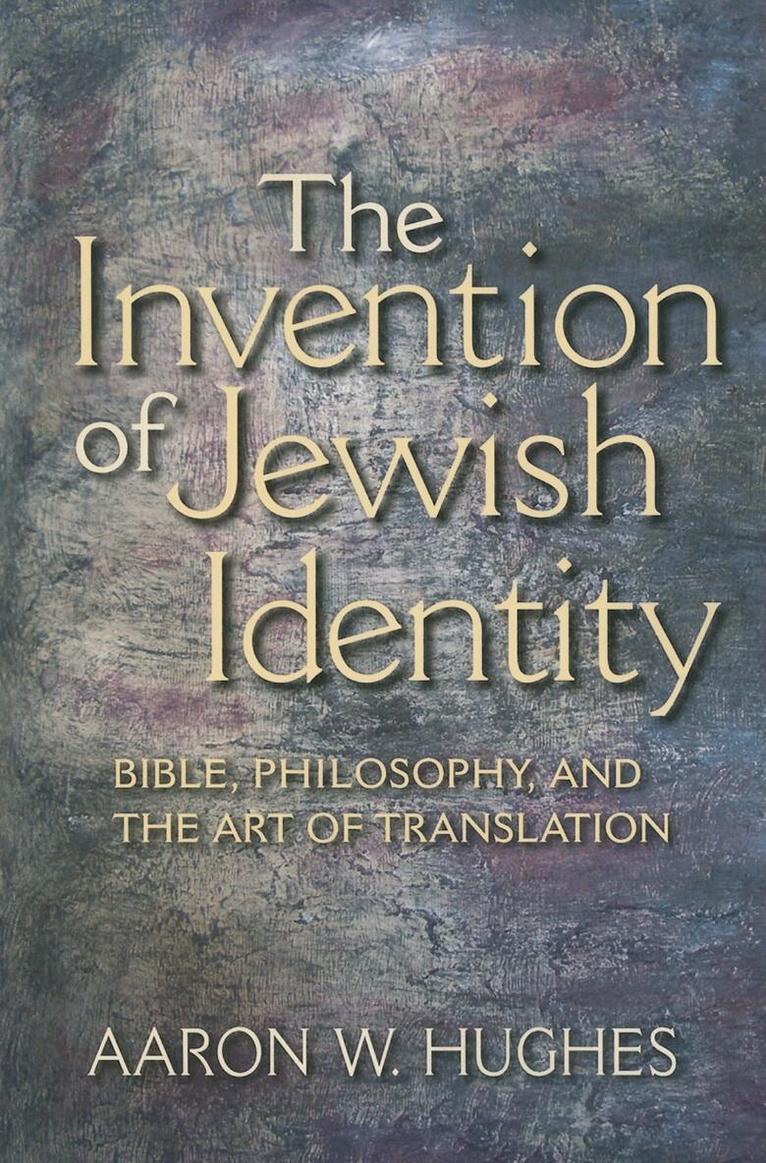
    Invention of Jewish Identity

    Bible, Philosophy, and the Art of Translation

    AvAaron W. Hughes

    Häftad, Engelska, 2010

    Del i serien Indiana University Press

    267 kr

    Beställningsvara. Skickas inom 5-8 vardagar. Fri frakt över 249 kr.

    Beskrivning

    Jews from all ages have translated the Bible for their particular times and needs, but what does the act of translation mean? Aaron W. Hughes believes translation has profound implications for Jewish identity. The Invention of Jewish Identity presents the first sustained analysis of Bible translation and its impact on Jewish philosophy from the medieval period to the 20th century. Hughes examines some of the most important Jewish thinkers—Saadya Gaon, Moses ibn Ezra, Maimonides, Judah Messer Leon, Moses Mendelssohn, Martin Buber, and Franz Rosenzweig—and their work on biblical narrative, to understand how linguistic and conceptual idioms change and develop into ideas about the self. The philosophical issues behind Bible translation, according to Hughes, are inseparable from more universal sets of questions that affect Jewish life and learning.

    Produktinformation

    • Utgivningsdatum:2010-10-29
    • Mått:152 x 226 x 18 mm
    • Vikt:318 g
    • Format:Häftad
    • Språk:Engelska
    • Serie:Indiana University Press
    • Antal sidor:202
    • Förlag:Indiana University Press
    • ISBN:9780253222497

    Utforska kategorier

    • Socialhistoria och kulturhistoria inom Historia och arkeologi
    • Biblar inom Filosofi och religion
    • Filosofi inom Filosofi och religion

    Mer om författaren

    Aaron W. Hughes is Associate Professor of History and the Gordon and Gretchen Gross Professor in the Institute of Jewish Thought and Heritage at the University at Buffalo, SUNY. He is author of The Texture of the Divine (IUP, 2004) and The Art of Dialogue in Jewish Philosophy (IUP, 2008).

    Recensioner i media

    "The intertwined goals of this ambitious monograph by Hughes (Univ. of Buffalo—SUNY) are expressed in the work's full title: to discern patterns that connect three discrete subjects—Bible, philosophy, and translation—and to explore their contributions to the development of Jewish identity. The author's success results largely from his creative approach, first by making his centerpiece the analysis of Bible translation within the context of Jewish philosophy. Second, he selects seven individuals from six distinct periods and cultures, each of whom has been a worthy subject for at least one book-length study; among them are Saadya Gaon, Maimonides, and Franz Rosenzweig. He then allows these individuals to converse, as it were, with each other, jarringly out of chronological order but with surprisingly productive results. Thus, not only can one study Rosenzweig (late 19th-early 20th century) in terms of the influence of Saadya (tenth century). . . . But one can also see Saadya himself in a new light (or, many new lights) through the lens of Rosenzweig. This is not a book for the beginner or even for the expert who is faint of heart. But for those with the requisite background and fortitude, it offers rich intellectual rewards. Summing Up: Recommended. Graduate students and researchers/faculty. —Choice"—L. J. Greenspoon, Creighton University, December 2011"This is not a book for the beginner or even for the expert who is faint of heart. But for those with the requisite background and fortitude, it offers rich intellectual rewards."—Choice"Shows how Bible translation strategies verify claims about the constant need for self-making that are usually associated with existentialism, claims about the constructedness of 'tradition' that are usually associated with postmodernism, and claims about the need to construct 'tradition' that are usually associated with cultural theorists."—Martin Kavka, Florida State University"Translation, as Hughes perceives it, becomes a major cultural monument rather than merely a philological exercise in transferring the semantics and syntax of one language into those of another."—Kalman Bland, Duke University

    Innehållsförteckning

    • PrefaceAcknowledgments 1. Introductory and Interpretive Contexts2. The Forgetting of History and the Memory of Translation3. The Translation of Silence and the Silence of Translation: The Fabric of Metaphor4. The Apologetics of Translation5. Translation and Its Discontents6. Translation and Issues of Identity and TemporalityConclusions: Between SpacesNotesBibliographyIndex