• Fri frakt över 249 kr
  • •
  • Snabba leveranser
  • •
  • Billiga böcker
Kundservice

Du är på sajten för privatpersoner.

Företag, bibliotek eller offentlig verksamhet?

Du handlar på classic.bokus.com, där alla dina funktioner finns intakta.
Till classic.bokus.com
Bokus logotyp. Gå till startsidan.
  • Erbjudanden
  • Nyheter
  • Student
  • Topplistor
  • Barn & ungdom
  • Bokus Play
  • E-böcker
  • Pocketböcker
  • Spel & pussel

10% rabatt på allt med kod NYSTART10 →

Sidfot

Mina sidor

    Hjälp

    • Kundservice
    • Vanliga frågor och svar
    • Frakt och leverans
    • Retur vid ångerrätt
    • Reklamera vara
    • Betalning
    • Köpvillkor
    • Allmänna villkor
    • Information om webbplatsens tillgänglighet

    Om Bokus

    • Om oss
    • Pressrum
    • För studenter
    • För företag
    • För bibliotek och offentlig verksamhet
    • För leverantörer
    • Hållbarhet

    Populärt

    • Aktuella erbjudanden
    • Presentkort
    • Studentlitteratur
    • Nya böcker
    • Topplistor
    • Signerade böcker
    • Engelska böcker

    Inspiration

    • Boktips
    • BookTok
    • Populära bokserier
    • Barnbokskaraktärer
    • Populära författare
    Logotyp för Bokus
    Följ oss på Facebook (extern länk)Följ oss på Instagram (extern länk)Följ oss på YouTube (extern länk)Följ oss på TikTok (extern länk)
    bokus @ CookiesAnpassa cookiesIntegritetspolicyKöpvillkor
    Till Citymail hemsida (extern länk)Till Budbee hemsida (extern länk)Till Postnord hemsida (extern länk)Till Schenker hemsida (extern länk)Till Early Bird hemsida (extern länk)Till Walleys hemsida (extern länk)
    1. Kultur
    2. Musikböcker
    3. Musikvetenskap

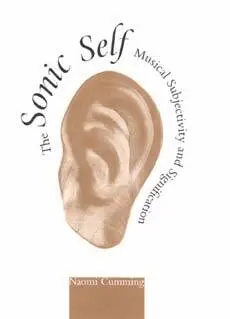
    Sonic Self

    Musical Subjectivity and Signification

    AvNaomi Cumming

    Inbunden, Engelska, 2001

    Del i serien Advances in Semiotics

    451 kr

    Beställningsvara. Skickas inom 10-15 vardagar. Fri frakt över 249 kr.

    Beskrivning

    "Semioticians began by looking at literature but have gradually applied their techniques to other disciplines, including music. The late Naomi Cumming . . . based this consideration of the sources of musical expression on her experiences as a performer—with interesting, if rarely surprising, results." —ChoiceUsing classical violin music as her principal laboratory, the author examines how a performance incorporates distinctive features not only of the work, but of the performer as well—and how the listener goes about interpreting not only the composer's work and the performer's rendering of the work, but also of the performer's and listener's identities. A richly interdisciplinary approach to a very common, yet persistently mysterious, part of our lives.

    Produktinformation

    • Utgivningsdatum:2001-01-22
    • Mått:156 x 235 x undefined mm
    • Vikt:875 g
    • Format:Inbunden
    • Språk:Engelska
    • Serie:Advances in Semiotics
    • Antal sidor:392
    • Förlag:Indiana University Press
    • ISBN:9780253337542

    Utforska kategorier

    • Musikvetenskap inom Kultur
    • Filosofiska discipliner inom Filosofi och religion

    Mer om författaren

    Naomi Cumming was a fine violinist and music theorist. She published a host of journal articles and lectured internationally on the philosophy, psychology, and semiotics of music; her article on musical semiotics will appear in the Revised New Grove Dictionary of Music and Musicians. She was a Fulbright fellow at Columbia University, a research fellow in music theory at the Department of Philosophy of the University of Melbourne, and recipient of an award from the Society for Music Theory in 1998.

    Recensioner i media

    "Semioticians began by looking at literature but have gradually applied their techniques to other disciplines, including music. The late Naomi Cumming, violinist and music theorist, based this consideration of the sources of musical expression on her experiences as a performer—with interesting, if rarely surprising, results. Cumming argues from the musical score and from the physical attributes of the performer toward a theory of musical analysis relying on C.S. Peirce's groundbreaking philosophy. It is worth noting, as musical theorists generally do not, that there is no such thing as analysis in music. There is only interpretation, because alternative conclusions about even the simplest music are inherent in its study. Total agreement concerning the meaning of any music is impossible. Although Cumming's arguments are on the whole reasonable, toward the end she veers off into a defense of some of the new musicology's more preposterous practitioners. Although the world of contemporary humanities scholarship is highly contentious, her book would have been better without the polemic. With appendix and notes, this volume is for upper—division undergraduates through professionals."—F. Goossen, emeritus, University of Alabama, Choice, September 2001

    Innehållsförteckning

    • Preliminary Table of Contents:IntroductionMusical InitiationsSubjects and SubjectivityA Philosophical Outlook1. Signs of SubjectivityPhysical Disciplines and SignsA Semiotic View of Musical SubjectivityExpressive Individuation and Uncertainty2. Listening Subjects and Semiotic WorldsThe Uncertainties of Musical SignificationInterntionality and MetaphorSubjects and First-person AuthorityRegaining an Interpretive "I"3. Musical SignsSigns and ObjectsQuestions and Typologies4. Naming Qualities; Hearing SignsQualities and Qualities-as-SignsDisciplinary Boundaries: How Does Semiotics Relate to Psychology?5. GesturingGesture as Performance and ConventionTo Perform or to Dissimulate?Voice and Gesture as Virtualities6. Framing Willfulness in Tonal LawTheorists: Giving Roles to RulesThe Dialectics of Tonal Semiosis7. Complex SynthesesExpressive Complexity and Musical "Personae"Modes of Synthesis8. Culturally Embedded SignsEmergent QualitiesSkeptical Issues9. Values and Personal CategoriesSounds and SensualityEncountersRehabilitating the SubjectAppendix: Theorizing GeneralsReal or Nominal Rules?Finding Constancies, Explaining What One Hears, or Seeking Enlightenment?