• Fri frakt över 249 kr
  • •
  • Snabba leveranser
  • •
  • Billiga böcker
Kundservice

Du är på sajten för privatpersoner.

Företag, bibliotek eller offentlig verksamhet?

Du handlar på classic.bokus.com, där alla dina funktioner finns intakta.
Till classic.bokus.com
Bokus logotyp. Gå till startsidan.
  • Erbjudanden
  • Nyheter
  • Student
  • Topplistor
  • Barn & ungdom
  • Bokus Play
  • E-böcker
  • Pocketböcker
  • Spel & pussel

10% rabatt på allt med kod NYSTART10 →

Sidfot

Mina sidor

    Hjälp

    • Kundservice
    • Vanliga frågor och svar
    • Frakt och leverans
    • Retur vid ångerrätt
    • Reklamera vara
    • Betalning
    • Köpvillkor
    • Allmänna villkor
    • Information om webbplatsens tillgänglighet

    Om Bokus

    • Om oss
    • Pressrum
    • För studenter
    • För företag
    • För bibliotek och offentlig verksamhet
    • För leverantörer
    • Hållbarhet

    Populärt

    • Aktuella erbjudanden
    • Presentkort
    • Studentlitteratur
    • Nya böcker
    • Topplistor
    • Signerade böcker
    • Engelska böcker

    Inspiration

    • Boktips
    • BookTok
    • Populära bokserier
    • Barnbokskaraktärer
    • Populära författare
    Logotyp för Bokus
    Följ oss på Facebook (extern länk)Följ oss på Instagram (extern länk)Följ oss på YouTube (extern länk)Följ oss på TikTok (extern länk)
    bokus @ CookiesAnpassa cookiesIntegritetspolicyKöpvillkor
    Till Citymail hemsida (extern länk)Till Budbee hemsida (extern länk)Till Postnord hemsida (extern länk)Till Schenker hemsida (extern länk)Till Early Bird hemsida (extern länk)Till Walleys hemsida (extern länk)
    1. Kultur
    2. Designböcker
    3. Designhistoria

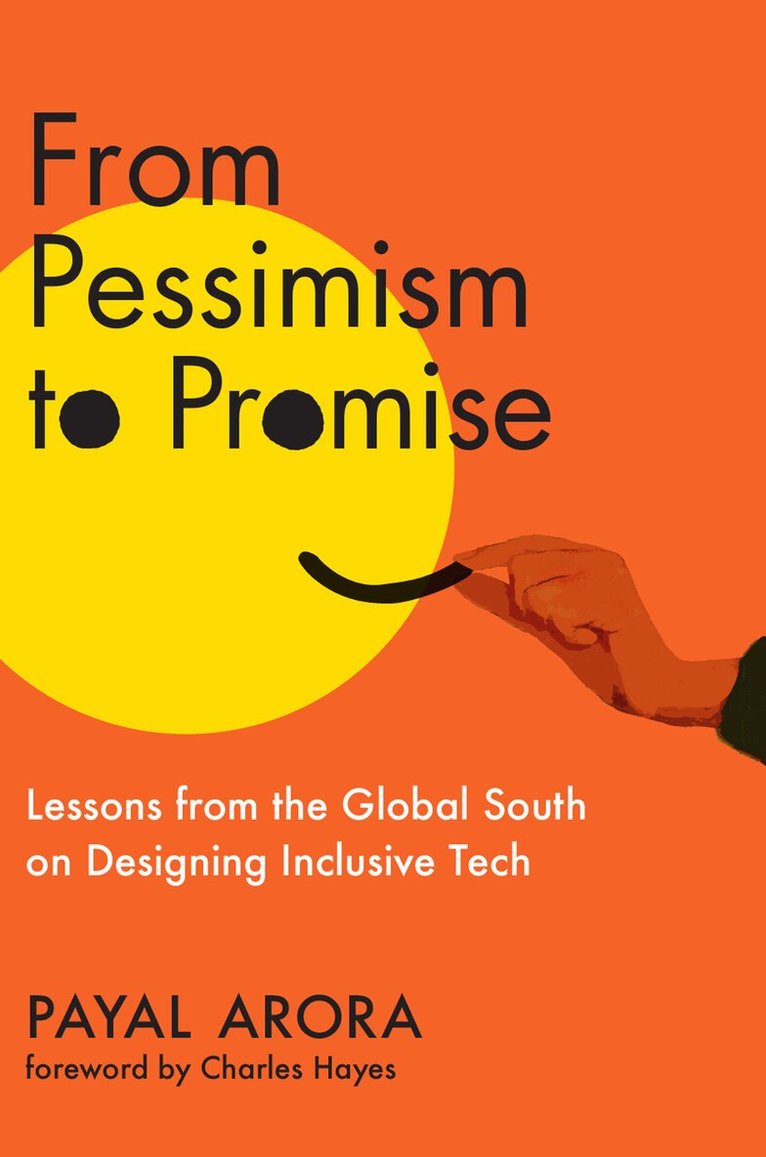
    From Pessimism to Promise

    Lessons from the Global South on Designing Inclusive Tech

    AvPayal Arora,Charles Hayes

    Inbunden, Engelska, 2024

    277 kr

    Skickas . Fri frakt över 249 kr.

    Fler format och utgåvor

    E-bok

    332 kr

    Beskrivning

    A radical paradigm shift in the way we think about AI and tech, taking hope and inspiration from the aspirational users of new technologies around the world.When it comes to tech, the mainstream headlines are bleak: Algorithms control and oppress. AI will destroy democracy and our social fabric, and possibly even drive us to extinction. While legitimate concerns drive these fears, we need to equally account for the fact that tech affords young people something incredibly valuable—a rare space for self-actualization. In From Pessimism to Promise, award-winning author Payal Arora explains that, outside the West, where most of the world’s youth reside, there is a significant different outlook on tech: in fact, there is a contagion of optimism toward all things digital. These users, especially those in marginalized contexts, are full of hope for new tech.As AI disrupts sectors across industries, education, and beyond, who better to shine the light forward, Arora argues, than the Global South, the navigator of all manner of forced disruptions, leapfrogging obstructive systems, norms, and practices to rapidly reinvent itself? Drawing on field insights in diverse global contexts such as Brazil, India, and Bangladesh, Payal describes what drives Gen Z to embrace new technologies. From Pessimism to Promise discusses the shift to relationally-driven approaches to design; how to create “algorithms of aspiration”; how to reimagine the digital space for sex, pleasure, and care; and, what we can learn from feminist digital activists and women’s collectives in the Global South on shared digital provenance and value, as well as indigenous approaches to sustainability, that challenges sacred ideas on degrowth, circular economy, and the doughnut economy. Arora also takes heart in the power in numbers, as the users from the majority world infuse algorithms with everyday aspirations, pushing for a new digital order.Timely and urgent, From Pessimism to Promise makes a deeply compelling case that it is not naïve to be optimistic about our digital future. On the contrary, it is our moral imperative to design with hope.

    Produktinformation

    • Utgivningsdatum:2024-09-03
    • Mått:155 x 231 x 23 mm
    • Vikt:295 g
    • Format:Inbunden
    • Språk:Engelska
    • Antal sidor:208
    • Förlag:MIT Press Ltd
    • ISBN:9780262049306

    Utforska kategorier

    • Designhistoria inom Kultur

    Mer om författaren

    Payal Arora is a digital anthropologist, consultant, TEDx speaker, and author of the award-winning book The Next Billion Users. Forbes named her the “next billion champion” and the “right kind of person to reform tech.” She is Professor of Inclusive AI Cultures at Utrecht University and cofounder of FemLab, a feminist future of work initiative.

    Recensioner i media

    “Payal Arora’s brilliant book turns standard beliefs upside down. Many people hold pessimistic views about the digital world but not the youth outside of Western culture: they find it uplifting and powerful.”—Don Norman, author of Design for a Better World: Meaningful, Sustainable, Humanity Centered“In this perspective-shifting new book, Payal Arora offers us a dynamic version of our shared designed and digital futures. A highly recommended read for all interested in crafting a green and equitable future.”—Leyla Acaroglu, founder, Disrupt Design“Arora urges us to ‘pop the pessimism bubble’ in this important and timely book, teaching lessons from the global majority to help us build hope for a digital future that truly serves the planet.”—Gina Neff, Executive Director, Minderoo Centre for Technology and Democracy, University of Cambridge; author of Venture Labor: Work and the Burden of Risk in Innovative Industries“This book brings a fresh wave of optimism toward all things digital. I think the Global South, where most of the world’s youth resides, will provide the direction to how technology will emerge and shape mankind’s future. Arora has done an excellent job in giving us a glimpse of a new digital order that is full of hope.”—Arundhati Bhattacharya, Chairperson & CEO, Salesforce India

    Innehållsförteckning

    • Introduction1   AI for Good, Bad, and the Ugly2   Algorithms of Aspiration3   Digital Desire4   Surveillance of Care5   Green DesignEpilogueNotesBibliographyAcknowledgmentsIndex