• Fri frakt över 249 kr
  • •
  • Snabba leveranser
  • •
  • Billiga böcker
Kundservice

Du är på sajten för privatpersoner.

Företag, bibliotek eller offentlig verksamhet?

Du handlar på classic.bokus.com, där alla dina funktioner finns intakta.
Till classic.bokus.com
Bokus logotyp. Gå till startsidan.
  • Erbjudanden
  • Nyheter
  • Student
  • Topplistor
  • Barn & ungdom
  • Bokus Play
  • E-böcker
  • Pocketböcker
  • Spel & pussel

10% rabatt på allt med kod: NYSTART10 →

Sidfot

Mina sidor

    Hjälp

    • Kundservice
    • Vanliga frågor och svar
    • Frakt och leverans
    • Retur vid ångerrätt
    • Reklamera vara
    • Betalning
    • Köpvillkor
    • Allmänna villkor
    • Information om webbplatsens tillgänglighet

    Om Bokus

    • Om oss
    • Pressrum
    • För studenter
    • För företag
    • För bibliotek och offentlig verksamhet
    • För leverantörer
    • Hållbarhet

    Populärt

    • Aktuella erbjudanden
    • Presentkort
    • Studentlitteratur
    • Nya böcker
    • Topplistor
    • Signerade böcker
    • Engelska böcker

    Inspiration

    • Boktips
    • BookTok
    • Populära bokserier
    • Barnbokskaraktärer
    • Populära författare
    Logotyp för Bokus
    Följ oss på Facebook (extern länk)Följ oss på Instagram (extern länk)Följ oss på YouTube (extern länk)Följ oss på TikTok (extern länk)
    bokus @ CookiesAnpassa cookiesIntegritetspolicyKöpvillkor
    Till Citymail hemsida (extern länk)Till Budbee hemsida (extern länk)Till Postnord hemsida (extern länk)Till Schenker hemsida (extern länk)Till Early Bird hemsida (extern länk)Till Walleys hemsida (extern länk)
    1. Juridik
    2. Rättsvetenskap
    3. Juridik: metod och teori
    4. Rättssystem

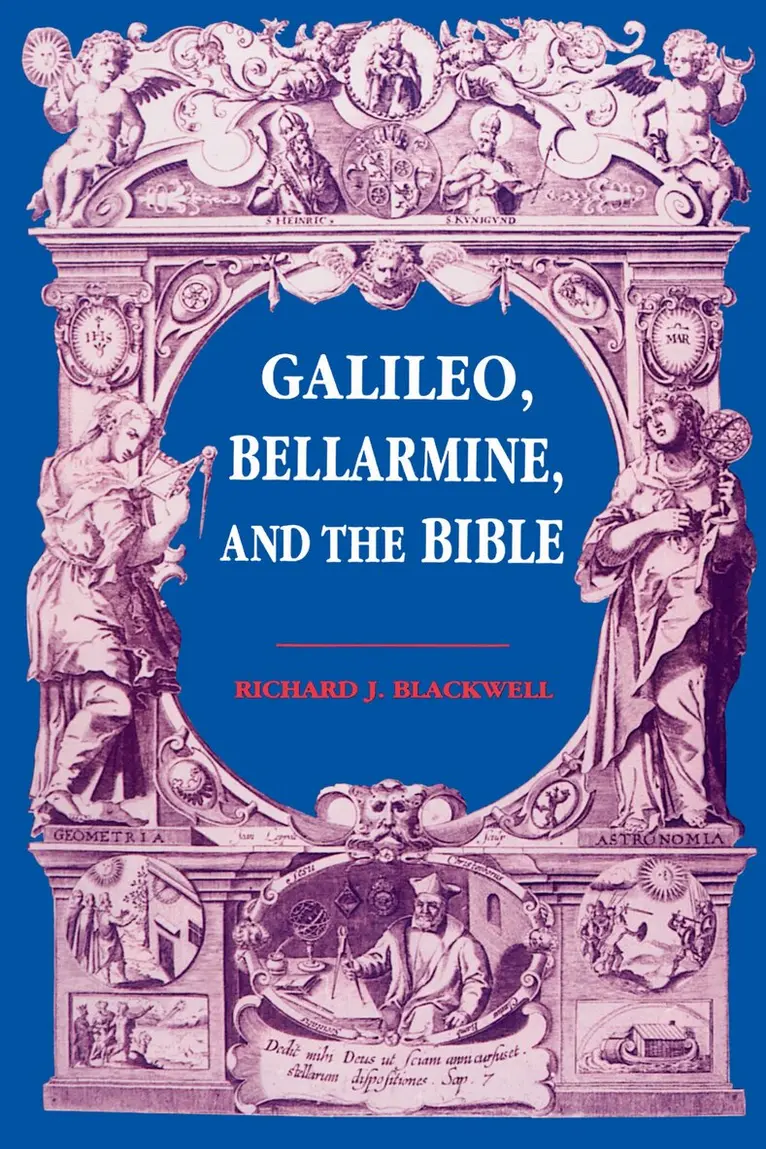
    Behind the Scenes at Galileo's Trial

    Including the First English Translation of Melchior Inchofer's Tractatus Syllepticus

    AvRichard J. Blackwell

    Häftad, Engelska, 2008

    272 kr

    Beställningsvara. Skickas inom 5-8 vardagar. Fri frakt över 249 kr.

    Beskrivning

    Galileo's trial in 1633 before the Roman Inquisition is one of the most frequently mentioned topics in the history of science. Galileo's encounter with the Catholic Church was not only a major turning point in the history of western culture; it is the paradigm case of the clash between the institutional authority of religion and the authority of scientific reason, a clash that has helped to define the modern era.Blackwell's new contribution to "the Galileo affair" concerns the official theological position against Galileo. The centerpiece of his project is the treatise entitled Tractatus syllepticus, written by Melchior Inchofer, S.J., whose judgment of the orthodoxy of Galileo's Dialogue had been requested earlier by the Holy Office and was then incorporated into the proceedings of the trial. At the time, Inchofer's judgment against Galileo's book was both detailed and harsh. That judgment formed the basis for Inchofer's subsequent Tractatus, the first English translation of which is included in this volume. Inchofer's text provides a new and fascinating way of looking at the defense of the guilty verdict. Blackwell's analysis of this material greatly enriches our knowledge of Galileo and his trial.Both legal and theological behind-the-scenes aspects of Galileo's trial are discussed. Because of a weak legal case, a plea bargain was arranged, extrajudicially, then sabotaged in the Holy Office before the final decision of the case. Through his close scrutiny of the specifics of the trial, Blackwell renders a picture that is more complex, and ominous, than the usual portrayal of the trial.


    Produktinformation

    • Utgivningsdatum:2008-09-15
    • Mått:152 x 229 x 14 mm
    • Vikt:358 g
    • Format:Häftad
    • Språk:Engelska
    • Antal sidor:264
    • Förlag:University of Notre Dame Press
    • ISBN:9780268022105

    Utforska kategorier

    • Rättssystem inom Juridik
    • Naturvetenskapens historia inom Naturvetenskap och teknik

    Mer om författaren

    RICHARD J. BLACKWELL is professor emeritus of philosophy, Saint Louis University. He is the author of numerous books, including Galileo, Bellarmine, and the Bible (University of Notre Dame Press, 1991), and is translator of A Defense of Galileo, the Mathematician from Florence (University of Notre Dame Press, 1994).

    Recensioner i media

    "It was faith against reason, entrenched religious orthodoxy against radically new scientific fact. Richard J. Blackwell (St. Louis, emeritus) is an expert on philosophy but here he diligently presents the complex religious and scientific details of the matter within the historical context of Galileo's time." — Bibliotheque d'Humanisme et Renaissance"There are many reasons why this 'Galileo affair' is uniquely important in modern history. One is that it is instructive for understanding the interaction between science and religion. Blackwell adds some nuances to the conflictualist thesis. . . . The main theme of Blackwell's book is that of exploring 'behind the scenes at Galileo's trial.'. . . This trial is one of the best-documented episodes emblematic of modernity . . . this book makes a valuable contribution and provides a model for this type of inquiry." —Journal of Modern History"If the evidence does not support a plot in Galileo's sense, Blackwell's account provides a scenario for a spellbinding novel. The story leaves enough latitude for the reader to draw his own conclusions. Although scholars both acquit and condemn the Church, the underlying issue remains: what constitutes a demonstration?" — The Review of Metaphysics"Richard Blackwell's latest foray into scholarship on the Galileo affair contains detective history, careful scholarship, theological ruminations, and excellent translation work. The most tantalizing piece is chapter 1, titled 'The Legal Case at Galileo's Trial: Impasse and Perfidy,' which pushes a thesis that involves plea bargains, mysterious saboteur(s), and a miscarriage of justice." —The Sixteenth Century Journal"Blackwell exposes details of the infamous trial that are not universally known: Galileo's explanation in the first session that he did not know there was a warning against writing the book that brought him to the Inquisition, his premature admission of guilt in the second session, and the misreporting of court proceedings to the cardinal in terms that would resonate with them. . . . Recommended." —Choice"Though the conduct of Galileo's trial was probably less sinister than Blackwell has suggested, with these two defenses of the Church's condemnation of Copernicanism we have a new, intriguing glimpse behind the scenes." —The Renaissance Quarterly