• Fri frakt över 249 kr
  • •
  • Snabba leveranser
  • •
  • Billiga böcker
Kundservice

Du är på sajten för privatpersoner.

Företag, bibliotek eller offentlig verksamhet?

Du handlar på classic.bokus.com, där alla dina funktioner finns intakta.
Till classic.bokus.com
Bokus logotyp. Gå till startsidan.
  • Erbjudanden
  • Nyheter
  • Student
  • Topplistor
  • Barn & ungdom
  • Bokus Play
  • E-böcker
  • Pocketböcker
  • Spel & pussel

10% rabatt på allt med kod: NYSTART10 →

Sidfot

Mina sidor

    Hjälp

    • Kundservice
    • Vanliga frågor och svar
    • Frakt och leverans
    • Retur vid ångerrätt
    • Reklamera vara
    • Betalning
    • Köpvillkor
    • Allmänna villkor
    • Information om webbplatsens tillgänglighet

    Om Bokus

    • Om oss
    • Pressrum
    • För studenter
    • För företag
    • För bibliotek och offentlig verksamhet
    • För leverantörer
    • Hållbarhet

    Populärt

    • Aktuella erbjudanden
    • Presentkort
    • Studentlitteratur
    • Nya böcker
    • Topplistor
    • Signerade böcker
    • Engelska böcker

    Inspiration

    • Boktips
    • BookTok
    • Populära bokserier
    • Barnbokskaraktärer
    • Populära författare
    Logotyp för Bokus
    Följ oss på Facebook (extern länk)Följ oss på Instagram (extern länk)Följ oss på YouTube (extern länk)Följ oss på TikTok (extern länk)
    bokus @ CookiesAnpassa cookiesIntegritetspolicyKöpvillkor
    Till Citymail hemsida (extern länk)Till Budbee hemsida (extern länk)Till Postnord hemsida (extern länk)Till Schenker hemsida (extern länk)Till Early Bird hemsida (extern länk)Till Walleys hemsida (extern länk)
    1. Naturvetenskap och teknik
    2. Geovetenskap
    3. Miljövetenskap och miljöpolitik

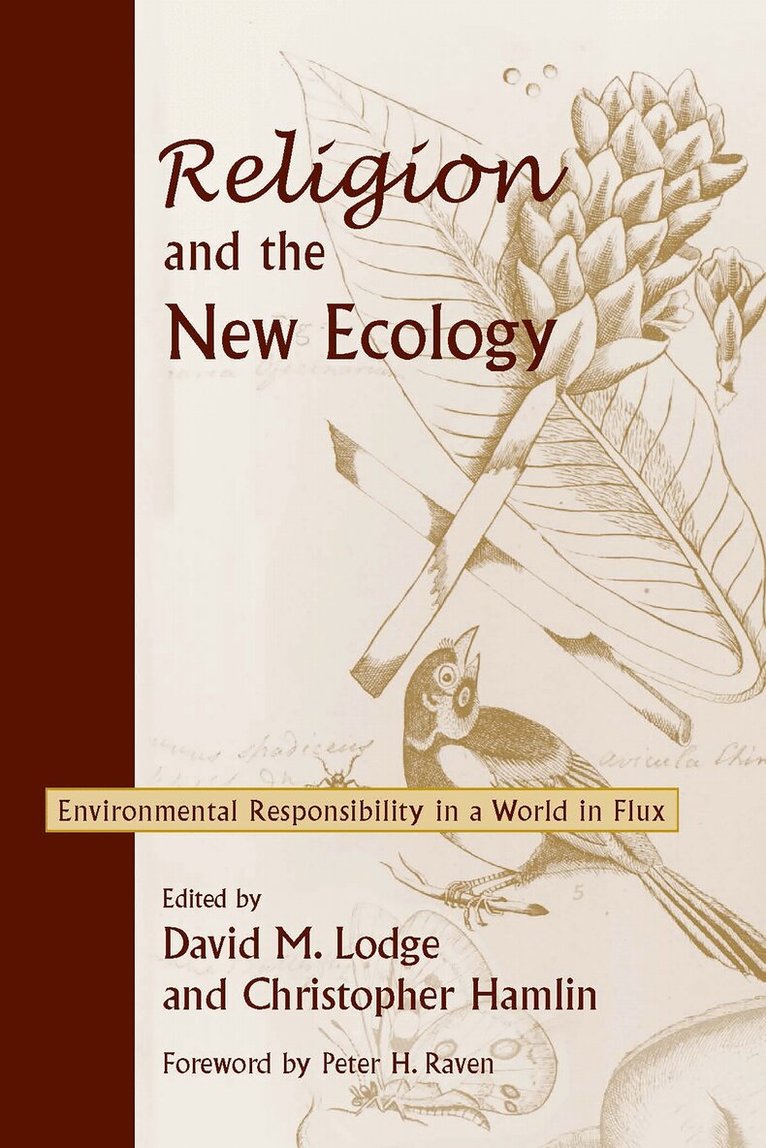
    Religion and the New Ecology

    Environmental Responsibility in a World in Flux

    AvDavid M. Lodge

    Häftad, Engelska, 2006

    408 kr

    Beställningsvara. Skickas inom 5-8 vardagar. Fri frakt över 249 kr.

    Beskrivning

    For many years, ecologists and the environmentalists who looked to ecology for authority depicted a dichotomy between a pristine, stable nature and disruptive human activity. Most contemporary ecologists, however, conceive of nature as undergoing continual change and find that "flux of nature" is a more accurate and fruitful metaphor than "balance of nature."The contributors to this volume address how this new paradigm fits into the broader history of ecological science and the cultural history of the West and, in particular, how environmental ethics and ecotheology should respond to it. Their discussions ask us to reconsider the intellectual foundations on which theories of human responsibility to nature are built. The provisional answer that develops throughout the book is to reintegrate scientific understanding of nature and human values, two realms of thought severed by intellectual and cultural forces during the last two centuries. Religious reflection and practice point the way toward a new humility in making the tough decisions and trade-offs that will always characterize environmental management.Timely and challenging, the essays suggest avenues toward a new framework for interdisciplinary conversation among theologians, philosophers, historians, and environmental ethicists.Contributors: David M. Lodge, Christopher Hamlin, Elspeth Whitney, Mark Stoll, Eugene Cittadino, Kyle S. Van Houtan, Stuart L. Pimm, Gary E. Belovsky, Peter S. White, Patricia A. Fleming, John F. Haught, and Larry Rasmussen.

    Produktinformation

    • Utgivningsdatum:2006-09-30
    • Mått:152 x 229 x 19 mm
    • Vikt:553 g
    • Format:Häftad
    • Språk:Engelska
    • Antal sidor:340
    • Förlag:University of Notre Dame Press
    • ISBN:9780268034047

    Utforska kategorier

    • Miljövetenskap och miljöpolitik inom Naturvetenskap och teknik
    • Filosofiska discipliner inom Filosofi och religion

    Mer om författaren

    David M. Lodge is professor of biological sciences at the University of Notre Dame.Christopher Hamlin is professor of history at the University of Notre Dame.

    Recensioner i media

    "Ecology has experienced a major paradigm shift over the last half of the twentieth century. This shift requires major rethinking of the relation of religion and environmental ethics to ecology because our scientific understanding of the nature side of that relationship has changed. This book is the first, to my knowledge, that is meeting this challenge head on, and it is doing so in an exemplary way." —J. Baird Callicott, University of North Texas"Everything on Earth is becoming unbalanced—escalating populations and consumption, global warming, extinction, troubling ecosystems that by nature are fluxing, evolving, often disturbed, even chaotic. What can and ought we conserve, preserve, sustain on this planet in jeopardy? Here science and religion join in urgent dialogue, a seminal search for answers as we face an open future, with promise and peril." —Holmes Rolston, III, University Distinguished Professor and Professor of Philosophy, Colorado State University"Contributors to this volume address the question of how the new paradigm of continual change in ecology ('flux in nature') fits into the broader history of ecological science and the cultural history of the West, and, in particular, how environmental ethics and eco-theology should respond." —Interdisciplinary Studies in Literature and Environment"… the authors firmly believe that religion has much to offer to modern environmentalism. They pragmatically argue that we need to engage with American Christians specifically, simply because of their prominence. More important, the authors genuinely believe that Christianity has the potential to contribute to a renewed environmental ethic; they unanimously dismiss Lynn White's infamous thesis that Christianity is essentially the cause of ecological degradation." — BioScience"Christians in environmental studies can use this book as an additional source of opinions on moral and ethical questions." —Perspectives on Science and Christian Faith"The book reflects the conviction that we must establish significant coherence between our historical, scientific, and religious understandings of nature if we are to effectively address current and emerging environmental problems . . . the editors effectively frame the overarching problems and the essays are serious, although still accessible to readers from various backgrounds." —The Quarterly Review of Biology