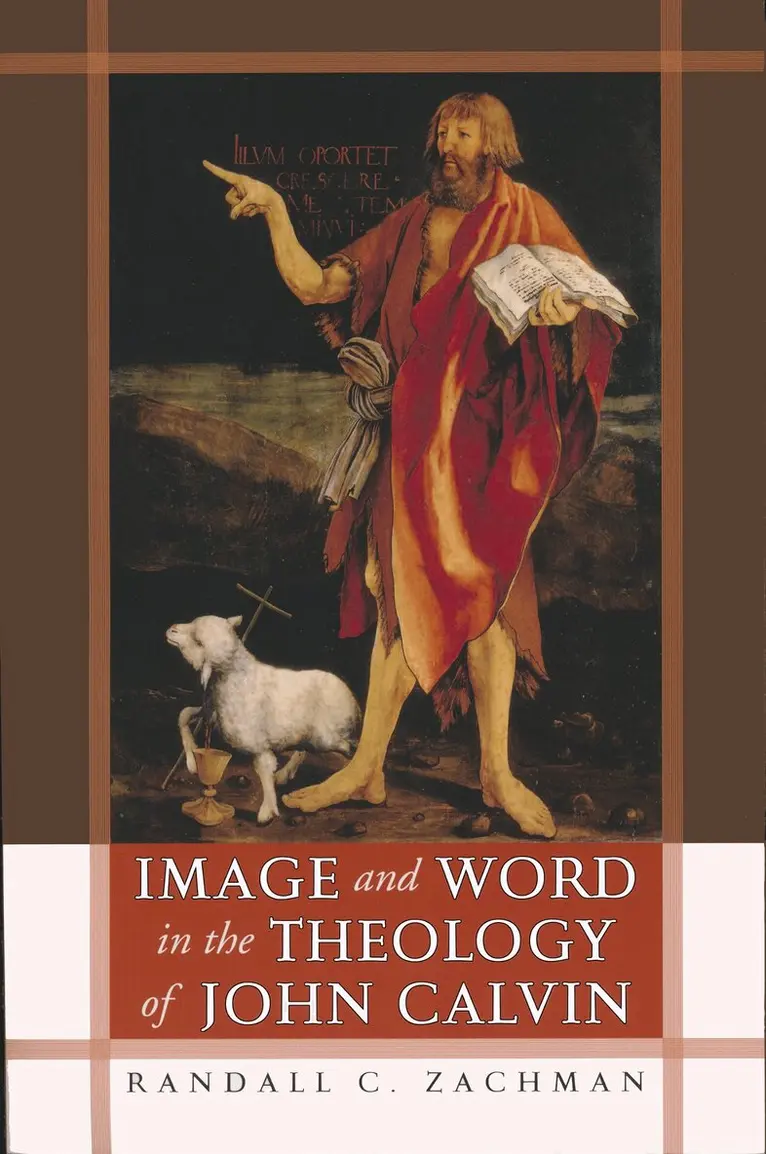
Häftad, Engelska, 2009
Image and Word in the Theology of John Calvin
Del i serien University of Notre Dame Press
680 kr
Beställningsvara. Skickas inom 3-6 vardagar. Fri frakt över 249 kr.
Beskrivning
Produktinformation
- Utgivningsdatum: 2009-08-15
- Mått: 156 x 234 x 29 mm
- Vikt: 780 g
- Format: Häftad
- Språk: Engelska
- Serie: University of Notre Dame Press
- Antal sidor: 277
- Förlag: University of Notre Dame Press
- ISBN: 9780268045012
Utforska kategorier
Mer om författaren
Randall C. Zachman taught Reformation and post-Reformation theology at the University of Notre Dame from 1991-2017. Since his retirement, he has moved to Lancaster, PA with his wife Carrie Call, and is now Adjunct Instructor of Church History at Lancaster Theological Seminary. He is the author of The Assurance of Faith and John Calvin as Teacher, Pastor, and Theologian, and co-editor of Conciliation and Confession (University of Notre Dame Press).
Recensioner i media
"Lutheran readers may find this book to be a helpful introduction to various themes in Calvin's thought with a few unexpected turns along the way. . . . Zachman's work will undoubtedly be important for evangelicals and Calvinists who seek to remain faithful to Calvin's theology and yet also move in ecumenical and liturgical directions." —Concordia Theological Quarterly"This interesting and rich volume by Randall Zachman successfully challenges the common assumption held by both critics and supporters that Calvin had a bias against visual experience. The bulk of the book is dedicated to tracing the interrelationship of Word and image in the writings of Calvin. Zachman's monograph ought to be read not only by all those who wish to understand image and Word in Calvin's theology but also by those who wish to understand their relationship in the larger Reformed and Protestant traditions." —Calvin Theological Journal"This is a substantial contribution to Calvin scholarship that offers a much needed corrective to Calvin's views concerning images. It is a carefully researched work that not only rightly shows the deep importance of images in Calvin's theology but also reveals the man tensions in Calvin's thought concerning divine manifestations and proclamations." —The Journal of Church History"Zachman's overall thesis is that a main theological concern of the Genevan Reformer was to try 'to combine what we hear with what we see.' It is connected with the complaint that Calvin has often been interpreted as a theologian of the Word who excludes the awareness of God's works and the praise of God's manifestations in the creation. . . . the result of this 'unorthodox' reading of Calvin is impressive and stimulating. It reminds us of an often neglected fact in the history of Calvinist piety: that God the Redeemer is still God the Creator." —Scottish Journal of Theology"Zachman's landmark work, with its copious references to Calvin's writings and attention to the historical development of his thought, provides Protestants the opportunity to alter the received view of Calvin's theology as being 'anti-aesthetic.' In doing so, he opens the doorway for a thoroughly Protestant and evangelical contribution to the burgeoning discipline of theological aesthetics that connects to both Augustine and Jonathan Edwards." —Themelios"The work is focused on the relationship between the 'theologies' of manifestation and proclamation in Calvin's corpus examining Calvin's understanding of images and words, the visible and auditory, as they are woven together in the fabric of his theological oeuvre. . . . Zachman's work is a significant contribution to Calvin scholarship and must be considered for its provocative, if unconventional thesis regarding the role of images in Calvin's theology." —Sixteenth Century Journal"This study of Calvin deserves wide reading by scholars, who will be challenged by a new emphasis on the relationship of word and image in the reformer's theology." — Interpretation"Zachman has written a tour de force on the interplay in John Calvin's theology between image and word. Too often, Zachman demonstrates, people have a caricatured view of Calvin's hostility to religious iconography. Zachman argues that Calvin did have a hostility to 'dead images,' but was open to using sights and images that allowed viewers to comprehend the Word of God in different ways than hearing alone. . . . Anyone who seeks to be engaged in Calvin scholarship or Calvinist theology will have to read and engage Zachman. Essential." —Choice"Randall C. Zachman's Image and Word in the Theology of John Calvin constitutes a major revision of a longstanding assumption regarding Calvin's theology of divine self-manifestation. At the heart of Zachman's work is a reassessment of an important aspect of Calvin's theology. . . . His discussion of Calvin's understanding of divine self-manifestation by means of visions, oracles, and the 'manifestations of piety in the church' leads us away from the overly intellectualistic reading of Calvin that has characterized scholarship, and it opens up a refreshing consideration of Calvin as a theologian of experience." —Renaissance Quarterly"Most students of John Calvin concentrate on his use of words and make of his form of religion one that can be absorbed only by listening or reading. Randall Zachman, by examining closely Calvin's constant references to living images, suggests that Calvin created a form of religion that should be absorbed by both listening and looking, revealed in both truth and beauty. His book supplies a fresh view that will be of special interest to those seeking ecumenical perspectives on Calvin's important contributions to the Christian tradition." —Robert M. Kingdon, Emeritus, University of Wisconsin-Madison
Betyg & recensioner
0 recensioner
Inga recensioner tillgängliga.