• Fri frakt över 249 kr
  • •
  • Snabba leveranser
  • •
  • Billiga böcker
Kundservice

Du är på sajten för privatpersoner.

Företag, bibliotek eller offentlig verksamhet?

Du handlar på classic.bokus.com, där alla dina funktioner finns intakta.
Till classic.bokus.com
Bokus logotyp. Gå till startsidan.
  • Erbjudanden
  • Nyheter
  • Student
  • Topplistor
  • Barn & ungdom
  • Bokus Play
  • E-böcker
  • Pocketböcker
  • Spel & pussel

10% studentrabatt med kod TERM26

Sidfot

Mina sidor

    Hjälp

    • Kundservice
    • Vanliga frågor och svar
    • Frakt och leverans
    • Retur vid ångerrätt
    • Reklamera vara
    • Betalning
    • Köpvillkor
    • Allmänna villkor
    • Information om webbplatsens tillgänglighet

    Om Bokus

    • Om oss
    • Pressrum
    • För studenter
    • För företag
    • För bibliotek och offentlig verksamhet
    • För leverantörer
    • Hållbarhet

    Populärt

    • Aktuella erbjudanden
    • Presentkort
    • Studentlitteratur
    • Nya böcker
    • Topplistor
    • Signerade böcker
    • Engelska böcker

    Inspiration

    • Boktips
    • BookTok
    • Populära bokserier
    • Barnbokskaraktärer
    • Populära författare
    Logotyp för Bokus
    Följ oss på Facebook (extern länk)Följ oss på Instagram (extern länk)Följ oss på YouTube (extern länk)Följ oss på TikTok (extern länk)
    bokus @ CookiesAnpassa cookiesIntegritetspolicyKöpvillkor
    Till Citymail hemsida (extern länk)Till Budbee hemsida (extern länk)Till Postnord hemsida (extern länk)Till Schenker hemsida (extern länk)Till Early Bird hemsida (extern länk)Till Walleys hemsida (extern länk)
    1. Skönlitteratur
    2. Poesi

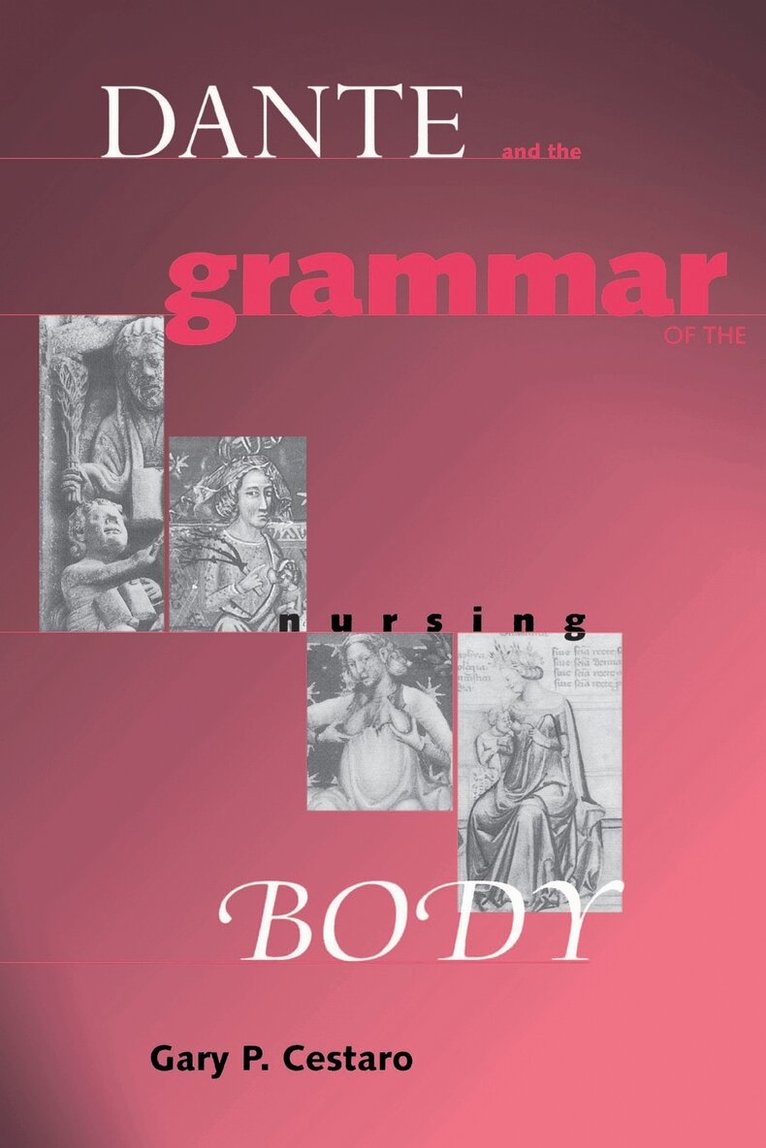
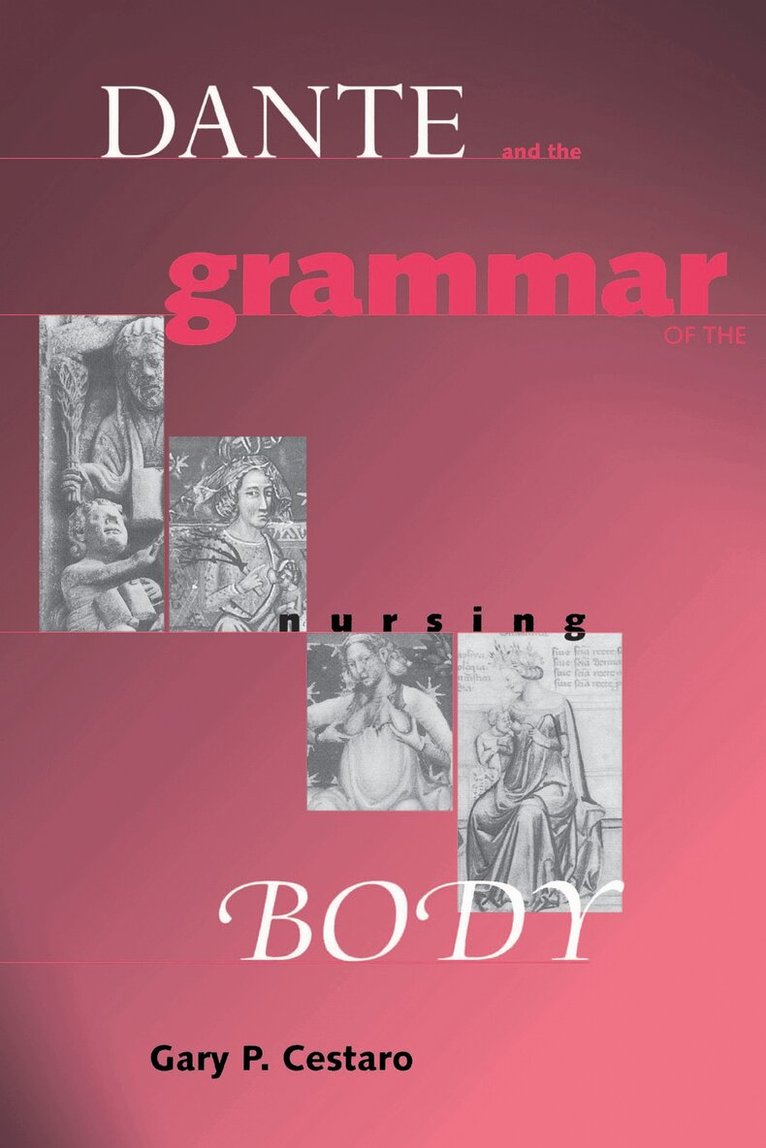
    Dante and the Grammar of the Nursing Body

    AvGary P. Cestaro

    E-bok
    PDF, Engelska, 2003

    Del i serien William and Katherine Devers Series in Dante and Medieval Italian Literature

    540 kr

    Läs direkt i Bokus Reader – eller ladda ned till din enhet (PDF kräver ofta zoom och scroll på små skärmar).

    Fler format och utgåvor

    Inbunden

    986 kr

    Häftad

    469 kr

    Beskrivning

    Dante and the Grammar of the Nursing Body takes a serious look at Dante's relation to Latin grammar and the new "mother tongue"-Italian vernacular-by exploring the cultural significance of the nursing mother in medieval discussions of language and selfhood. Inspired by Julia Kristeva's meditations on the maternal semiotic, Cestaro's book uncovers ancient and medieval discourses that assert the nursing body's essential role in the development of a mature linguistic self.The opening chapters locate traces of the nursing motif in Dante's minor works and particularly in his Latin treatise on the mother tongue, De vulgari eloquentia. Cestaro argues that a primal scene of suckling motivates the poet's musings on language and brings the work to its premature end. Subsequent chapters explore the evolution of the nursing body in the Comedy: from the parodic anti-nurse of Inferno (archetypically Circe with her poison milk), to the Christian deconstruction and reconstruction of selfhood in intimate association with female nursing on the mountain of Purgatorio. The book ends in Paradiso with a dramatic metaphorical celebration of the nursing body as a site of eternal truth and emblem of the resurrected body promised by medieval Christianity.
    Produktinformation

    • Utgivningsdatum:2003-09-03
    • Språk:Engelska
    • Antal sidor:320
    • Filformat:PDF
    • Kopieringsskydd:LCP
    • ISBN:9780268159184
    • Förlag:University of Notre Dame Press
    • Serie:William and Katherine Devers Series in Dante and Medieval Italian Literature

    Utforska kategorier

    • Poesi inom Skönlitteratur
    • Litteraturvetenskap inom Skönlitteratur
    • Litteraturvetenskap inom Skönlitteratur

    Mer om författaren

    Gary P. Cestaro is associate professor of modern languages at DePaul University.

    Recensioner i media

    "Cestaro marshals an impressive array of material, within and outside the Dante corpus, in the service of materializing Dante beyond the hypostases of classical virility and its modern critical analogues. Additionally, Cestaro writes like a charm." —Modern Philology"… a highly intelligent and engaging read. Cestaro writes with great breadth. The book offers a nice balance of historical and theoretical readings of many thinkers to whom Dante was indebted while cultivating our appreciation for the artistry and luminosity of the Commedia." —Comitatus: A Journal of Medieval and Renaissance Studies"Cestaro's subtle, complex, and thought-provoking book is a welcome demonstration of how much can be gained by reading the Commedia not only as a product of preceding traditions but also as an anticipation of themes central to thinkers such as Kristeva and Lacan. …his thesis offers a cogent challenge to the standard view that the poem tends ultimately towards evanescence and the diminution of corporeality, for Cestaro recognizes that at the heart of the Paradiso there is an affirmation of the body as a site of joyous process." —MLR"Gary Cestaro's study of the nursing body, language, and salvation in Dante's De vulgari eloquentia, Convivio, and Commedia constitutes a remarkable contribution to both Dante studies and the flourishing fields of gender and sexuality studies. This book about Dante's disinterment and resurrection of the permeable, reproductive, fluid, nurturing body as the primal signifier is groundbreaking (in several senses) and will invigorate many further investigations." —Speculum(Speculum)