• Fri frakt över 249 kr
  • •
  • Snabba leveranser
  • •
  • Billiga böcker
Kundservice

Du är på sajten för privatpersoner.

Företag, bibliotek eller offentlig verksamhet?

Du handlar på classic.bokus.com, där alla dina funktioner finns intakta.
Till classic.bokus.com
Bokus logotyp. Gå till startsidan.
  • Erbjudanden
  • Nyheter
  • Student
  • Topplistor
  • Barn & ungdom
  • Bokus Play
  • E-böcker
  • Pocketböcker
  • Spel & pussel

10% rabatt på allt med kod: NYSTART10 →

Sidfot

Mina sidor

    Hjälp

    • Kundservice
    • Vanliga frågor och svar
    • Frakt och leverans
    • Retur vid ångerrätt
    • Reklamera vara
    • Betalning
    • Köpvillkor
    • Allmänna villkor
    • Information om webbplatsens tillgänglighet

    Om Bokus

    • Om oss
    • Pressrum
    • För studenter
    • För företag
    • För bibliotek och offentlig verksamhet
    • För leverantörer
    • Hållbarhet

    Populärt

    • Aktuella erbjudanden
    • Presentkort
    • Studentlitteratur
    • Nya böcker
    • Topplistor
    • Signerade böcker
    • Engelska böcker

    Inspiration

    • Boktips
    • BookTok
    • Populära bokserier
    • Barnbokskaraktärer
    • Populära författare
    Logotyp för Bokus
    Följ oss på Facebook (extern länk)Följ oss på Instagram (extern länk)Följ oss på YouTube (extern länk)Följ oss på TikTok (extern länk)
    bokus @ CookiesAnpassa cookiesIntegritetspolicyKöpvillkor
    Till Citymail hemsida (extern länk)Till Budbee hemsida (extern länk)Till Postnord hemsida (extern länk)Till Schenker hemsida (extern länk)Till Early Bird hemsida (extern länk)Till Walleys hemsida (extern länk)
    1. Filosofi och religion
    2. Religion och tro
    3. Islam

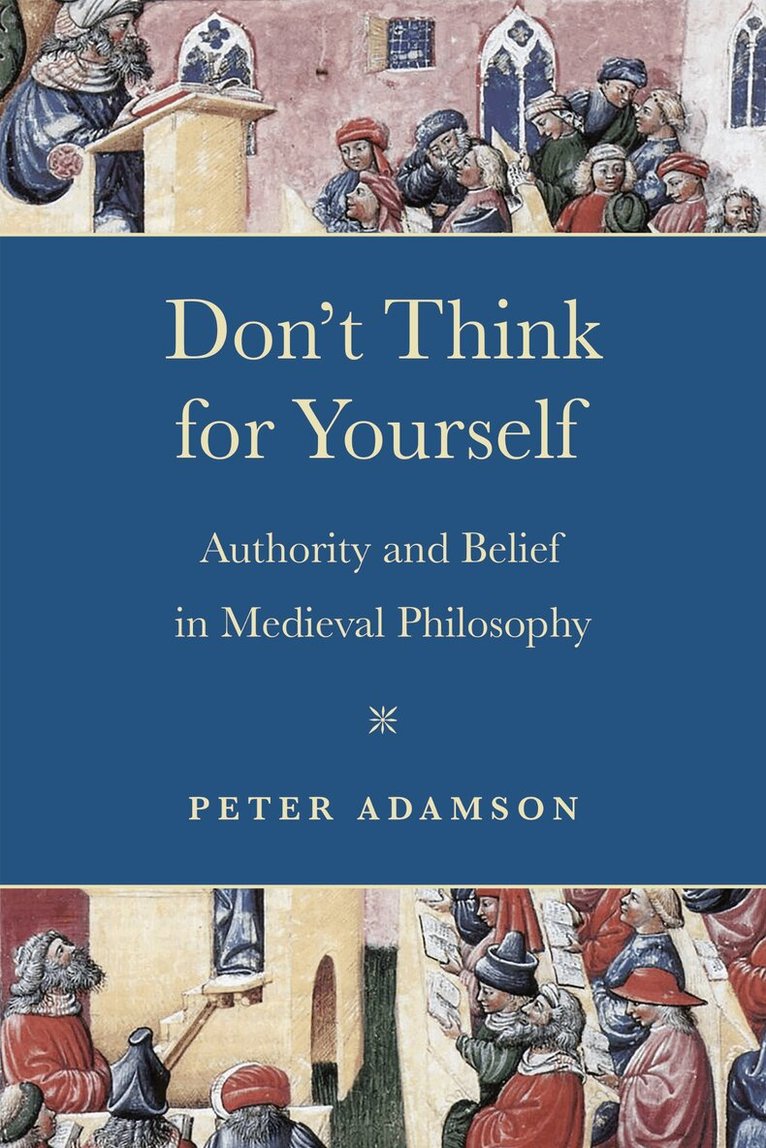
    Don't Think for Yourself

    Authority and Belief in Medieval Philosophy

    AvPeter Adamson

    Inbunden, Engelska, 2022

    Del i serien Conway Lectures in Medieval Studies

    858 kr

    Beställningsvara. Skickas inom 5-8 vardagar. Fri frakt över 249 kr.

    Fler format och utgåvor

    Häftad

    397 kr

    Beskrivning

    How do we judge whether we should be willing to follow the views of experts or whether we ought to try to come to our own, independent views? This book seeks the answer in medieval philosophical thought.In this engaging study into the history of philosophy and epistemology, Peter Adamson provides an answer to a question as relevant today as it was in the medieval period: how and when should we turn to the authoritative expertise of other people in forming our own beliefs? He challenges us to reconsider our approach to this question through a constructive recovery of the intellectual and cultural traditions of the Islamic world, the Byzantine Empire, and Latin Christendom.Adamson begins by foregrounding the distinction in Islamic philosophy between taqlīd, or the uncritical acceptance of authority, and ijtihād, or judgment based on independent effort, the latter of which was particularly prized in Islamic law, theology, and philosophy during the medieval period. He then demonstrates how the Islamic tradition paves the way for the development of what he calls a "justified taqlīd," according to which one develops the skills necessary to critically and selectively follow an authority based on their reliability. The book proceeds to reconfigure our understanding of the relation between authority and independent thought in the medieval world by illuminating how women found spaces to assert their own intellectual authority, how medieval writers evaluated the authoritative status of Plato and Aristotle, and how independent reasoning was deployed to defend one Abrahamic faith against the other. This clear and eloquently written book will interest scholars in and enthusiasts of medieval philosophy, Islamic studies, Byzantine studies, and the history of thought.

    Produktinformation

    • Utgivningsdatum:2022-10-15
    • Mått:152 x 229 x 13 mm
    • Vikt:436 g
    • Format:Inbunden
    • Språk:Engelska
    • Serie:Conway Lectures in Medieval Studies
    • Antal sidor:194
    • Förlag:University of Notre Dame Press
    • ISBN:9780268203399

    Utforska kategorier

    • Islam inom Filosofi och religion
    • Religion: allmänt inom Filosofi och religion
    • Filosofiska discipliner inom Filosofi och religion

    Mer om författaren

    Peter Adamson is professor of philosophy at Ludwig-Maximilians-Universität München. He is the author and co-author of a number of books, including A History of Philosophy without Any Gaps: Philosophy in the Islamic World.

    Recensioner i media

    "Don't Think for Yourself is a timely intervention from the past into the present. And while it is up to the individual reader to decide who they think offers the best insight today, Peter Adamson offers us a chance to have a dialogue across the generations, cultures and geographies. . . . We may not agree with what our predecessors thought about expertise and our relationship to it, but reading them might trigger a new way of thinking about our problems. A thoughtful, engaging and erudite book that leaves one wanting more." —The New Arab"This is a highly original work in its combination of popular and scholarly themes. Adamson weaves together a number of disparate sources under the broad theme of the epistemic legitimacy of authority, many of them unexpected companions." —Deborah L. Black, author of Logic and Aristotle's "Rhetoric" and "Poetics" in Medieval Arabic Philosophy"Thoughtful, lucid, and concise... A book which can be read fruitfully not only by medievalists of all disciplines, but also by anyone interested in the philosophic contributions of the past." —The Medieval Review"As Don't Think for Yourself itself richly demonstrates, medieval attitudes towards questions of epistemic authority are much more complex and interesting than we might have initially supposed." —Notre Dame Philosophical Reviews

    Innehållsförteckning

    • Introduction1. Taqlīd: Authority and the Intellectual Elite in the Islamic World2. Too High a Standard: Knowledge and Skepticism in Medieval Philosophy3. Testing the Prophets: Reason and the Choice of Faiths4. Using the Pagans: Reason in Interreligious Debate5. Some Pagans are Better than Others: the Merits of Plato and Aristotle6. Finding Their Voices: Women in Byzantine and Latin Christian Philosophy7. The Rule of Reason: Human and Animal Nature