• Fri frakt över 249 kr
  • •
  • Snabba leveranser
  • •
  • Billiga böcker
Kundservice

Du är på sajten för privatpersoner.

Företag, bibliotek eller offentlig verksamhet?

Du handlar på classic.bokus.com, där alla dina funktioner finns intakta.
Till classic.bokus.com
Bokus logotyp. Gå till startsidan.
  • Erbjudanden
  • Nyheter
  • Student
  • Topplistor
  • Barn & ungdom
  • Bokus Play
  • E-böcker
  • Pocketböcker
  • Spel & pussel

10% rabatt på allt med kod NYSTART10 →

Sidfot

Mina sidor

    Hjälp

    • Kundservice
    • Vanliga frågor och svar
    • Frakt och leverans
    • Retur vid ångerrätt
    • Reklamera vara
    • Betalning
    • Köpvillkor
    • Allmänna villkor
    • Information om webbplatsens tillgänglighet

    Om Bokus

    • Om oss
    • Pressrum
    • För studenter
    • För företag
    • För bibliotek och offentlig verksamhet
    • För leverantörer
    • Hållbarhet

    Populärt

    • Aktuella erbjudanden
    • Presentkort
    • Studentlitteratur
    • Nya böcker
    • Topplistor
    • Signerade böcker
    • Engelska böcker

    Inspiration

    • Boktips
    • BookTok
    • Populära bokserier
    • Barnbokskaraktärer
    • Populära författare
    Logotyp för Bokus
    Följ oss på Facebook (extern länk)Följ oss på Instagram (extern länk)Följ oss på YouTube (extern länk)Följ oss på TikTok (extern länk)
    bokus @ CookiesAnpassa cookiesIntegritetspolicyKöpvillkor
    Till Citymail hemsida (extern länk)Till Budbee hemsida (extern länk)Till Postnord hemsida (extern länk)Till Schenker hemsida (extern länk)Till Early Bird hemsida (extern länk)Till Walleys hemsida (extern länk)
    1. Filosofi och religion
    2. Filosofi
    3. Filosofiska discipliner

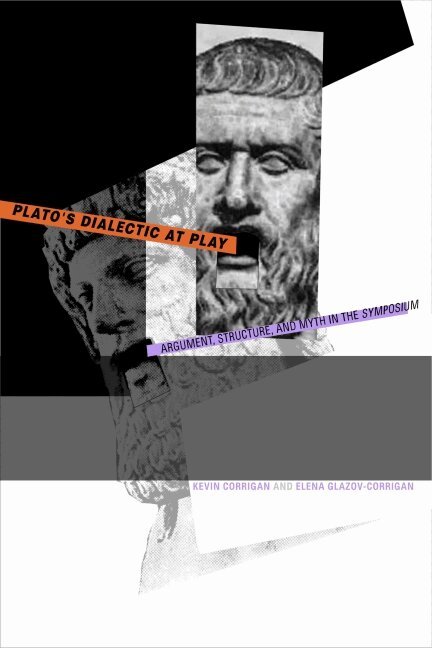
    Plato's Dialectic at Play

    Argument, Structure, and Myth in the Symposium

    AvKevin Corrigan,Elena Glazov-Corrigan

    Häftad, Engelska, 2004

    582 kr

    Beställningsvara. Skickas inom 5-8 vardagar. Fri frakt över 249 kr.

    Beskrivning

    The Symposium is one of Plato’s most accessible dialogues, an engrossing historical document as well as an entertaining literary masterpiece. By uncovering the structural design of the dialogue, Plato’s Dialectic at Play aims at revealing a Plato for whom the dialogical form was not merely ornamentation or philosophical methodology but the essence of philosophical exploration. His dialectic is not only argument; it is also play. Careful analysis of each layer of the text leads cumulatively to a picture of the dialogue’s underlying structure, related to both argument and myth, and shows that a dynamic link exists between Diotima’s higher mysteries and the organization of the dialogue as a whole. On this basis the authors argue that the Symposium, with its positive theory of art contained in the ascent to the Beautiful, may be viewed as a companion piece to the Republic, with its negative critique of the role of art in the context of the Good. Following Nietzsche’s suggestion and applying criteria developed by Mikhail Bakhtin, they further argue for seeing the Symposium as the first novel. The book concludes with a comprehensive reevaluation of the significance of the Symposium and its place in Plato’s thought generally, touching on major issues in Platonic scholarship: the nature of art, the body-soul connection, the problem of identity, the relationship between mythos and logos, Platonic love, and the question of authorial writing and the vanishing signature of the absent Plato himself.

    Produktinformation

    • Utgivningsdatum:2004-11-15
    • Mått:152 x 229 x 19 mm
    • Vikt:454 g
    • Format:Häftad
    • Språk:Engelska
    • Antal sidor:280
    • Förlag:Pennsylvania State University Press
    • ISBN:9780271029139

    Utforska kategorier

    • Filosofiska discipliner inom Filosofi och religion

    Mer om författaren

    Kevin Corrigan is Professor in the Graduate Institute of Liberal Arts at Emory University. Elena Glazov-Corrigan is Associate Professor and Chair of the Department of Russian and East Asian Languages and Cultures at Emory University.

    Recensioner i media

    “Its literary sensibility and systematic lucidity make this work a remarkable contribution to the debates concerning Plato’s Symposium as well as the vexata quaestio of the relation between poetry and philosophy or, more broadly, art, literature, imagination, and thinking.”—Claudia Baracchi, The New School

    Innehållsförteckning

    • ContentsIntroduction1. Apollodorus’s Prologue: An Imitation of an Imitation1.1 The Historical Frame1.2 Apollodorus and Mimetic Narrative1.3 The Force of Hybris1.4 Malakos versus Manikos: Soft or Mad?1.5 Anachronisms?2. Aristodemus’s Prologue: The Destruction and Transformation of the Factual Frame of Reference2.1 The Story2.2 Sufficiency and Beauty: Emerging Criteria for Judgment2.3 The Spatial Order?2.4 Mimetic versus Hubristic: The Destruction of the Factual Narrative2.5 Sophistic Education in the Context of Other Dialogues: Protagoras, Phaedo, Republic2.6 Between Religious Observance and the Cycle of Opposites2.7 “The Father of the Discourse”3. The Order of the Speeches: Formulating the Problem3.1 Eros3.2 Encomium3.3 The Problem of the Significance of the Early Speeches4. From Character to Speech: The Early Speeches and Their Significance4.1 Phaedrus: The Ardent Apprentice, but Confused Mythologue4.2 Pausanias: The Sophistic Sociologue4.3 Hiccups and Eryximachus, the Homogenic Doctor-Scientist4.4 Aristophanes: The Poet as Educator4.4.1 Aristophanes’ Speech and Socrates’ Criticism of Mimetic Art in the Republic4.4.2 The Possibility of Anachronism and Plato’s Vanishing Signature4.4.3 Aristophanes’ Speech as a Parody of Philosophical Dialectic4.4.4 Aristophanes’ Speech and Individual Identity4.4.5 Aristophanes’ Hiccups Revisited4.5 Agathon: The Sophistic Theologue as the “Climax” of an Unselfcritical Tradition4.5.1 Advance over the Previous Speakers?4.5.2 Agathon as Theologue Without Need4.5.3 The Shadow of the “Good”: Agathon’s Portrait in the Context of the Republic4.6 Conclusion5. Diotima-Socrates: Mythical Thought in the Making5.1 Introduction: The Problem5.2 The Elenchus of Agathon and the Question of Truth5.3 The Role of Diotima5.4 Eros-Daimôn5.5 Diotima and the Art of Mythmaking Revisited: The Birth of Eros5.6 Love: Relation or Substance?5.7 Rhetoric and Dialectic5.8 Criticism of Aristophanes and Agathon5.9 The Curious Case of Procreation in the Beautiful5.10 The Concluding Sections of the Lesser Mysteries5.11 Preliminary Conclusion6. The Greater Mysteries and the Structure of the Symposium So Far6.1 The Movement of Ascent: Structure6.2 The Movement of Ascent and the Earlier Speeches6.3 Immortality and God-Belovedness6.4 Overall Conclusion6.4.1 “Platonic Love”: The View So Far7. Alcibiades and the Conclusion of the Symposium: The Test and Trial of Praise7.1 The Figure of Dionysus and the Face of Socrates7.2 The Role of Alcibiades7.3 The Test of Praise7.4 The Trial of Praise7.5 Eros, the Tyrant, and His Revelers7.6 Identity and Diversity: The Uniqueness of Socrates7.7 Logoi Opened Up: An Image for the Symposium?7.8 The Concluding Scenes: Rest and the Self-Motion of Thought—“Socrates Standing Seeking”8. Conclusion: Plato’s Dialectic at Play8.1 Character, Voice, and Genre8.2 Bakhtin and the Dialogical Character of Novelistic Discourse8.3 The Symposium as the First “Novel” of Its Kind in History8.4 Plato’s Dialectic at Play: Art, Reason, and Understanding8.5 Plato’s Positive View of Art8.6 Structure, Myth, and Argument8.7 Soul-Body and Human Identity8.8 “Platonic Love” and “Plato”Select BibliographyIndex