• Fri frakt över 249 kr
  • •
  • Snabba leveranser
  • •
  • Billiga böcker
Kundservice

Du är på sajten för privatpersoner.

Företag, bibliotek eller offentlig verksamhet?

Du handlar på classic.bokus.com, där alla dina funktioner finns intakta.
Till classic.bokus.com
Bokus logotyp. Gå till startsidan.
  • Erbjudanden
  • Nyheter
  • Student
  • Topplistor
  • Barn & ungdom
  • Bokus Play
  • E-böcker
  • Pocketböcker
  • Spel & pussel

10% rabatt på allt med kod: NYSTART10 →

Sidfot

Mina sidor

    Hjälp

    • Kundservice
    • Vanliga frågor och svar
    • Frakt och leverans
    • Retur vid ångerrätt
    • Reklamera vara
    • Betalning
    • Köpvillkor
    • Allmänna villkor
    • Information om webbplatsens tillgänglighet

    Om Bokus

    • Om oss
    • Pressrum
    • För studenter
    • För företag
    • För bibliotek och offentlig verksamhet
    • För leverantörer
    • Hållbarhet

    Populärt

    • Aktuella erbjudanden
    • Presentkort
    • Studentlitteratur
    • Nya böcker
    • Topplistor
    • Signerade böcker
    • Engelska böcker

    Inspiration

    • Boktips
    • BookTok
    • Populära bokserier
    • Barnbokskaraktärer
    • Populära författare
    Logotyp för Bokus
    Följ oss på Facebook (extern länk)Följ oss på Instagram (extern länk)Följ oss på YouTube (extern länk)Följ oss på TikTok (extern länk)
    bokus @ CookiesAnpassa cookiesIntegritetspolicyKöpvillkor
    Till Citymail hemsida (extern länk)Till Budbee hemsida (extern länk)Till Postnord hemsida (extern länk)Till Schenker hemsida (extern länk)Till Early Bird hemsida (extern länk)Till Walleys hemsida (extern länk)
    1. Skönlitteratur
    2. Litteraturvetenskap
    3. Litteraturvetenskap

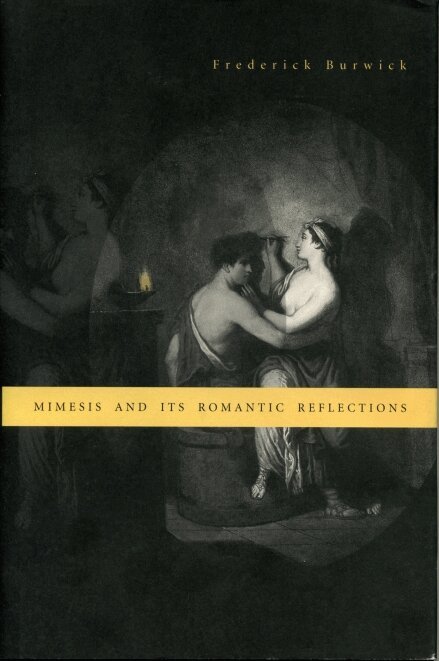
    Mimesis and Its Romantic Reflections

    AvFrederick Burwick

    Häftad, Engelska, 2001

    588 kr

    Beställningsvara. Skickas inom 5-8 vardagar. Fri frakt över 249 kr.

    Beskrivning

    In Romantic theories of art and literature, the notion of mimesis—defined as art’s reflection of the external world—became introspective and self-reflexive as poets and artists sought to represent the act of creativity itself. Frederick Burwick seeks to elucidate this Romantic aesthetic, first by offering an understanding of key Romantic mimetic concepts and then by analyzing manifestations of the mimetic process in literary works of the period.Burwick explores the mimetic concepts of "art for art's sake," "Idem et Alter," and "palingenesis of mind as art" by drawing on the theories of Philo of Alexandria, Aristotle, Immanuel Kant, Friedrich Schiller, Friederich Wilhelm Joseph von Schelling, Thomas De Quincey, and Germaine de Staël. Having established the philosophical bases of these key mimetic concepts, Burwick analyzes manifestations of mimesis in the literature of the period, including ekphrasis in the work of Thomas De Quincey, mirrored images in the poems of Samuel Taylor Coleridge and William Wordsworth, and the twice-told tale in the novels of Charles Brockden Brown, E. T. A. Hoffmann, and James Hogg. Although artists of this period have traditionally been dismissed in discussions of mimesis, Burwick demonstrates that mimetic concepts comprised a major component of the Romantic aesthetic.

    Produktinformation

    • Utgivningsdatum:2001-01-15
    • Mått:152 x 229 x 12 mm
    • Vikt:322 g
    • Format:Häftad
    • Språk:Engelska
    • Antal sidor:216
    • Förlag:Pennsylvania State University Press
    • ISBN:9780271033273

    Utforska kategorier

    • Litteraturvetenskap inom Skönlitteratur
    • Filosofiska discipliner inom Filosofi och religion

    Mer om författaren

    Frederick Burwick is Professor of English at the University of California-Los Angeles. His previous books include Illusion and the Drama: Critical Theory of the Enlightenment and Romantic Era (1991) and Poetic Madness and the Romantic Imagination (1996), both published by Penn State Press.

    Recensioner i media

    “A rich and meticulous study. With range and rigor, Burwick probes the origins—philosophical, aesthetic, and literary—of developing subjectivist mimeses in the literature and theory of the Romantic period.”—John L. Mahoney, Boston College