• Fri frakt över 249 kr
  • •
  • Snabba leveranser
  • •
  • Billiga böcker
Kundservice

Du är på sajten för privatpersoner.

Företag, bibliotek eller offentlig verksamhet?

Du handlar på classic.bokus.com, där alla dina funktioner finns intakta.
Till classic.bokus.com
Bokus logotyp. Gå till startsidan.
  • Erbjudanden
  • Nyheter
  • Student
  • Topplistor
  • Barn & ungdom
  • Bokus Play
  • E-böcker
  • Pocketböcker
  • Spel & pussel

10% rabatt på allt med kod NYSTART10 →

Sidfot

Mina sidor

    Hjälp

    • Kundservice
    • Vanliga frågor och svar
    • Frakt och leverans
    • Retur vid ångerrätt
    • Reklamera vara
    • Betalning
    • Köpvillkor
    • Allmänna villkor
    • Information om webbplatsens tillgänglighet

    Om Bokus

    • Om oss
    • Pressrum
    • För studenter
    • För företag
    • För bibliotek och offentlig verksamhet
    • För leverantörer
    • Hållbarhet

    Populärt

    • Aktuella erbjudanden
    • Presentkort
    • Studentlitteratur
    • Nya böcker
    • Topplistor
    • Signerade böcker
    • Engelska böcker

    Inspiration

    • Boktips
    • BookTok
    • Populära bokserier
    • Barnbokskaraktärer
    • Populära författare
    Logotyp för Bokus
    Följ oss på Facebook (extern länk)Följ oss på Instagram (extern länk)Följ oss på YouTube (extern länk)Följ oss på TikTok (extern länk)
    bokus @ CookiesAnpassa cookiesIntegritetspolicyKöpvillkor
    Till Citymail hemsida (extern länk)Till Budbee hemsida (extern länk)Till Postnord hemsida (extern länk)Till Schenker hemsida (extern länk)Till Early Bird hemsida (extern länk)Till Walleys hemsida (extern länk)
    1. Samhälle och politik
    2. Sociologi och antropologi
    3. Antropologi

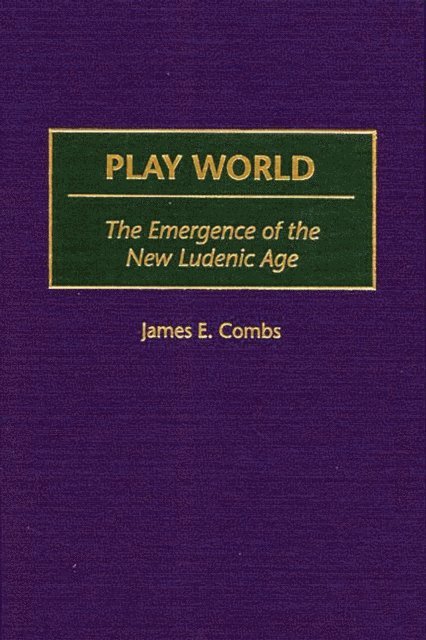
    Play World

    The Emergence of the New Ludenic Age

    AvJames E. Combs

    Inbunden, Engelska, 2000

    1 019 kr

    Beställningsvara. Skickas inom 10-15 vardagar. Fri frakt över 249 kr.

    Fler format och utgåvor

    E-bok

    1 132 kr

    Beskrivning

    Should we take the idea of play seriously? Since the publication of Huizinga's Homo Ludens in 1938, a provocative literature has developed in philosophy and social science that does. Combs argues that we should understand play both as a generic concept with considerable power to explain human activity, and as a contemporary procept that demystifies some of the puzzling trends and innovations emerging in the quickly developing new social world of the 21st century.Combs explores the thesis that play has a central role in our understanding of human activity and social and political organization in the new millennium. He argues that the human desire for play is strong and given the continuation of certain major historical innovations now shaping the world, it may well be that 21st-century people will increasingly exercise their desire for play and that the world will increasingly be organized around the principle and practice of play. It may now seem a truism that people prefer to have fun, but that has not always been the case. If, as Combs argues, the preference for fun is becoming central to human activity, we need to explore why that preference is becoming dominant and what kind of social organization and consequences such a change entails. A provocative look at social change in the 20th century that will be of interest to scholars, students, and researchers of sociology and anthropology.


    Produktinformation

    • Utgivningsdatum:2000-09-30
    • Mått:157 x 235 x 15 mm
    • Vikt:423 g
    • Format:Inbunden
    • Språk:Engelska
    • Antal sidor:184
    • Förlag:Bloomsbury Publishing Plc
    • ISBN:9780275968380

    Utforska kategorier

    • Antropologi inom Samhälle och politik
    • Barnpsykologi och utvecklingspsykologi inom Psykologi och pedagogik

    Mer om författaren

    JAMES E. COMBS is Professor of Political Science Emeritus, Valparaiso University. Professor Combs is the author, editor, coauthor, or coeditor of 16 earlier books, including The Political Pundits (Praeger, 1992) and The Comedy of Democracy (Praeger, 1996).

    Innehållsförteckning

    • Introduction: The Play of Musement, and the Musement of Play The Dynamics of Play The Pragmatics of Play The Futuristics of Play Selected Bibliography Index