• Fri frakt över 249 kr
  • •
  • Snabba leveranser
  • •
  • Billiga böcker
Kundservice

Du är på sajten för privatpersoner.

Företag, bibliotek eller offentlig verksamhet?

Du handlar på classic.bokus.com, där alla dina funktioner finns intakta.
Till classic.bokus.com
Bokus logotyp. Gå till startsidan.
  • Erbjudanden
  • Nyheter
  • Student
  • Topplistor
  • Barn & ungdom
  • Bokus Play
  • E-böcker
  • Pocketböcker
  • Spel & pussel

10% rabatt på allt med kod: NYSTART10 →

Sidfot

Mina sidor

    Hjälp

    • Kundservice
    • Vanliga frågor och svar
    • Frakt och leverans
    • Retur vid ångerrätt
    • Reklamera vara
    • Betalning
    • Köpvillkor
    • Allmänna villkor
    • Information om webbplatsens tillgänglighet

    Om Bokus

    • Om oss
    • Pressrum
    • För studenter
    • För företag
    • För bibliotek och offentlig verksamhet
    • För leverantörer
    • Hållbarhet

    Populärt

    • Aktuella erbjudanden
    • Presentkort
    • Studentlitteratur
    • Nya böcker
    • Topplistor
    • Signerade böcker
    • Engelska böcker

    Inspiration

    • Boktips
    • BookTok
    • Populära bokserier
    • Barnbokskaraktärer
    • Populära författare
    Logotyp för Bokus
    Följ oss på Facebook (extern länk)Följ oss på Instagram (extern länk)Följ oss på YouTube (extern länk)Följ oss på TikTok (extern länk)
    bokus @ CookiesAnpassa cookiesIntegritetspolicyKöpvillkor
    Till Citymail hemsida (extern länk)Till Budbee hemsida (extern länk)Till Postnord hemsida (extern länk)Till Schenker hemsida (extern länk)Till Early Bird hemsida (extern länk)Till Walleys hemsida (extern länk)
    1. Psykologi och pedagogik
    2. Psykologi

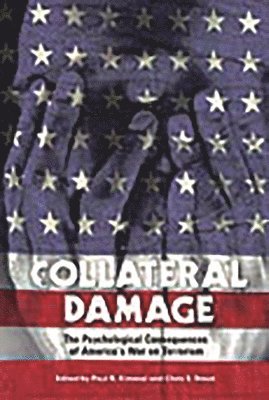
    Collateral Damage

    The Psychological Consequences of America's War on Terrorism

    AvPaul Kimmel,Chris E. Stout Ph.D.

    Inbunden, Engelska, 2006

    722 kr

    Beställningsvara. Skickas inom 10-15 vardagar. Fri frakt över 249 kr.

    Beskrivning

    Color-coded terrorism alerts are issued, then lifted with no explanation. False alarms can, like crying wolf, desensitize people to a real need to be on alert. And that psychic numbing is just one effect discussed in this book by fifteen psychologists teamed up to take a critical look at the U.S. war on terrorism. These experts are led by the Chairman of an American Psychological Association task force charged with pinpointing the effect of our anti-terrorism efforts on American mental health. Together, they present the most up-to-date and intriguing picture we have of the fallout on our own people from our own programs. The text spotlights stereotyping of foreigners, increased domestic hate crimes, fear, depression and helplessness, as well as increased militancy and belligerence, especially among students. Perhaps most disturbing in the land of the free, we also see increasing acceptance of restrictions on our personal freedoms, and acceptance of human rights violations.Color-coded terrorism alerts are issued, then lifted with no explanation. False alarms can, like crying wolf, desensitize people to a real need to be on alert. And that psychic numbing is just one effect discussed in this book by fifteen psychologists teamed up for a critical look at the U.S. war on terrorism. These experts are led by the Chairman of the American Psychological Association task force charged with pinpointing the effect of our anti-terrorism efforts on America's mental health. Together, they present the most up-to-date and intriguing picture we have of the fallout on our own people from our own programs. The text spotlights fueled stereotyping of foreigners, increased domestic hate crimes, fear, depression and helplessness, as well as increasing militancy and belligerence, especially among students. Perhaps most disturbing in the land of the free, our attention is drawn to growing acceptance of restrictions on our personal freedoms, and acceptance of human rights violations.Contributors to this collection aim to give us a reality check, looking at what our national reactions to terrorism have been, how those reactions have affected the psyche of our people and whether this has made us stronger or weaker, and more or less likely to be the target for future attacks.

    Produktinformation

    • Utgivningsdatum:2006-08-01
    • Mått:161 x 240 x 18 mm
    • Vikt:531 g
    • Format:Inbunden
    • Språk:Engelska
    • Antal sidor:240
    • Förlag:Bloomsbury Publishing Plc
    • ISBN:9780275988265

    Utforska kategorier

    • Psykologi inom Psykologi och pedagogik
    • Krig och försvar inom Samhälle och politik
    • Folkhälsa och hälsopedagogik inom Medicin

    Mer om författaren

    Paul R. Kimmel is Chair of the American Psychological Association's Task Force on the Psychological Effects of Efforts to Prevent Terrorism. He is past President of Psychologists for Social Responsibility, and an Adjunct Faculty member at the Saybrook Graduate School and Research Center.Chris E. Stout is Series Editor for the Praeger series, Contemporary Psychology. Stout is a Licensed Clinical Psychologist and a Clinical Full Professor at the University of Illinois College of Medicine's Department of Psychiatry. He served as NGO Special Representative to the United Nations and is a Founding Director of the Center for Global Initiatives. He has published some 300 papers and 30 books and manuals on psychology and his works have been translated into six languages.

    Recensioner i media

    "[E]xamines the psychological effects of the U.S. government's antiterrorism measures and takes the reader a step back to look at what this campaign has come to mean....[c]hapters provide readers with discussions that view the problem from a social as well as individual perspectives....[r]ecommendations for improving emergency prepardness efforts are sound, especially their call for collaboration instead of competitiveness among mental health providers and organizations in the wake of disaster....[i]ntroductory comments and the constellation of discussions in this book's chapters serve as a clear starting point for a necessary and ongoing discussion and are as refreshing as the child's declaration that the emperor is wearing no clothes. It is good to know that, in a moment of our history when even a supposedly independent press has largely suspended its critical voice, there are still some who will call it as they see it." - PsycCRITIQUES

    Innehållsförteckning

    • Foreword by Philip G. ZimbardoAcknowledgmentIntroduction by Paul R. Kimmelchapter 1 US & THEM: Moderating Group Conflict—A Track Four Diplomacy Program Stephen Fabickchapter 2 9/11 Aftershocks: An Analysis of Conditions Ripe for Hate Crimes Daniel J. Christiechapter 3 Jujitsu Politics: Terrorism and Responses to Terrorism Clark McCauleychapter 4 The Social Psychology of Punishing Dissent: Negative Reactions to Antiwar Views in the United States Bernice Lottchapter 5 Untangling the Web: Threat, Ideology, and Political Behavior Rhoda Ungerchapter 6 Perceptions of Threat, National Representation, and Support for Procedures To Protect the National Group Gordon Hodson, Victoria M. Esses, and John F. Dovidiochapter 7 Efforts To Prevent Terrorism: Impact on Immigrant Groups Nina K. Thomaschapter 8 Psychological Effects of the Virtual Media Coverage of the Iraq War: A Postmodern Humanistic Perspective Ilene A. Serlinchapter 9 The Impact of U.S. Antiterrorism Interventions on Terrorist Motivation: Preliminary Research in Afghanistan and Iraq Michael Wessellschapter 10 Cities of Fear, Cities of Hope: Public Mental Health in the Age of Terrorism Chris E. Stout and Stevan WeineAfterword by Chris E. StoutIndexAbout the Series Advisory BoardAbout the Editors and Contributors