Inbunden, Engelska, 2006
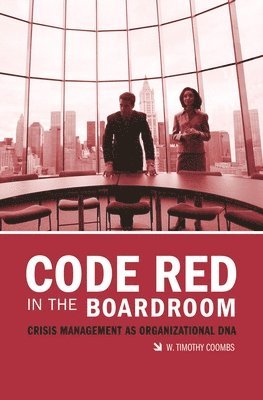
Code Red in the Boardroom
Crisis Management as Organizational DNA
875 kr
Beställningsvara. Skickas inom 10-15 vardagar. Fri frakt över 249 kr.
Beskrivning
Produktinformation
- Utgivningsdatum: 2006-03-30
- Mått: 156 x 235 x 17 mm
- Vikt: 397 g
- Format: Inbunden
- Språk: Engelska
- Antal sidor: 152
- Förlag: Bloomsbury Publishing Plc
- ISBN: 9780275989125
Utforska kategorier
Mer om författaren
W. TIMOTHY COOMBS is Associate Professor in the Communication Studies Department, Eastern Illinois University, where he teaches courses in crisis management, corporate communications, and public relations. Previously on the faculty of Wayne State University, Clemson University, and Illinois State University, he is the author or coauthor of two textbooks, Ongoing Crisis Communication and Today's Public Relations, and dozens of articles in such publications as Public Relations Review, Management Communication Quarterly, and the Journal of Public Affairs. He also consults on issues of crisis management, communication, and public relations for clients in the petrochemical, construction/engineering, and healthcare industries.
Recensioner i media
This compact, clearly written, and well-documented primer is especially useful for those undertaking crisis planning for the first time, particularly small organizations, including nonprofits that do not maintain in-house legal and public relations experts. While large, experienced organizations can certainly benefit from the author's emphasis on integrating crisis management into the organizational DNA, the expository style and the case studies make it particularly helpful for novice crisis planners. In part 1 Coombs examines major crisis types: attacks on organizations, such as computer hacking or product tampering; product defects or other organizational failures, such as industrial accidents; and organizational wrongdoing in the form of financial fraud (e.g., Tyco, Enron) or failure to obey or enforce government regulations. Part 2 focuses on crisis management tools: maintaining a crisis-sensing network and a living crisis management plan; overcoming resistance to change; and integrating crisis management into the organization's culture--or organizational DNA, as Coombs calls it. This part includes practical guidelines, based on organizational change literature and sound communication practices. The book ends with two appendixes: the elements of a sample crisis management plan and a US Department of Homeland Security fact sheet for crisis planning. Recommended. Upper-division undergraduate through professional collections.
Betyg & recensioner
0 recensioner
Inga recensioner tillgängliga.