Häftad, Engelska, 2014
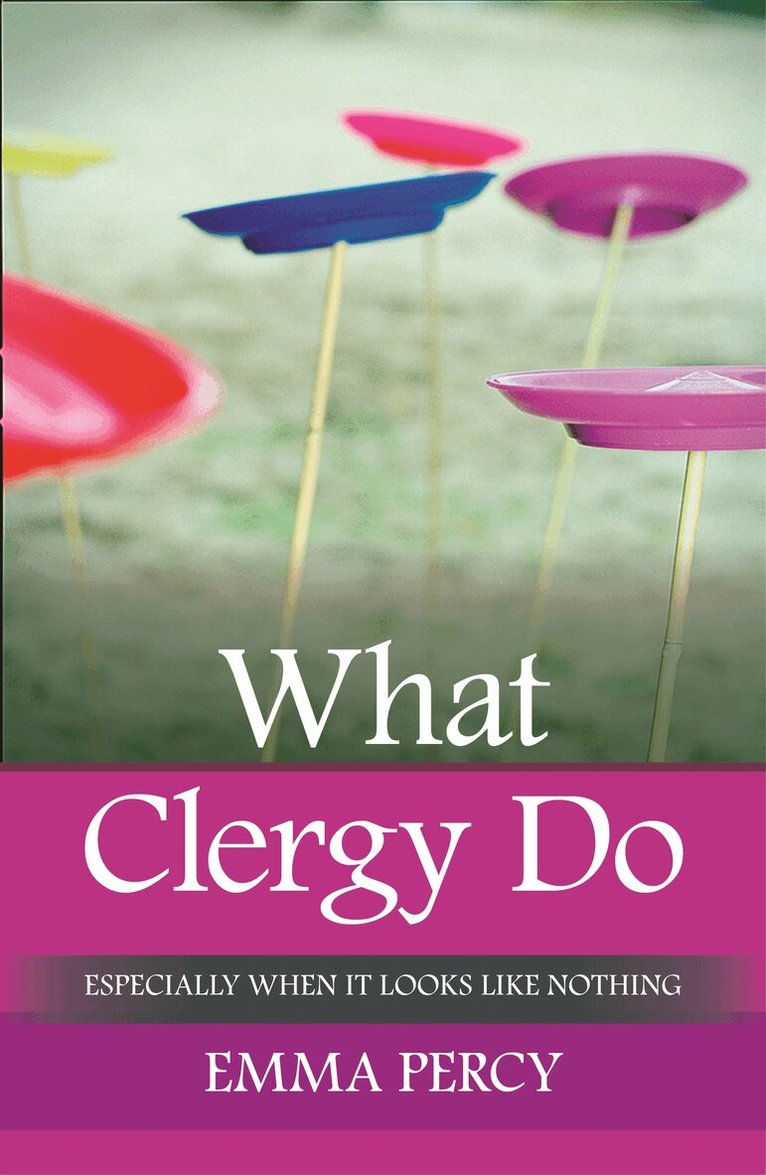
What Clergy Do
Especially When It Looks Like Nothing
Av Emma Percy
213 kr
Beställningsvara. Skickas inom 5-8 vardagar. Fri frakt över 249 kr.
Beskrivning
Produktinformation
- Utgivningsdatum: 2014-04-17
- Mått: 138 x 216 x 14 mm
- Vikt: 255 g
- Format: Häftad
- Språk: Engelska
- Antal sidor: 176
- Förlag: SPCK Publishing
- ISBN: 9780281070244
Utforska kategorier
Mer om författaren
Revd Dr Emma Percy is Chaplain, Welfare Dean and Fellow of Trinity College, Oxford.
Recensioner i media
Lucid and concise, What Clergy Do introduces us to a rich store of work onmotherhood, inviting us to enjoy a satisfying many layered metaphor for ministrywhich opens up well-defended areas of embattled priestly hearts.Each chapter states its aim, says it well, then summarizes it. That apparenttidiness, though, sets free all sorts of imagery. Motherhood’s ordinariness is,of course, pricelessly rich. A priest wouldn’t hesitate to encourage a motherwho feels undervalued. The more Emma Percy compares it with the ordinarinessof parish ministry, the more we are reminded how rich and moving is ourcalling.For instance, using Arendt’s subtle differentiation between ‘labour, work andaction’ in motherhood, she traces our shifting roles between completed tangibletasks, those sustaining, nurturing and impossible to measure, and those involvingprofessional skill. We are offered a way of describing this odd combination thatmakes enough sense for us to carry on. Emma Percy hopes to move us away from‘the rather empty language of leadership into richer metaphorical language whichconnects to what people do’ (p. 160). More than analysing what we ‘do’, in fact, sheuncovers who we might crave being.Understated feeling allows us to charge these images with our own emotionalexperience. Sometimes I felt I had read a series of truisms about ministry, thenrealized that I had been faced with some very challenging realities. Rather thansolutions to particular predicaments, Emma Percy offers a way of tuning the heart.Infused with Sara Ruddick’s study of Maternal Thinking (1995) and workadayexperience, pairs of qualities or risks mark out spaces in which we can take responsibility,finding our own place between ‘dependence and maturity’, ‘transitionaldependency and generous inequality’, or, best of all, ‘the art of comforting andvirtue of delight’. There is a challenging chorus line about not treating people astypes (which I needed to hear) and an encouraging one, quoting Winnicott, aboutbeing ‘good enough’ mothers and priests.It would be their real loss if some found relatively few biblical references in thiswork an excuse not to take it seriously. It rings with biblical chords: the section onweaning enriched my feeling for 1 Corinthians 3.2; Isaiah 49.15; 66.13. The powerfulpassage on body image (p. 155), exposing neuroses about church growth, gave 1Corinthians 12 a new resonance. With the habits of mothering Emma Percy pointsus toward a virtue ethic which I found timely, providing an oblique critique ofconsequentialist tendencies in clergy selection.Unqualified, such a powerful metaphor could develop unhealthy priestly superiority.We might egotistically conspire with a congregation’s desire to project groupinadequacies onto an emotionally absorbent parent-priest, but Emma Percy knowsthis (Chapter 4). I would like her to explore more explicitly the most attractive,subversive word in the title: ‘nothing’. I wonder if the key theme of motherhoodwas omitted from the title in case defensive male clergy wouldn’t pick it up.Who is it for? A hard-pressed archdeacon; a bullish chair of board of finance;DDOs lending it to enquirers before giving them grids of competencies that suckthe Spirit out of discernment; the newly ordained; PCCs in interregnum tempted topepper a Church Times advert with words like ‘energetic . . . communicationskills . . . [and] . . . successful’. It is a gift for people who have slogged in parishesfor a couple of decades and feel on a cusp of disappointment. Just when youwonder if anyone’s noticed, asking, ‘Is this it, then?’; when you’re tired, but stillsure you are doing something good; when you’re unsure if your favourite metaphorsfor ministry can hold up for another decade, and you’ve finally admitted thatno one else will organize your sabbatical: just then, this could be a wonderful read.It is never hectoring, very encouraging and, as a male priest, it gave me permissionto explore feminine imagery without a hint of pretence or awkwardness. Thoseof us who are not mothers should feel refreshed, not marginalized, by this exploration.If we use it to recalibrate priorities and retune our pastoral heart, noble butfrustrated ministries may rediscover their calm integrity, offering our neighbourswhat they need in their priest. I have a hunch this book is written by a priest who israther more than ‘good enough’.
Betyg & recensioner
0 recensioner
Inga recensioner tillgängliga.