• Fri frakt över 249 kr
  • •
  • Snabba leveranser
  • •
  • Billiga böcker
Kundservice

Du är på sajten för privatpersoner.

Företag, bibliotek eller offentlig verksamhet?

Du handlar på classic.bokus.com, där alla dina funktioner finns intakta.
Till classic.bokus.com
Bokus logotyp. Gå till startsidan.
  • Erbjudanden
  • Nyheter
  • Student
  • Topplistor
  • Barn & ungdom
  • Bokus Play
  • E-böcker
  • Pocketböcker
  • Spel & pussel

10% rabatt på allt med kod: NYSTART10 →

Sidfot

Mina sidor

    Hjälp

    • Kundservice
    • Vanliga frågor och svar
    • Frakt och leverans
    • Retur vid ångerrätt
    • Reklamera vara
    • Betalning
    • Köpvillkor
    • Allmänna villkor
    • Information om webbplatsens tillgänglighet

    Om Bokus

    • Om oss
    • Pressrum
    • För studenter
    • För företag
    • För bibliotek och offentlig verksamhet
    • För leverantörer
    • Hållbarhet

    Populärt

    • Aktuella erbjudanden
    • Presentkort
    • Studentlitteratur
    • Nya böcker
    • Topplistor
    • Signerade böcker
    • Engelska böcker

    Inspiration

    • Boktips
    • BookTok
    • Populära bokserier
    • Barnbokskaraktärer
    • Populära författare
    Logotyp för Bokus
    Följ oss på Facebook (extern länk)Följ oss på Instagram (extern länk)Följ oss på YouTube (extern länk)Följ oss på TikTok (extern länk)
    bokus @ CookiesAnpassa cookiesIntegritetspolicyKöpvillkor
    Till Citymail hemsida (extern länk)Till Budbee hemsida (extern länk)Till Postnord hemsida (extern länk)Till Schenker hemsida (extern länk)Till Early Bird hemsida (extern länk)Till Walleys hemsida (extern länk)
    1. Kultur
    2. Scenkonst och film
    3. Television

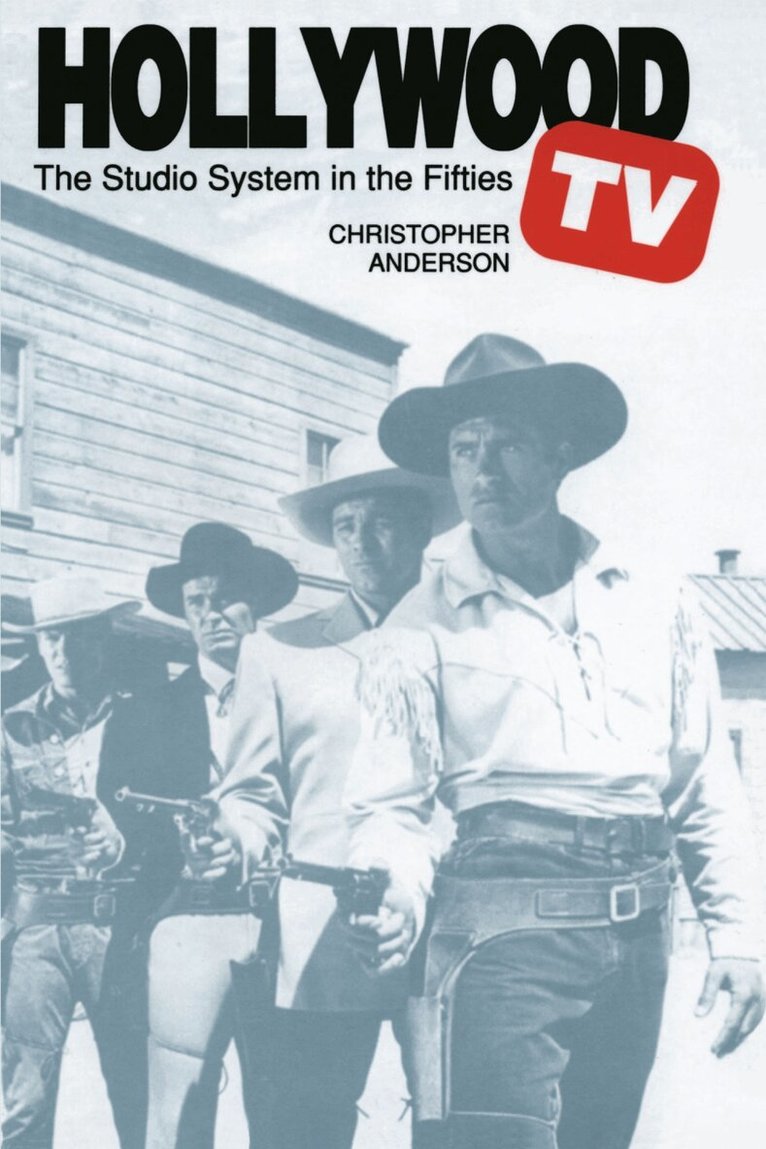
    Hollywood TV

    The Studio System in the Fifties

    AvChristopher Anderson

    Häftad, Engelska, 1994

    Del i serien Texas Film and Media Studies Series

    405 kr

    Beställningsvara. Skickas inom 10-15 vardagar. Fri frakt över 249 kr.

    Beskrivning

    The 1950s was one of the most turbulent periods in the history of motion pictures and television. During the decade, as Hollywood's most powerful studios and independent producers shifted into TV production, TV replaced film as America's principal postwar culture industry.This pioneering study offers the first thorough exploration of the movie industry's shaping role in the development of television and its narrative forms. Drawing on the archives of Warner Bros. and David O. Selznick Productions and on interviews with participants in both industries, Christopher Anderson demonstrates how the episodic telefilm series, a clear descendant of the feature film, became and has remained the dominant narrative form in prime-time TV.This research suggests that the postwar motion picture industry was less an empire on the verge of ruin-as common wisdom has it-than one struggling under unsettling conditions to redefine its frontiers. Beyond the obvious contribution to film and television studies, these findings add an important chapter to the study of American popular culture of the postwar period.

    Produktinformation

    • Utgivningsdatum:1994-07-01
    • Mått:152 x 229 x 27 mm
    • Vikt:454 g
    • Format:Häftad
    • Språk:Engelska
    • Serie:Texas Film and Media Studies Series
    • Antal sidor:355
    • Förlag:University of Texas Press
    • ISBN:9780292704572

    Utforska kategorier

    • Television inom Kultur

    Mer om författaren

    Christopher Anderson is Associate Professor of Communication & Culture at Indiana University–Bloomington.

    Recensioner i media

    Most definitely a book worth reading and an important contribution to media history. . . . Anderson blazes trails for continued investigation into the many historical questions surrounding the integration of film and television, questions highly relevant to the American mediascape of the 1990s. (Historical Journal of Film, Radio, and Television)

    Innehållsförteckning

    • AcknowledgmentsI. Introduction: Hollywood in the HomeII. Thwarted Ambitions in the Studio EraIII. Escape from the Studio System: Independent Producers and TelevisionIV. The Sponsor’s Medium: Light’s Diamond Jubilee and the Campaign for the Peaceful AtomV. David O. Selznick and the Making of Light’s Diamond JubileeVI. DisneylandVII. Origins of Warner Bros. TelevisionVIII. Negotiating the Television Text: Warner Bros. PresentsIX. Reviving the Studio System at Warner Bros. TelevisionX. The Pathology of Mass ProductionXI. EpilogueNotesBibliographyIndex