• Fri frakt över 249 kr
  • •
  • Snabba leveranser
  • •
  • Billiga böcker
Kundservice

Du är på sajten för privatpersoner.

Företag, bibliotek eller offentlig verksamhet?

Du handlar på classic.bokus.com, där alla dina funktioner finns intakta.
Till classic.bokus.com
Bokus logotyp. Gå till startsidan.
  • Erbjudanden
  • Nyheter
  • Student
  • Topplistor
  • Barn & ungdom
  • Bokus Play
  • E-böcker
  • Pocketböcker
  • Spel & pussel

10% rabatt på allt med kod: NYSTART10 →

Sidfot

Mina sidor

    Hjälp

    • Kundservice
    • Vanliga frågor och svar
    • Frakt och leverans
    • Retur vid ångerrätt
    • Reklamera vara
    • Betalning
    • Köpvillkor
    • Allmänna villkor
    • Information om webbplatsens tillgänglighet

    Om Bokus

    • Om oss
    • Pressrum
    • För studenter
    • För företag
    • För bibliotek och offentlig verksamhet
    • För leverantörer
    • Hållbarhet

    Populärt

    • Aktuella erbjudanden
    • Presentkort
    • Studentlitteratur
    • Nya böcker
    • Topplistor
    • Signerade böcker
    • Engelska böcker

    Inspiration

    • Boktips
    • BookTok
    • Populära bokserier
    • Barnbokskaraktärer
    • Populära författare
    Logotyp för Bokus
    Följ oss på Facebook (extern länk)Följ oss på Instagram (extern länk)Följ oss på YouTube (extern länk)Följ oss på TikTok (extern länk)
    bokus @ CookiesAnpassa cookiesIntegritetspolicyKöpvillkor
    Till Citymail hemsida (extern länk)Till Budbee hemsida (extern länk)Till Postnord hemsida (extern länk)Till Schenker hemsida (extern länk)Till Early Bird hemsida (extern länk)Till Walleys hemsida (extern länk)
    1. Historia och arkeologi
    2. Arkeologi

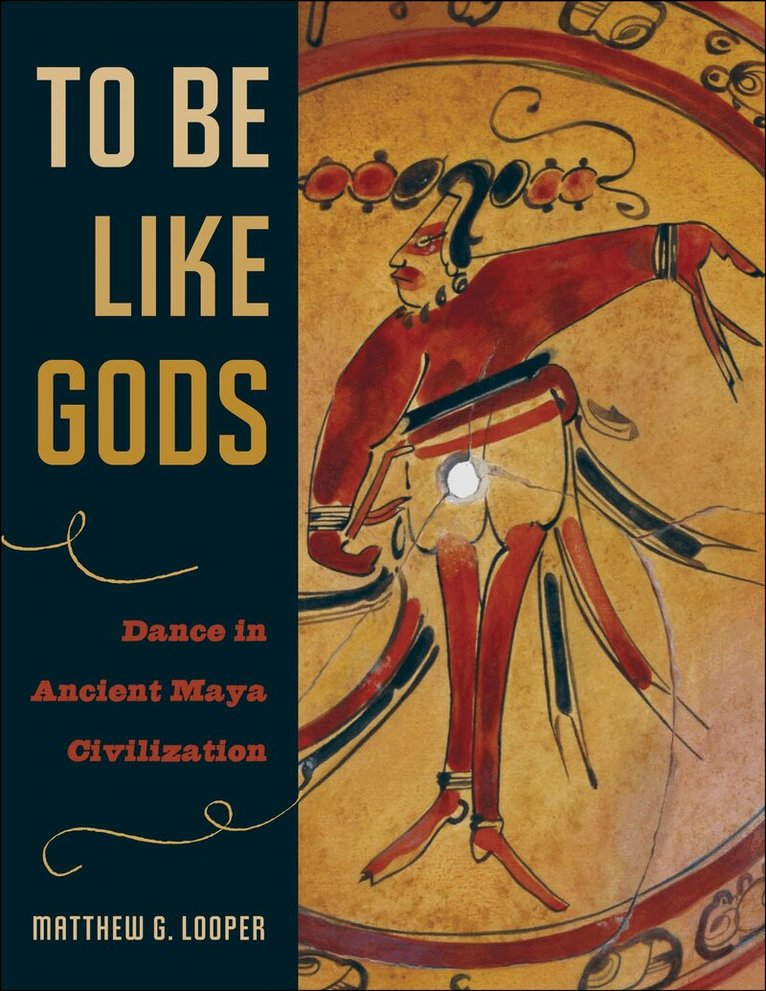
    To Be Like Gods

    Dance in Ancient Maya Civilization

    AvMatthew G. Looper

    Inbunden, Engelska, 2009

    684 kr

    Beställningsvara. Skickas inom 5-8 vardagar. Fri frakt över 249 kr.

    Beskrivning

    Winner, Association for Latin American Art Book Award, 2010The Maya of Mexico and Central America have performed ritual dances for more than two millennia. Dance is still an essential component of religious experience today, serving as a medium for communication with the supernatural. During the Late Classic period (AD 600-900), dance assumed additional importance in Maya royal courts through an association with feasting and gift exchange. These performances allowed rulers to forge political alliances and demonstrate their control of trade in luxury goods. The aesthetic values embodied in these performances were closely tied to Maya social structure, expressing notions of gender, rank, and status. Dance was thus not simply entertainment, but was fundamental to ancient Maya notions of social, religious, and political identity.Using an innovative interdisciplinary approach, Matthew Looper examines several types of data relevant to ancient Maya dance, including hieroglyphic texts, pictorial images in diverse media, and architecture. A series of case studies illustrates the application of various analytical methodologies and offers interpretations of the form, meaning, and social significance of dance performance. Although the nuances of movement in Maya dances are impossible to recover, Looper demonstrates that a wealth of other data survives which allows a detailed consideration of many aspects of performance. To Be Like Gods thus provides the first comprehensive interpretation of the role of dance in ancient Maya society and also serves as a model for comparative research in the archaeology of performance.

    Produktinformation

    • Utgivningsdatum:2009-01-15
    • Mått:216 x 279 x 36 mm
    • Vikt:1 134 g
    • Format:Inbunden
    • Språk:Engelska
    • Antal sidor:296
    • Förlag:University of Texas Press
    • ISBN:9780292709881

    Utforska kategorier

    • Arkeologi inom Historia och arkeologi
    • Arkeologiska perioder och områden inom Historia och arkeologi
    • Populärmusik inom Kultur

    Mer om författaren

    Matthew G. Looper is a Professor in the Department of Art and Art History at California State University, Chico. His publications include Lightning Warrior: Maya Art and Kingship at Quirigua.

    Innehållsförteckning

    • AcknowledgmentsIntroduction: The Definition and Interpretation of Ancient Maya Dance Definitions of DanceHistory of Maya Dance StudiesAesthetics and EmbodimentSources and MethodsChapter 1: The Textual Record of Dance Decipherment of Dance TextsThe Contexts of T516 "Dance" ExpressionsCase Study 1: Dos PilasCase Study 2: YaxchilÁnConclusionsChapter 2: The Iconography of Dance Identifying Dance IconographyCase Study: Dance in the Bonampak MuralsConclusionsChapter 3: Dance Poses and Gestures The Study of Body Positions in Maya ArtDance PosesProblematic PosesFrom Pose to Gesture: Reconstructing Dance Movement from Figural ImagesCase Study: Narrative and Avian DancesConclusionsChapter 4: Dance on Classic Maya Ceramics by Matthew Looper, Dorie Reents-Budet, and Ronald L. BishopCase Study 1: Dances of the Maize GodCase Study 2: The Ik'-Style Corpus of Pictorial Cylinder VesselsConclusionsChapter 5: The Architectural Settings of Dance Case Study 1: Dance Platforms at CopÁn and the YucatÁnCase Study 2: Temple and Palace Dances in CampecheConclusionsChapter 6: The Persistence of Maya Dance After European Contact Characteristics of Colonial and Modern Maya DanceCase Study: The PatzkarConclusionsEpilogue: Dance as an Image of Civilization Dance as an Image of DivinityDance as an Image of SocietyDance as an Image of the StateAesthetics as Image and ProcessDance in Ancient Maya HistoryAppendix: T516 "Dance" Expressions Ordered by DateNotesBibliographyIndex