• Fri frakt över 249 kr
  • •
  • Snabba leveranser
  • •
  • Billiga böcker
Kundservice

Du är på sajten för privatpersoner.

Företag, bibliotek eller offentlig verksamhet?

Du handlar på classic.bokus.com, där alla dina funktioner finns intakta.
Till classic.bokus.com
Bokus logotyp. Gå till startsidan.
  • Erbjudanden
  • Nyheter
  • Student
  • Topplistor
  • Barn & ungdom
  • Bokus Play
  • E-böcker
  • Pocketböcker
  • Spel & pussel

Må bättre, för mindre! Upp till 50% rabatt på hälsoböcker

Sidfot

Mina sidor

    Hjälp

    • Kundservice
    • Vanliga frågor och svar
    • Frakt och leverans
    • Retur vid ångerrätt
    • Reklamera vara
    • Betalning
    • Köpvillkor
    • Allmänna villkor
    • Information om webbplatsens tillgänglighet

    Om Bokus

    • Om oss
    • Pressrum
    • För studenter
    • För företag
    • För bibliotek och offentlig verksamhet
    • För leverantörer
    • Hållbarhet

    Populärt

    • Aktuella erbjudanden
    • Presentkort
    • Studentlitteratur
    • Nya böcker
    • Topplistor
    • Signerade böcker
    • Engelska böcker

    Inspiration

    • Boktips
    • BookTok
    • Populära bokserier
    • Barnbokskaraktärer
    • Populära författare
    Logotyp för Bokus
    Följ oss på Facebook (extern länk)Följ oss på Instagram (extern länk)Följ oss på YouTube (extern länk)Följ oss på TikTok (extern länk)
    bokus @ CookiesAnpassa cookiesIntegritetspolicyKöpvillkor
    Till Citymail hemsida (extern länk)Till Budbee hemsida (extern länk)Till Postnord hemsida (extern länk)Till Schenker hemsida (extern länk)Till Early Bird hemsida (extern länk)Till Walleys hemsida (extern länk)
    1. Historia och arkeologi
    2. Historia
    3. Asiens historia

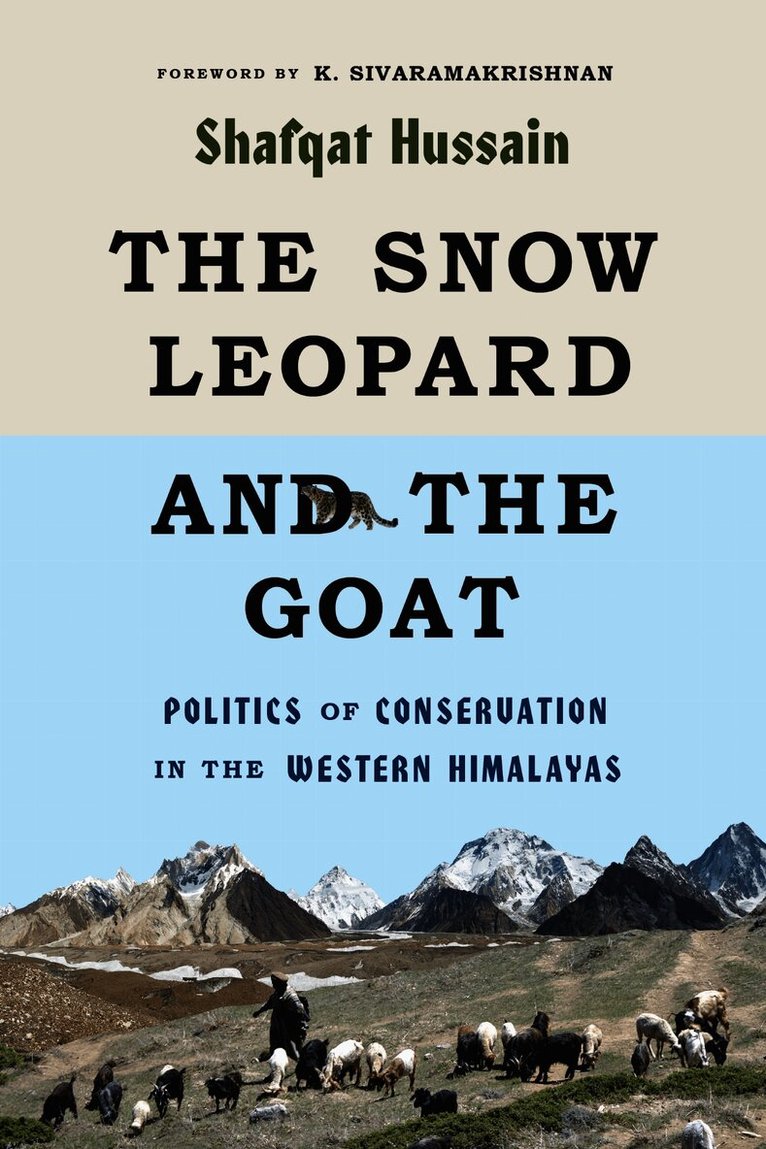
    Snow Leopard and the Goat

    Politics of Conservation in the Western Himalayas

    AvShafqat Hussain

    Inbunden, Engelska, 2020

    Del i serien Culture, Place, and Nature

    1 879 kr

    Beställningsvara. Skickas inom 5-8 vardagar. Fri frakt över 249 kr.

    Fler format och utgåvor

    Häftad

    538 kr

    Beskrivning

    Who should bear the cost of protecting charismatic wildlife?Following the downgrading of the snow leopard's status from "endangered" to "vulnerable" by the International Union for Conservation of Nature in 2017, debate has renewed about the actual number of snow leopards in the wild and the most effective strategies for coexisting with these enigmatic animals. Evidence from Pakistan and other countries in the snow leopard's home range shows that they rely heavily on human society—domestic livestock accounts for as much as 70 percent of their diet. Maintaining that the snow leopard is a "wild" animal, conservation NGOs and state agencies have enacted laws that punish farmers for attacking these predators, while avoiding engaging with efforts to mitigate the harms suffered by farmers whose herds are reduced by snow leopards.This ethnography examines the uneven distribution of costs and benefits involved in snow leopard conservation and shows that for the conservation of nature to be successful, the vision, interests, and priorities of those most affected by conservation policies—in this case, local farmers—must be addressed. A case history of Project Snow Leopard in the mountains of northern Pakistan, which inspired similar programs in India, Bhutan, Nepal, Mongolia, Afghanistan and Tajikistan, describes how the animal's food habits are studied, how elusive individuals are counted, and how a novel kind of "snow leopard insurance" has protected the species by compensating farmers for livestock losses. The Snow Leopard and the Goat demonstrates that characterizing this conflict as one between humans (farmers) and wildlife (snow leopards) is misleading, as the real conflict is between two human groups—farmers and conservationists—who see the snow leopard differently.

    Produktinformation

    • Utgivningsdatum:2020-01-10
    • Mått:152 x 229 x undefined mm
    • Vikt:499 g
    • Format:Inbunden
    • Språk:Engelska
    • Serie:Culture, Place, and Nature
    • Antal sidor:240
    • Förlag:University of Washington Press
    • Medarbetare:K. Sivaramakrishnan
    • ISBN:9780295746593

    Utforska kategorier

    • Asiens historia inom Historia och arkeologi
    • Miljövetenskap och miljöpolitik inom Naturvetenskap och teknik

    Mer om författaren

    Shafqat Hussain is associate professor of anthropology at Trinity College. He is the author of Remoteness and Modernity: Transformation and Continuity in Northern Pakistan.

    Recensioner i media

    "Hussain provides context on the animal (the snow leopard) and the area (mountainous Baltistan) in question by examining how both Islam and residual traces of Bon, the area's now extinct pre-Islam religion, influence local attitudes. . . . Readers interested in animal conservation will find much to ponder in this thoughtful study."(Publishers Weekly) "[A] fascinating account of snow leopard con-servation in Baltistan... Shafqat's dissection of conservation discourse exposes the inverse cor-relation between resource distribution and responsibilities in conservation."(Journal of Anthropological Research) "[A] breath of fresh air, suggesting room for optimism amidst the gloom of despairing writing on the snow leopard."(Conservation and Society) "The theoretically dense and historically rich chapters provide a nuanced understanding of how the life of the snow leopard is intertwined with the life of the goat and other livestock that are kept by the poor Balti herders in open corrals to meet their everyday nutritional needs... Shafqat Hussain's careful analysis invites us to consider the agentivity of this elegant predator in harsh remote terrains, and by combining empirical evidence and scientific analyses, explains how domestic livestock continue to sustain the numbers of this vulnerable cat in the wild."(Pacific Affairs) "Carefully documenting the history of the snow leopard and its trade around the world, evaluating the science asso-ciated with snow leopard conservation and its uncertainties, and contextualizing it with rich ethnographic work, Hussain makes an important contribution to highlight the challenges and dynamics of operationalizing global conservation priorities at the local level."(Journal of Asian Studies)