• Fri frakt över 249 kr
  • •
  • Snabba leveranser
  • •
  • Billiga böcker
Kundservice

Du är på sajten för privatpersoner.

Företag, bibliotek eller offentlig verksamhet?

Du handlar på classic.bokus.com, där alla dina funktioner finns intakta.
Till classic.bokus.com
Bokus logotyp. Gå till startsidan.
  • Erbjudanden
  • Nyheter
  • Student
  • Topplistor
  • Barn & ungdom
  • Bokus Play
  • E-böcker
  • Pocketböcker
  • Spel & pussel

10% rabatt på allt med kod: NYSTART10 →

Sidfot

Mina sidor

    Hjälp

    • Kundservice
    • Vanliga frågor och svar
    • Frakt och leverans
    • Retur vid ångerrätt
    • Reklamera vara
    • Betalning
    • Köpvillkor
    • Allmänna villkor
    • Information om webbplatsens tillgänglighet

    Om Bokus

    • Om oss
    • Pressrum
    • För studenter
    • För företag
    • För bibliotek och offentlig verksamhet
    • För leverantörer
    • Hållbarhet

    Populärt

    • Aktuella erbjudanden
    • Presentkort
    • Studentlitteratur
    • Nya böcker
    • Topplistor
    • Signerade böcker
    • Engelska böcker

    Inspiration

    • Boktips
    • BookTok
    • Populära bokserier
    • Barnbokskaraktärer
    • Populära författare
    Logotyp för Bokus
    Följ oss på Facebook (extern länk)Följ oss på Instagram (extern länk)Följ oss på YouTube (extern länk)Följ oss på TikTok (extern länk)
    bokus @ CookiesAnpassa cookiesIntegritetspolicyKöpvillkor
    Till Citymail hemsida (extern länk)Till Budbee hemsida (extern länk)Till Postnord hemsida (extern länk)Till Schenker hemsida (extern länk)Till Early Bird hemsida (extern länk)Till Walleys hemsida (extern länk)
    1. Naturvetenskap och teknik
    2. Geovetenskap
    3. Miljövetenskap och miljöpolitik

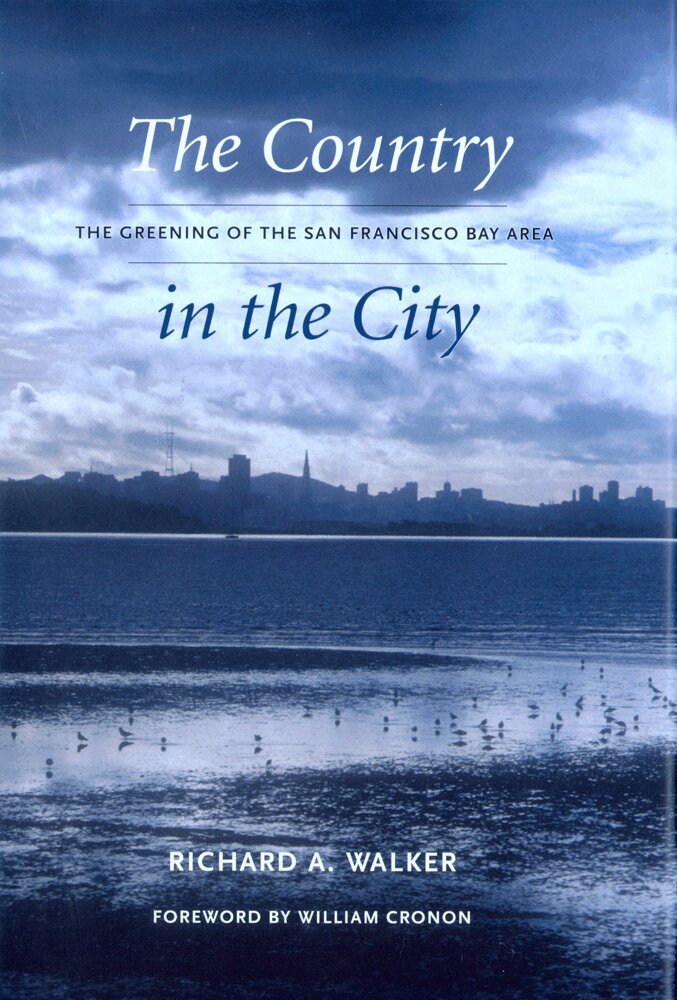
    Country in the City

    The Greening of the San Francisco Bay Area

    AvRichard A. Walker

    Häftad, Engelska, 2008

    Del i serien Weyerhaeuser Environmental Books

    448 kr

    Beställningsvara. Skickas inom 5-8 vardagar. Fri frakt över 249 kr.

    Fler format och utgåvor

    E-bok

    518 kr

    Beskrivning

    Winner of the Western History Association's 2009 Hal K. Rothman AwardFinalist in the Western Writers of America Spur Award for the Western Nonfiction Contemporary category (2008).The San Francisco Bay Area is one of the world's most beautiful cities. Despite a population of 7 million people, it is more greensward than asphalt jungle, more open space than hardscape. A vast quilt of countryside is tucked into the folds of the metropolis, stitched from fields, farms and woodlands, mines, creeks, and wetlands. In The Country in the City, Richard Walker tells the story of how the jigsaw geography of this greenbelt has been set into place.The Bay Area’s civic landscape has been fought over acre by acre, an arduous process requiring popular mobilization, political will, and hard work. Its most cherished environments--Mount Tamalpais, Napa Valley, San Francisco Bay, Point Reyes, Mount Diablo, the Pacific coast--have engendered some of the fiercest environmental battles in the country and have made the region a leader in green ideas and organizations.This book tells how the Bay Area got its green grove: from the stirrings of conservation in the time of John Muir to origins of the recreational parks and coastal preserves in the early twentieth century, from the fight to stop bay fill and control suburban growth after the Second World War to securing conservation easements and stopping toxic pollution in our times. Here, modern environmentalism first became a mass political movement in the 1960s, with the sudden blooming of the Sierra Club and Save the Bay, and it remains a global center of environmentalism to this day.Green values have been a pillar of Bay Area life and politics for more than a century. It is an environmentalism grounded in local places and personal concerns, close to the heart of the city. Yet this vision of what a city should be has always been informed by liberal, even utopian, ideas of nature, planning, government, and democracy. In the end, green is one of the primary colors in the flag of the Left Coast, where green enthusiasms, like open space, are built into the fabric of urban life.Written in a lively and accessible style, The Country in the City will be of interest to general readers and environmental activists. At the same time, it speaks to fundamental debates in environmental history, urban planning, and geography.

    Produktinformation

    • Utgivningsdatum:2008-03-17
    • Mått:152 x 229 x 32 mm
    • Vikt:590 g
    • Format:Häftad
    • Språk:Engelska
    • Serie:Weyerhaeuser Environmental Books
    • Antal sidor:424
    • Förlag:University of Washington Press
    • Medarbetare:William Cronon
    • ISBN:9780295988153

    Utforska kategorier

    • Miljövetenskap och miljöpolitik inom Naturvetenskap och teknik

    Mer om författaren

    Richard A. Walker is professor of geography and chair of the California Studies Center at the University of California, Berkeley. His publications include The New Social Economy: Reworking the Division of Labor and The Conquest of Bread: 150 Years of California Agribusiness.

    Recensioner i media

    "Three cheers for Richard Walker's The Country in the City, as one of the first efforts to bring together a community-scale history of environmental activism and politics . . . . There is a wealth of information here, particularly pinpointing some of the specific individuals who spearheaded various activist campaigns to improve the area's environment."

    Innehållsförteckning

    • Foreword: Thinking Globally, Acting Locally / William CrononPrefaceAbbreviationsIntroduction: Saving Graces1. Out of the Woods: Stirrings of Conservation2. Fields of Gold: Resources at Close Quarters3. Moving Outdoors: Parks for the People4. The Upper West Side: Suburbia and Conservation5. The Green and the Blue: Saving the Bay and the Coast6. Encounters with the Arch-Modern: Regional Planning and Growth Control7. Fasten Your Greenbelt: Triumph and Trust Funds8. Sour Grapes: The Fight for the Wine Country9. Toxic Landscapes: Beyond Open Space10. Green Justice: Reclaiming the Inner CityConclusion: City and Country Reconciled?AppendixNotesBibliographyIndex