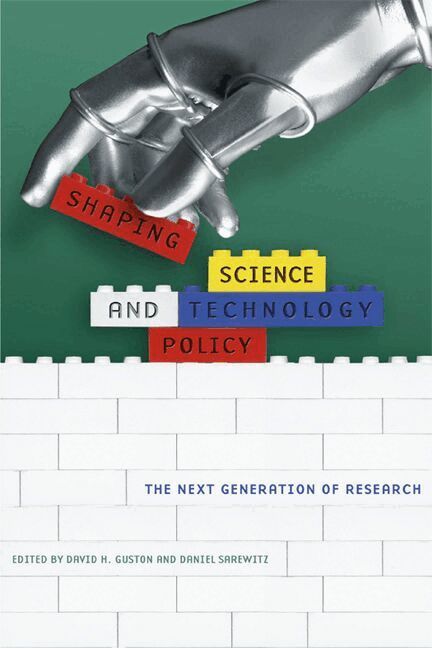
Shaping Science and Technology Policy
The Next Generation of Research
AvDavid H. Guston,Daniel Sarewitz
Del i serien Science and Technology in Society
504 kr
Beställningsvara. Skickas inom 3-6 vardagar. Fri frakt över 249 kr.
Du är på sajten för privatpersoner.
AvDavid H. Guston,Daniel Sarewitz
Del i serien Science and Technology in Society
504 kr
Beställningsvara. Skickas inom 3-6 vardagar. Fri frakt över 249 kr.
With scientific progress occurring at a breathtaking pace, science and technology policy has never been more important than it is today. Yet there is a very real lack of public discourse about policy-making, and government involvement in science remains shrouded in both mystery and misunderstanding. Who is making choices about technology policy, and who stands to win or lose from these choices? What criteria are being used to make decisions and why? Does government involvement help or hinder scientific research? Shaping Science and Technology Policy brings together an exciting and diverse group of emerging scholars, both practitioners and academic experts, to investigate current issues in science and technology policy. Essays explore such topics as globalization, the shifting boundary between public and private, informed consent in human participation in scientific research, intellectual property and university science, and the distribution of the costs and benefits of research. David H. Guston is professor of political science and associate director of the Consortium for Science, Policy, and Outcomes at Arizona State University. He is the author of Between Politics and Science, winner of the American Political Science Association's Don K. Price Award. Daniel Sarewitz is professor of science and society and director of the Consortium for Science, Policy, and Outcomes at Arizona State University. His books include Frontiers of Illusion: Science, Technology and Politics of Progress.
A fascinating study of how government policies help shape scientific research, how well governments use research in policymaking, and the challenges in making technology policy more susceptible to democratic deliberation and participation. - Gary C. Bryner, Brigham Young University
Du är på sajten för privatpersoner.
AvDavid H. Guston,Daniel Sarewitz
Del i serien Science and Technology in Society
504 kr
Beställningsvara. Skickas inom 3-6 vardagar. Fri frakt över 249 kr.
With scientific progress occurring at a breathtaking pace, science and technology policy has never been more important than it is today. Yet there is a very real lack of public discourse about policy-making, and government involvement in science remains shrouded in both mystery and misunderstanding. Who is making choices about technology policy, and who stands to win or lose from these choices? What criteria are being used to make decisions and why? Does government involvement help or hinder scientific research? Shaping Science and Technology Policy brings together an exciting and diverse group of emerging scholars, both practitioners and academic experts, to investigate current issues in science and technology policy. Essays explore such topics as globalization, the shifting boundary between public and private, informed consent in human participation in scientific research, intellectual property and university science, and the distribution of the costs and benefits of research. David H. Guston is professor of political science and associate director of the Consortium for Science, Policy, and Outcomes at Arizona State University. He is the author of Between Politics and Science, winner of the American Political Science Association's Don K. Price Award. Daniel Sarewitz is professor of science and society and director of the Consortium for Science, Policy, and Outcomes at Arizona State University. His books include Frontiers of Illusion: Science, Technology and Politics of Progress.
A fascinating study of how government policies help shape scientific research, how well governments use research in policymaking, and the challenges in making technology policy more susceptible to democratic deliberation and participation. - Gary C. Bryner, Brigham Young University
Du är på sajten för privatpersoner.
AvDavid H. Guston,Daniel Sarewitz
Del i serien Science and Technology in Society
504 kr
Beställningsvara. Skickas inom 3-6 vardagar. Fri frakt över 249 kr.
With scientific progress occurring at a breathtaking pace, science and technology policy has never been more important than it is today. Yet there is a very real lack of public discourse about policy-making, and government involvement in science remains shrouded in both mystery and misunderstanding. Who is making choices about technology policy, and who stands to win or lose from these choices? What criteria are being used to make decisions and why? Does government involvement help or hinder scientific research? Shaping Science and Technology Policy brings together an exciting and diverse group of emerging scholars, both practitioners and academic experts, to investigate current issues in science and technology policy. Essays explore such topics as globalization, the shifting boundary between public and private, informed consent in human participation in scientific research, intellectual property and university science, and the distribution of the costs and benefits of research. David H. Guston is professor of political science and associate director of the Consortium for Science, Policy, and Outcomes at Arizona State University. He is the author of Between Politics and Science, winner of the American Political Science Association's Don K. Price Award. Daniel Sarewitz is professor of science and society and director of the Consortium for Science, Policy, and Outcomes at Arizona State University. His books include Frontiers of Illusion: Science, Technology and Politics of Progress.
A fascinating study of how government policies help shape scientific research, how well governments use research in policymaking, and the challenges in making technology policy more susceptible to democratic deliberation and participation. - Gary C. Bryner, Brigham Young University