• Fri frakt över 249 kr
  • •
  • Snabba leveranser
  • •
  • Billiga böcker
Kundservice

Du är på sajten för privatpersoner.

Företag, bibliotek eller offentlig verksamhet?

Du handlar på classic.bokus.com, där alla dina funktioner finns intakta.
Till classic.bokus.com
Bokus logotyp. Gå till startsidan.
  • Erbjudanden
  • Nyheter
  • Student
  • Topplistor
  • Barn & ungdom
  • Bokus Play
  • E-böcker
  • Pocketböcker
  • Spel & pussel

10% rabatt på allt med kod NYSTART10 →

Sidfot

Mina sidor

    Hjälp

    • Kundservice
    • Vanliga frågor och svar
    • Frakt och leverans
    • Retur vid ångerrätt
    • Reklamera vara
    • Betalning
    • Köpvillkor
    • Allmänna villkor
    • Information om webbplatsens tillgänglighet

    Om Bokus

    • Om oss
    • Pressrum
    • För studenter
    • För företag
    • För bibliotek och offentlig verksamhet
    • För leverantörer
    • Hållbarhet

    Populärt

    • Aktuella erbjudanden
    • Presentkort
    • Studentlitteratur
    • Nya böcker
    • Topplistor
    • Signerade böcker
    • Engelska böcker

    Inspiration

    • Boktips
    • BookTok
    • Populära bokserier
    • Barnbokskaraktärer
    • Populära författare
    Logotyp för Bokus
    Följ oss på Facebook (extern länk)Följ oss på Instagram (extern länk)Följ oss på YouTube (extern länk)Följ oss på TikTok (extern länk)
    bokus @ CookiesAnpassa cookiesIntegritetspolicyKöpvillkor
    Till Citymail hemsida (extern länk)Till Budbee hemsida (extern länk)Till Postnord hemsida (extern länk)Till Schenker hemsida (extern länk)Till Early Bird hemsida (extern länk)Till Walleys hemsida (extern länk)
    1. Historia och arkeologi
    2. Historia
    3. Historia: särskilda händelser och ämnen
    4. Slaveri

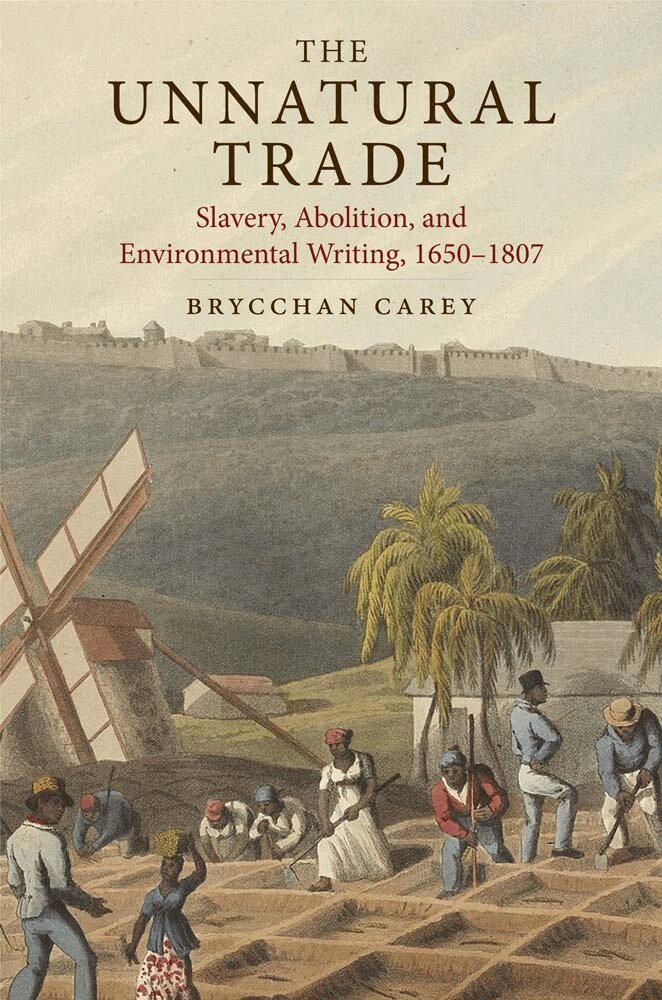
    Unnatural Trade

    Slavery, Abolition, and Environmental Writing, 1650-1807

    AvBrycchan Carey

    Inbunden, Engelska, 2024

    627 kr

    Beställningsvara. Skickas inom 5-8 vardagar. Fri frakt över 249 kr.

    Beskrivning

    A look at the origins of British abolitionism as a problem of eighteenth-century science, as well as one of economics and humanitarian sensibilities  How did late eighteenth-century British abolitionists come to view the slave trade and British colonial slavery as unnatural, a “dread perversion” of nature? Focusing on slavery in the Americas, and the Caribbean in particular, alongside travelers’ accounts of West Africa, Brycchan Carey shows that before the mid-eighteenth century, natural histories were a primary source of information about slavery for British and colonial readers. These natural histories were often ambivalent toward slavery, but they increasingly adopted a proslavery stance to accommodate the needs of planters by representing slavery as a “natural” phenomenon. From the mid-eighteenth century, abolitionists adapted the natural history form to their own writings, and many naturalists became associated with the antislavery movement.  Carey draws on descriptions of slavery and the slave trade created by naturalists and other travelers with an interest in natural history, including Richard Ligon, Hans Sloane, Griffith Hughes, Samuel Martin, and James Grainger. These environmental writings were used by abolitionists such as Anthony Benezet, James Ramsay, Thomas Clarkson, and Olaudah Equiano to build a compelling case that slavery was unnatural, a case that was popularized by abolitionist poets such as Thomas Day, Edward Rushton, Hannah More, and William Cowper.

    Produktinformation

    • Utgivningsdatum:2024-10-22
    • Mått:156 x 235 x 26 mm
    • Vikt:492 g
    • Format:Inbunden
    • Språk:Engelska
    • Antal sidor:280
    • Förlag:Yale University Press
    • ISBN:9780300224412

    Utforska kategorier

    • Slaveri inom Historia och arkeologi
    • Miljövetenskap och miljöpolitik inom Naturvetenskap och teknik

    Mer om författaren

    Brycchan Carey is professor of literature, culture, and history at Northumbria University in Newcastle upon Tyne. He has published numerous books and articles on the cultural history of slavery and abolition.

    Recensioner i media

    “Carey’s razor-sharp key insight is that eighteenth-century abolitionism engaged as much with emerging environmental and life sciences as with . . . moral philosophy. . . . Meticulously argued.”—Monique Allewaert, William and Mary Quarterly“Offering a new environmental history of abolitionism, Carey[’s] . . . dialectical reading of these ‘narratives of nature’ spanning two centuries demonstrates how determining the nature of nature is inextricably entwined with the history of political and moral world-making.”—Nayanika Shome, British Society for Literature and ScienceLonglisted for The Society for the History of Natural History Prize, 2025Shortlisted for the 2025 Early American Literature Book Prize“Bolstered by impressive primary and secondary research, Brycchan Carey argues compellingly that eighteenth-century abolitionists imitated contemporaneous naturalists to depict chattel slavery as an invasive species brought by Europeans to the Americas.”—Vincent Carretta, author of Phillis Wheatley Peters: Biography of a Genius in Bondage“Brycchan Carey’s skillful re‑examination of the primary literature of British slave trading and settlement in the Caribbean is persuasive and welcome. His forensic study forms a highly original environmental analysis both of humans and the natural world in the era of Atlantic slavery, exploration and settlement. In the process, it provides a totally new backdrop to the rise of late eighteenth-century abolitionist sensibility.”—James Walvin, University of York