• Fri frakt över 249 kr
  • •
  • Snabba leveranser
  • •
  • Billiga böcker
Kundservice

Du är på sajten för privatpersoner.

Företag, bibliotek eller offentlig verksamhet?

Du handlar på classic.bokus.com, där alla dina funktioner finns intakta.
Till classic.bokus.com
Bokus logotyp. Gå till startsidan.
  • Erbjudanden
  • Student
  • Topplistor
  • Barn & ungdom
  • Bokus Play
  • E-böcker
  • Ljudböcker
  • Pocketböcker
  • Spel & pussel

Upp till 25% på utvalda nyheter →

Sidfot

Mina sidor

    Hjälp

    • Kundservice
    • Vanliga frågor och svar
    • Frakt och leverans
    • Retur vid ångerrätt
    • Reklamera vara
    • Betalning
    • Köpvillkor
    • Allmänna villkor
    • Information om webbplatsens tillgänglighet

    Om Bokus

    • Om oss
    • Pressrum
    • För studenter
    • För företag
    • För bibliotek och offentlig verksamhet
    • För leverantörer
    • Hållbarhet

    Populärt

    • Aktuella erbjudanden
    • Presentkort
    • Studentlitteratur
    • Nya böcker
    • Topplistor
    • Signerade böcker
    • Engelska böcker

    Inspiration

    • Boktips
    • BookTok
    • Populära bokserier
    • Barnbokskaraktärer
    • Populära författare
    Logotyp för Bokus
    Följ oss på Facebook (extern länk)Följ oss på Instagram (extern länk)Följ oss på YouTube (extern länk)Följ oss på TikTok (extern länk)
    bokus @ CookiesAnpassa cookiesIntegritetspolicyKöpvillkor
    Till Citymail hemsida (extern länk)Till Budbee hemsida (extern länk)Till Postnord hemsida (extern länk)Till Schenker hemsida (extern länk)Till Early Bird hemsida (extern länk)Till Walleys hemsida (extern länk)
    1. Ekonomi och Ledarskap
    2. Nationalekonomi
    3. Ekonomisk historia

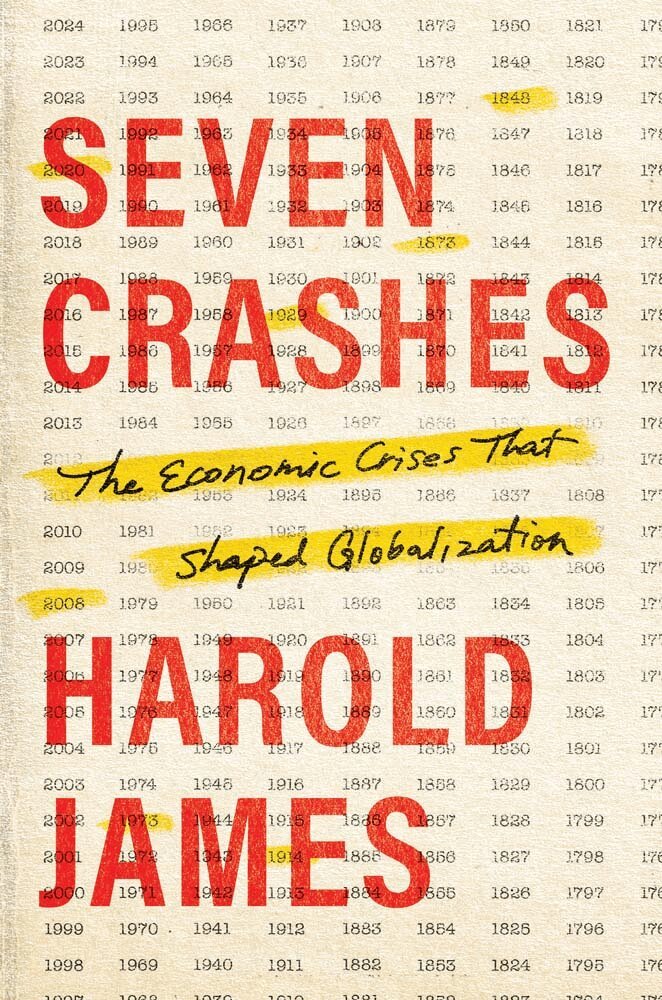
    Seven Crashes

    The Economic Crises That Shaped Globalization

    AvHarold James

    Inbunden, Engelska, 2023

    292 kr

    Skickas . Fri frakt över 249 kr.

    Fler format och utgåvor

    E-bok

    314 kr

    Beskrivning

    A leading economic historian presents a new history of financial crises, showing how some led to greater globalization while others kept nations apart  “[A] fascinating book.”—Martin Wolf, Financial Times, “Best Books of 2023—Economics”  The eminent economic historian Harold James presents a new perspective on financial crises, dividing them into “good” crises, which ultimately expand markets and globalization, and “bad” crises, which result in a smaller, less prosperous world. Examining seven turning points in financial history—from the depression of the 1840s through the Great Depression of the 1930s to the Covid-19 crisis—James shows how crashes prompted by a lack of supply, like the oil shortages of the 1970s, lead to greater globalization as markets expand and producers innovate to increase supply. By contrast, crises triggered by a lack of demand—such as the Global Financial Crisis of 2007–2008—result in less globalization as markets contract, austerity measures are imposed, and skepticism of government grows.  By considering not only the times but also the observers who shaped our understanding of each crisis—from Karl Marx to John Maynard Keynes to Larry Summers—James shows how the uneven course of globalization has led to new economic thinking, and how understanding this history can help us better prepare for the future.

    Produktinformation

    • Utgivningsdatum:2023-07-11
    • Mått:164 x 236 x 28 mm
    • Vikt:745 g
    • Format:Inbunden
    • Språk:Engelska
    • Antal sidor:376
    • Förlag:Yale University Press
    • ISBN:9780300263398

    Utforska kategorier

    • Ekonomisk historia inom Ekonomi och Ledarskap
    • Finanskriser inom Ekonomi och Ledarskap
    • Ekonomiska system inom Ekonomi och Ledarskap

    Mer om författaren

    Harold James is the Claude and Lore Kelly Professor in European Studies and professor of history and international affairs at Princeton University. He is the author of numerous books, including The War of Words: A Glossary of Globalization. He lives in Princeton, NJ.

    Recensioner i media

    “[A] fascinating book. . . . James’s surprising conclusion is that supply shocks promote globalisation, while demand shocks inhibit it.”—Martin Wolf, Financial Times, “Best Books of 2023—Economics”“Even readers who are familiar with the economic history will find striking new details and surprising juxtapositions.”—Trevor Jackson, New York of Review of Books“A very enjoyable new book . . . applies the lens of whether each the seven advanced or set back the process of globalization to crises ranging from famines and blights in the 1840s via wars and depressions, commodity price hikes in the 1970s, the GFC and the Covid lockdowns and Russian invasion of Ukraine. . . . Masterly concise essays.”—Diane Coyle, Enlightened Economist (blog)“James’ analysis is persuasive, and his book offers an illuminating history of how our world became so globalized.”—Mark Buchanan, Nature“Seven Crashes . . . offer(s) necessary and sober updates to the literature on financial crises.”—Rémi Meehan, International Affairs“Seven Crashes . . . sheds light on our most recent period of economic uncertainty.”— Kyle Scott, LSE Review of Books“An impressive book which covers an exceptional amount of ground.”—Ian Harwood, Society of Professional EconomistsShortlisted for the Lionel Gelber Prize, sponsored by the Munk Centre for International Studies“An audacious historical interpretation of how global mega-shocks have driven globalization cycles over the last two centuries. Anyone hoping to forecast the future of the world economy should read it.”—Maurice Obstfeld, Class of 1958 Professor of Economics, University of California, Berkeley“Those who cherish economics will be fascinated by Harold James’s exploration of financial crises, and the ways in which they have validated the views of those economists who saw them coming.”—Edmund Phelps, winner of the Nobel Prize in Economic Sciences and director of the Center on Capitalism and Society, Columbia University“A brilliant book—James shows how economists often draw the wrong lessons from the past and why globalization is unlikely to vanish in the wake of the Covid-19 crisis.”—Odd Arne Westad, author of The Cold War: A World History“James’s masterful account sheds new light on how globalization has been shaped by economic crises since the nineteenth century and deepens our understanding of globalization’s opportunities and its challenges.”—Linda Yueh, author of The Great Crashes: Lessons from Global Meltdowns and How to Prevent Them“If you are looking for a book that puts the economic fallout from the Covid-19 pandemic into historical context and considers what it means for the economy’s future, this is it.”—Mark Zandi, author of Paying the Price: Ending the Great Recession and Ensuring a New American Century