• Fri frakt över 249 kr
  • •
  • Snabba leveranser
  • •
  • Billiga böcker
Kundservice

Du är på sajten för privatpersoner.

Företag, bibliotek eller offentlig verksamhet?

Du handlar på classic.bokus.com, där alla dina funktioner finns intakta.
Till classic.bokus.com
Bokus logotyp. Gå till startsidan.
  • Erbjudanden
  • Student
  • Topplistor
  • Barn & ungdom
  • Bokus Play
  • E-böcker
  • Ljudböcker
  • Pocketböcker
  • Spel & pussel

10% rabatt på allt med kod NYSTART10 →

Sidfot

Mina sidor

    Hjälp

    • Kundservice
    • Vanliga frågor och svar
    • Frakt och leverans
    • Retur vid ångerrätt
    • Reklamera vara
    • Betalning
    • Köpvillkor
    • Allmänna villkor
    • Information om webbplatsens tillgänglighet

    Om Bokus

    • Om oss
    • Pressrum
    • För studenter
    • För företag
    • För bibliotek och offentlig verksamhet
    • För leverantörer
    • Hållbarhet

    Populärt

    • Aktuella erbjudanden
    • Presentkort
    • Studentlitteratur
    • Nya böcker
    • Topplistor
    • Signerade böcker
    • Engelska böcker

    Inspiration

    • Boktips
    • BookTok
    • Populära bokserier
    • Barnbokskaraktärer
    • Populära författare
    Logotyp för Bokus
    Följ oss på Facebook (extern länk)Följ oss på Instagram (extern länk)Följ oss på YouTube (extern länk)Följ oss på TikTok (extern länk)
    bokus @ CookiesAnpassa cookiesIntegritetspolicyKöpvillkor
    Till Citymail hemsida (extern länk)Till Budbee hemsida (extern länk)Till Postnord hemsida (extern länk)Till Schenker hemsida (extern länk)Till Early Bird hemsida (extern länk)Till Walleys hemsida (extern länk)
    1. Ekonomi och Ledarskap
    2. Ledarskapsböcker
    3. Ledarskap och motivation

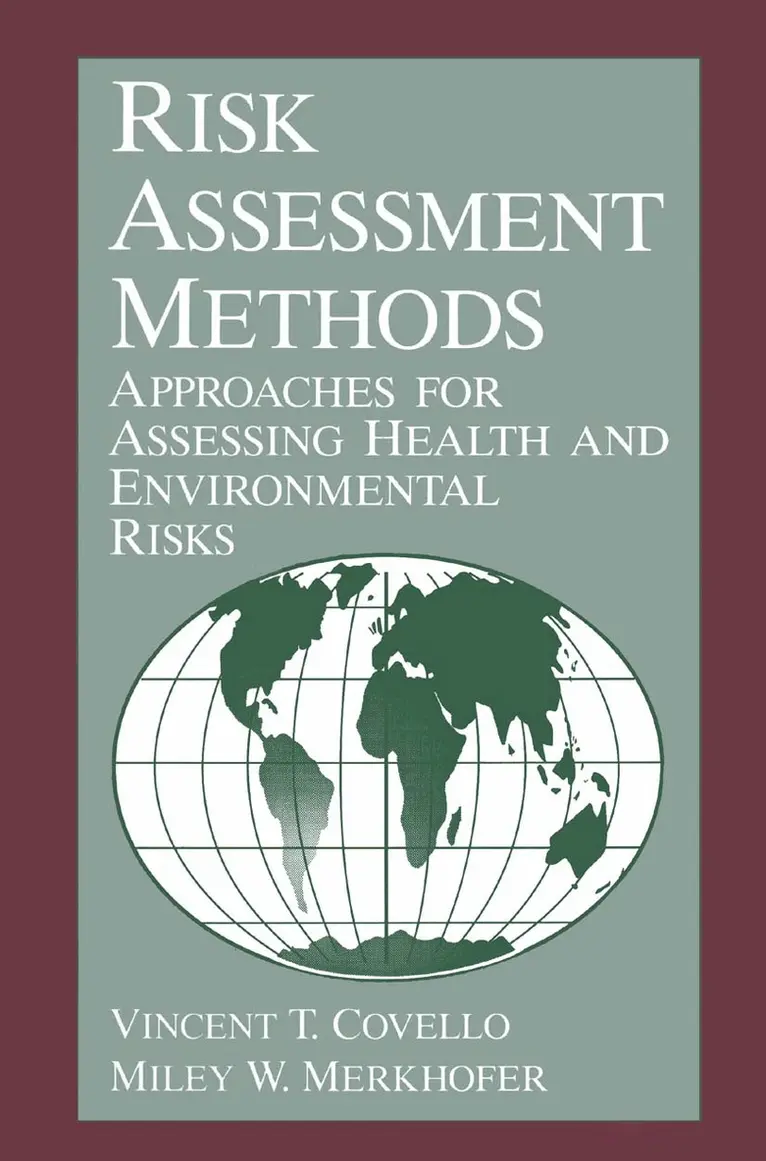
    Risk Assessment Methods

    Approaches for Assessing Health and Environmental Risks

    AvV.T. Covello,M.W. Merkhoher

    Inbunden, Engelska, 1993

    1 623 kr

    Beställningsvara. Skickas inom 10-15 vardagar. Fri frakt över 249 kr.

    Fler format och utgåvor

    Häftad

    1 671 kr

    Beskrivning

    Much has already been written about risk assessment. Epidemiologists write books on how risk assessment is used to explore the factors that influence the distribution of disease in populations of people. Toxicologists write books on how risk assess­ ment involves exposing animals to risk agents and concluding from the results what risks people might experience if similarly exposed. Engineers write books on how risk assessment is utilized to estimate the risks of constructing a new facility such as a nuclear power plant. Statisticians write books on how risk assessment may be used to analyze mortality or accident data to determine risks. There are already many books on risk assessment-the trouble is that they all seem to be about different sUbjects! This book takes another approach. It brings together all the methods for assessing risk into a common framework, thus demonstrating how the various methods relate to one another. This produces four important benefits: • First, it provides a comprehensive reference for risk assessment. This one source offers readers concise explanations of the many methods currently available for describing and quantifying diverse types of risks. • Second, it consistently evaluates and compares available risk assessment methods and identifies their specific strengths and limitations. Understand­ ing the limitations of risk assessment methods is important. The field is still in its infancy, and the problems with available methods are disappoint­ ingly numerous. At the same time, risk assessment is being used.

    Produktinformation

    • Utgivningsdatum:1993-12-31
    • Mått:152 x 229 x 24 mm
    • Vikt:639 g
    • Format:Inbunden
    • Språk:Engelska
    • Antal sidor:318
    • Upplaga:1993
    • Förlag:Springer Science+Business Media
    • ISBN:9780306443824

    Utforska kategorier

    • Ledarskap och motivation inom Ekonomi och Ledarskap
    • Miljövetenskap och miljöpolitik inom Naturvetenskap och teknik

    Innehållsförteckning

    • 1 Introduction to Risk Assessment.- 2 Release Assessment.- 3 Exposure Assessment.- 4 Consequence Assessment.- 5 Risk Estimation.- 6 An Evaluation of the State of the Art.- References.