• Fri frakt över 249 kr
  • •
  • Snabba leveranser
  • •
  • Billiga böcker
Kundservice

Du är på sajten för privatpersoner.

Företag, bibliotek eller offentlig verksamhet?

Du handlar på classic.bokus.com, där alla dina funktioner finns intakta.
Till classic.bokus.com
Bokus logotyp. Gå till startsidan.
  • Erbjudanden
  • Nyheter
  • Student
  • Topplistor
  • Barn & ungdom
  • Bokus Play
  • E-böcker
  • Pocketböcker
  • Spel & pussel

10% rabatt på allt med kod: NYSTART10 →

Sidfot

Mina sidor

    Hjälp

    • Kundservice
    • Vanliga frågor och svar
    • Frakt och leverans
    • Retur vid ångerrätt
    • Reklamera vara
    • Betalning
    • Köpvillkor
    • Allmänna villkor
    • Information om webbplatsens tillgänglighet

    Om Bokus

    • Om oss
    • Pressrum
    • För studenter
    • För företag
    • För bibliotek och offentlig verksamhet
    • För leverantörer
    • Hållbarhet

    Populärt

    • Aktuella erbjudanden
    • Presentkort
    • Studentlitteratur
    • Nya böcker
    • Topplistor
    • Signerade böcker
    • Engelska böcker

    Inspiration

    • Boktips
    • BookTok
    • Populära bokserier
    • Barnbokskaraktärer
    • Populära författare
    Logotyp för Bokus
    Följ oss på Facebook (extern länk)Följ oss på Instagram (extern länk)Följ oss på YouTube (extern länk)Följ oss på TikTok (extern länk)
    bokus @ CookiesAnpassa cookiesIntegritetspolicyKöpvillkor
    Till Citymail hemsida (extern länk)Till Budbee hemsida (extern länk)Till Postnord hemsida (extern länk)Till Schenker hemsida (extern länk)Till Early Bird hemsida (extern länk)Till Walleys hemsida (extern länk)
    1. Djur och Natur
    2. Naturböcker
    3. Växtböcker

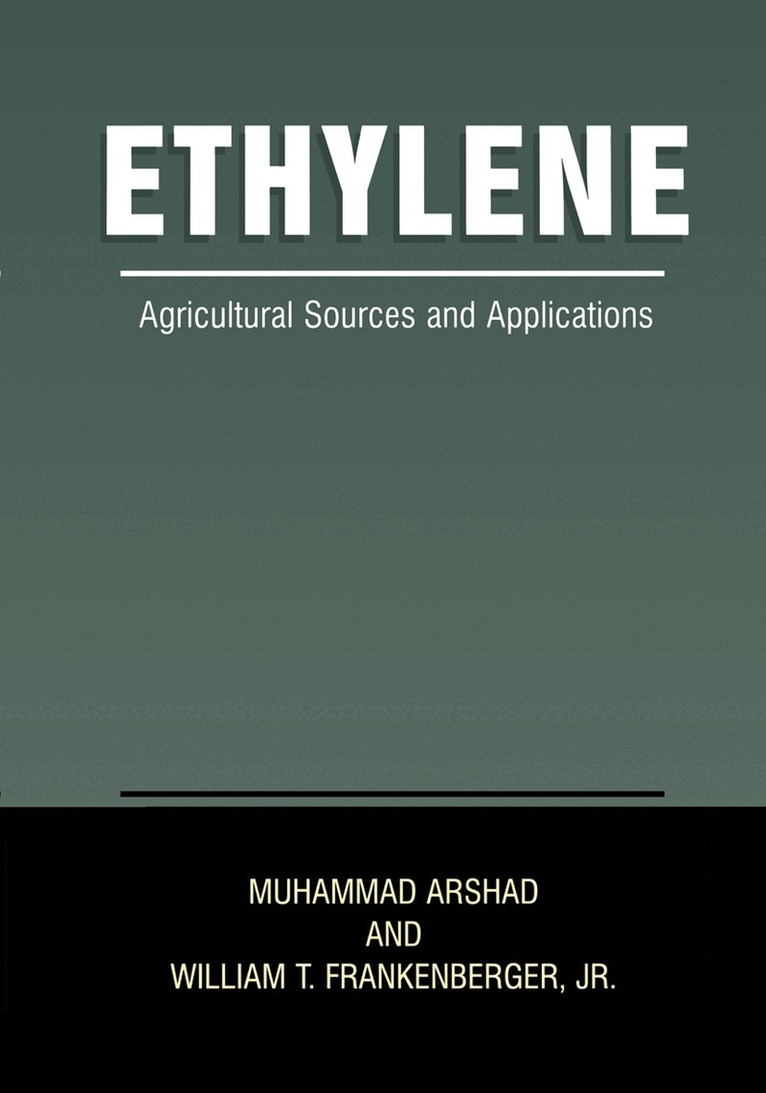
    Ethylene

    Agricultural Sources and Applications

    AvMuhammad Arshad,William T. Frankenberger Jr.

    Inbunden, Engelska, 2002

    1 626 kr

    Beställningsvara. Skickas inom 10-15 vardagar. Fri frakt över 249 kr.

    Fler format och utgåvor

    Häftad

    1 626 kr

    Beskrivning

    This text examines the biochemistry of endogenous ethylene biosynthesis and its role in the physiology of higher plants. It provides chapters examining ethylene as a hormone, its role in plant physiology, sources and factors affecting microbial production of ethylene, and biochemistry of ethylene production by microorganisms. It also considers ethylene production in soil, the role of ethylene in symbiosis and pathogenesis, and its commercial application in agriculture.

    Produktinformation

    • Utgivningsdatum:2002-01-31
    • Mått:178 x 254 x 25 mm
    • Vikt:711 g
    • Format:Inbunden
    • Språk:Engelska
    • Antal sidor:342
    • Upplaga:2002
    • Förlag:Springer Science+Business Media
    • ISBN:9780306466663

    Utforska kategorier

    • Växtböcker inom Djur och Natur
    • Botanik inom Naturvetenskap och teknik

    Recensioner i media

    From the reviews: "...a comprehensive account of our current knowledge of ethylene ... The strength of the book is that it brings together a large amount of information on microbial ethylene, and in this respect it is unique. (P. John in Annals of Botany Company, 2002) "In conclusion, the book can be recommended to anyone with an interest in "Plant Science", teachers, graduate students and plant scientists (whether working or not on ethylene) who would like to have an extended and comprehensive view of the role of ethylene in areas such as plant microbe interactions, soil science and applied aspects of the use of ethylene in agriculture, areas other than plant physiology per se." (Plant Science, 162, 2002) "The main emphasis of this book is on the microbial production of ethylene and its effects on plant growth. Each chapter is well-written and has adequate figures and tables to support the essence of the material presented in the text. There are extensive references at the end of each chapter. Although the book was published in 2001, there are few references beyond 2000. [...] the vast amount of information presented in this book on the microbial production of ethylene, and the activity of ethylene in soil, symbiosis, and pathogenesis make the book well worth acquiring. While this book will be valuable to anyone interested in the biology of ethylene, the book may be of more use to soil scientists and plant pathologists than to horticulturists. [Ethylene: Agricultural Sources and Applications] gives a thorough background on our current knowledge of ethylene in plant biology and is an excellent reference to the synthesis and action of ethylene in microbes." (Mikal E. Saltveit, University of California, Davis in HortScience, 38:1, February 2003)

    Innehållsförteckning

    • 1. THE PLANT HORMONE, ETHYLENE.- 1.1. Introduction.- 1.2. Ethylene as a Gas.- 1.3. Biological Activity of Ethylene.- 1.4. Historical Perspective.- 1.5. Sources of Ethylene and Applications.- 1.6. Future Prospects.- 1.7. References.- 2. ETHYLENE IN PLANT PHYSIOLOGY.- 2.1. Introduction.- 2.2. Endogenous Production of Ethylene.- 2.3. Biosynthetic Pathway.- 2.4. Regulation of Ethylene Production.- 2.5. Metabolism.- 2.6. Mechanism of Action and Ethylene Receptors.- 2.7. Ethylene Production by Lower Plants.- 2.8. Concluding Remarks.- 2.9. References.- 3. BIOCHEMISTRY OF MICROBIAL PRODUCTION OF ETHYLENE.- 3.1. Introduction.- 3.2. Substrates/Precursors/Stimulators of Ethylene.- 3.3. Biosynthetic Pathways.- 3.4. Methionine-Dependent and -Independent Pathways.- 3.5. Molecular Aspects of the Ethylene-forming Enzyme of Pseudomonas syringae.- 3.6. Structure of Ethylene-forming Enzymes.- 3.7. Microbial Metabolism of Ethylene.- 3.8. Concluding Remarks.- 3.9. References.- 4. FACTORS AFFECTING MICROBIAL PRODUCTION OF ETHYLENE.- 4.1. Microbial Production of Ethylene.- 4.2. Factors Affecting Microbial Production of Ethylene in Vitro.- 4.3. Effect of Ethylene on Microbial Growth.- 4.4. Concluding Remarks.- 4.5. References.- 5. ETHYLENE IN SOIL.- 5.1. Ethylene Production in Soil.- 5.2. Physicochemical Properties of Soil and Ethylene Production.- 5.3. Organic Amendments and Ethylene Accumulation.- 5.4. Inorganic Amendments and Ethylene Accumulation in Soil.- 5.5. Nitrate as a Suppressor of Ethylene Accumulation in Soil.- 5.6. Ferrous Iron as a Stimulator of C2H4 Production in Soil.- 5.7. Persistence of Ethylene in Soil.- 5.8. Plant Responses Evoked by Ethylene and Waterlogging.- 5.9. Concluding Remarks.- 5.10. References.- 6. ETHYLENE IN SYMBIOSIS.- 6.1. Introduction.- 6.2. Symbiotic Associations.- 6.3. Nodulation.- 6.4. Mycorrhizal Associations.- 6.5. Lichen (An Algal-Fungal Symbiosis).- 6.6. Concluding Remarks.- 6.7. References.- 7. ETHYLENE IN PATHOGENESIS.- 7.1. Infection: A Biotic Stress.- 7.2. Enhanced Ethylene Production during Pathogenesis.- 7.3. Source of Accelerated Ethylene Evolution during Pathogenesis.- 7.4. Role of Ethylene in Disease Development.- 7.5. Role of Ethylene in Disease Resistance.- 7.6. Soil Ethylene as a Weedicide.- 7.7. Concluding Remarks.- 7.8. References.- 8. ETHYLENE IN AGRICULTURE: SYNTHETIC AND NATURAL SOURCES AND APPLICATIONS.- 8.1. Introduction.- 8.2. Ethylene Sources and Their Applications in Agriculture.- 8.3. Alterations in Endogenous Ethylene Biosynthesis and Plant Responses.- 8.4. Concluding Remarks.- 8.5. References.